Chinese Humanoid Robot Makers Report Thousands of Orders but Face Bubble Warnings and Limited Real-World Use
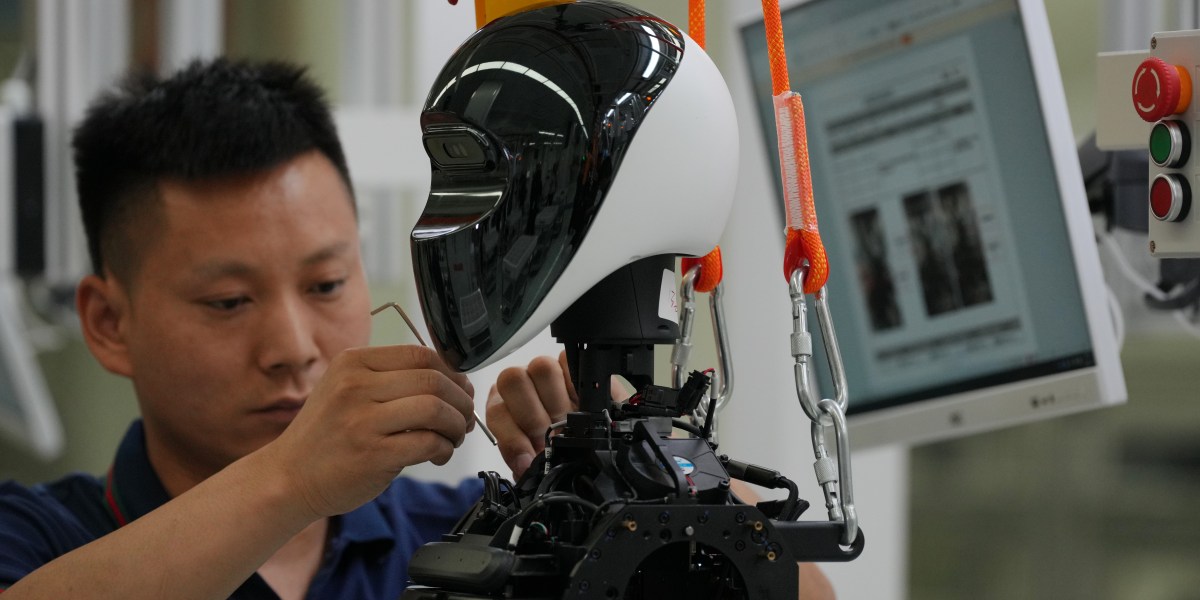
Startups in China have received orders from government and private buyers for robots priced between $26,600 and $99,000. Shipments are projected to rise sharply in 2026.
 fortune.com
Com reported. 6 feet tall and costs about $99,000. Founder and CEO Allen Zhang, formerly of Tesla, said customers include coffee chains and hotels.
The company has built only a few hundred units so far but stated it can deliver 5,000 within 2026 if orders continue. EngineAI, based in Shenzhen, sells a basic humanoid model for 180,000 yuan ($26,600). Head of brand and marketing Issac Li said the next step is deployment in real-life scenarios such as security and museum guiding.
China had more than 140 humanoid robot manufacturers and more than 330 models in 2025, according to the Ministry of Industry and Information Technology. S. firms Figure AI and Tesla each shipped a few hundred or fewer, Omdia data showed.
Morgan Stanley estimates the global humanoid robot market at $5 trillion. It projects China’s sales will more than double to around 28,000 units in 2026. The firm also reported that more than 2 billion yuan ($295 million) in 2025 orders came from state-owned enterprises for use in power plants, data centers, and entertainment.
7 billion yuan ($250 million) in revenue last year and a profit exceeding 278 million yuan ($41 million). Morgan Stanley said greater use of locally made parts has made Chinese models at least 20 percent cheaper than foreign equivalents on average. Samm Sacks, a senior fellow at the New America think tank, said most current humanoids remain performative rather than functional and struggle in unstructured environments.
She noted the economics remain difficult because the machines are expensive, fragile, and require highly structured settings. Chibo Tang of Gobi Partners said use cases are still limited and that without demand and scale, companies cannot move to mass production. The Chinese government publicly warned last year about the risk of a bubble given lagging commercialization.
Ye Tian, founder of RoboScience, said Chinese consumers are accustomed to rapid technological change. Lian Jye Su of Omdia said maturing technology could allow humanoids to handle heavy lifting and repetitive tasks in warehouses, factories, and ports.
Allen Zhang said robots can fill roles that are dangerous or repetitive and that a large household market exists for chores across hundreds of millions of homes.
Freelance content creator Yang Ning in Beijing tested a cleaning robot that organizes shoes, folds clothes, and changes garbage bags. She described the shoe-sorting function as amazing but noted the machine was inefficient and too large for a small apartment.
Wang Xiaogang, chairman of ACE Robotics, said his firm is collecting human-centric data from factories, retail, and offices to train robots for complex tasks.
Eric Guo, founder of AI² Robotics, said gathering sufficient varied data could take years and that mass production capability remains at an early stage. Omdia forecasts annual shipments of advanced robots could exceed 1 million units by the early 2030s.
Morgan Stanley estimates average humanoid prices could fall to about $21,000 by 2050 from $46,000 last year, with some Chinese models already priced below $6,000.