Company Withdraws Graphite Drilling Project Near Sacred Sioux Site in South Dakota
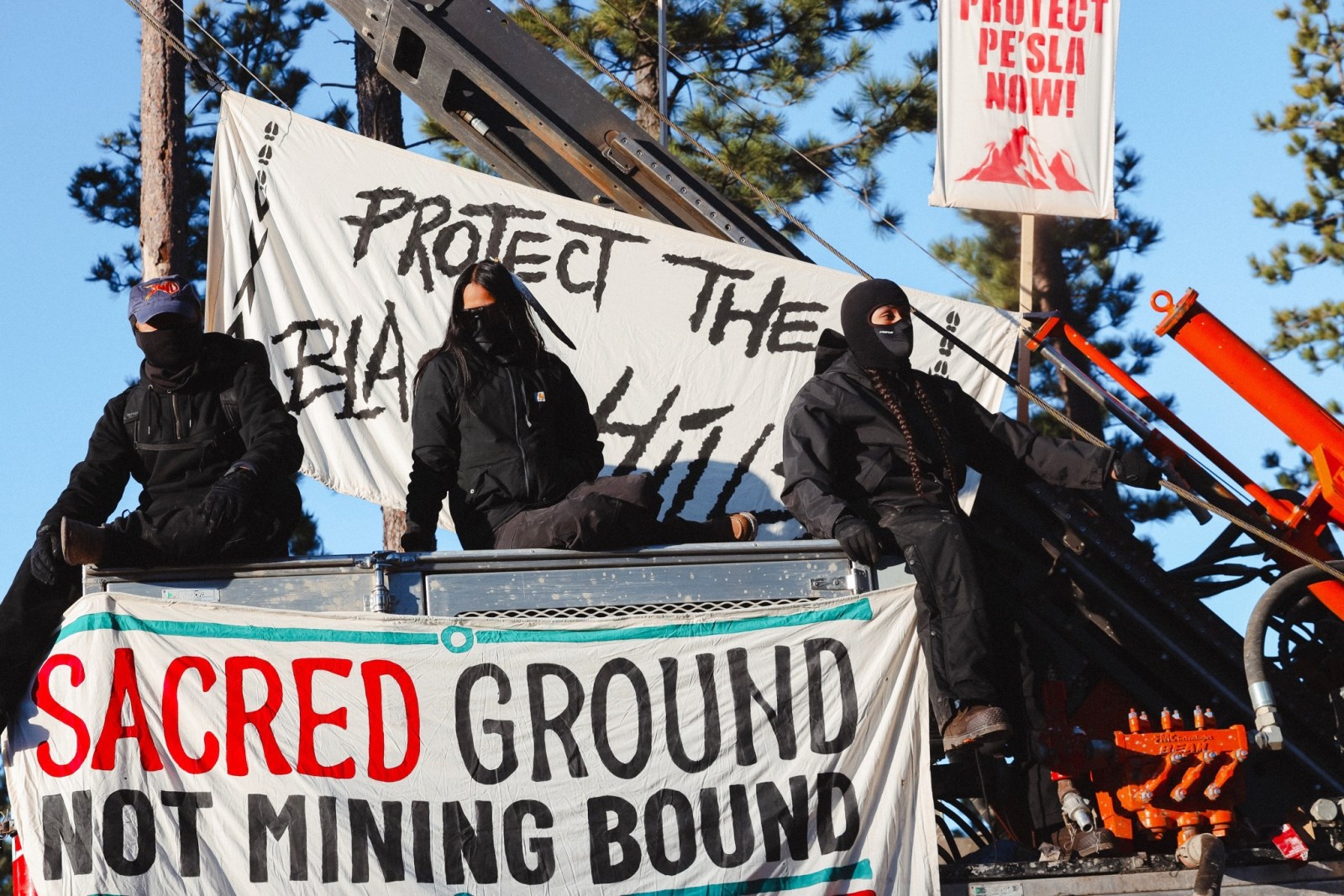
Pete Lien and Sons withdrew its exploratory graphite drilling plan at Pe’ Sla, also known as Reynolds Prairie, after two groups filed a lawsuit against the US Forest Service. The site is a recognized ceremonial location for nine Sioux Nation groups. The withdrawal follows a decade of disputes over tribal rights and sacred lands in the Black Hills since the 2016 Standing Rock protests.
 winnipegfreepress.com
Almost exactly ten years after the Standing Rock protests against the Dakota Access pipeline began, new disputes have arisen over tribal rights and sacred sites in the Black Hills of South Dakota. Earlier this month an environmental organization and a Native American advocacy group sued the US Forest Service.
The suit stated that an exploratory graphite drilling project on national forest land threatened a recognized ceremonial site on mountain meadows known as Pe’ Sla, or Reynolds Prairie. Nine groups within the Sioux Nation, including the Standing Rock Sioux, said the project would directly and significantly affect use of the site, which sits within the Lakota-named Ȟe Sápa, or Black Hills.
On Friday, Pete Lien and Sons, the company behind the project, withdrew its plans. The company said it would perform reclamation on the site and would not seek to file another plan. The decision followed the filing of the lawsuit.
The Pe’ Sla site holds importance in Lakota creation myths. The lawsuit claimed the US Forest Service improperly used a categorical exclusion to bypass reviews required under the National Environmental Policy Act and the National Historic Preservation Act.
The groups said proper environmental and cultural impact studies and consultations with tribes were not conducted. Wizipan “Little Elk” Garriott, a member of NDN Collective, said the approval process for the planned mine happened without notice to the sovereign tribal nations.
Lilias Jarding, director of the Black Hills Clean Water Alliance, one of the parties in the lawsuit, said the company did not stop drilling when the suit was filed and instead operated 24 hours a day. Oglala Sioux president Frank Star Comes Out said in a statement that the Sioux tribes never ceded the lands in the Black Hills.
He stated the area remains the spiritual center of the Great Sioux Nation and is not for sale, lease or exploitation. The pipeline project, developed by Bridger, has been described by the company as a response to identified market interest. It is expected to help increase Canadian oil output to around 6.1 million barrels a day from 5.5 million currently.
The disputes over the mining projects and the pipeline involve issues of extraction, water safety and sacred sites. The 2016 Standing Rock protests began after the Standing Rock Sioux passed a resolution stating that the Dakota Access Pipeline posed a serious risk to the tribe and would destroy valuable cultural resources.
That dispute centered on the 1868 Fort Laramie Treaty. In the aftermath of those protests, Greenpeace was ordered to pay $345 million in damages to Energy Transfer and subsidiary Dakota Access, a ruling that is set to go to appeal.
Jarding said the decade since Standing Rock has seen growth in projects attempting to mine tribal lands and areas of ceremonial significance. She stated that since the start of the second Trump administration the push for minerals extraction and energy has increased.
Wizipan “Little Elk” Garriott said the tribal groups had seen a ramp-up of opening federal lands for mineral and gas exploration. A representative of Clean Nuclear Energy Corp, Mike Blady, said the company was aware of the cultural significance of its project area and was doing everything in its power to ensure no collateral damage.
The Pe’ Sla dispute did not lead to large-scale protests. Jarding said elders made clear that the deeply sacred site was not a suitable location for another Standing Rock with thousands of people.
Transparency
Story details
Related Stories
 upi.com
Trump Announces $700 Million Federal Investment in Coal Plants and Export Terminal
The funding covers upgrades at 13 existing plants, two new facilities, and a terminal in Oakland. Officials said the package will support jobs and grid reliability.
 Substrate placeholder — needs review
$700M in Federal Support Allocated for Coal Plants and Export Terminal
The plan directs $425 million to 13 existing plants, $185 million to two new facilities, and $75 million to a California export terminal under the Defense Production Act.
 The Hill
Iran Nuclear Material Continuity Lost After U.S.-Israeli Strikes, IAEA Says
The agency has been unable to inspect Iranian sites since U.S. and Israeli strikes began in June 2025 and has lost continuity of knowledge on previously declared nuclear material.