Conservationists Collect Seeds to Preserve Wales' Native Plant Species
Two conservationists at the National Botanic Garden of Wales collect and store seeds from native plants to protect against extinction and potential disasters. Their work has restored species lost to natural events and supports ecosystem resilience. The seed bank holds over five million seeds, with half stored in a secure international vault.
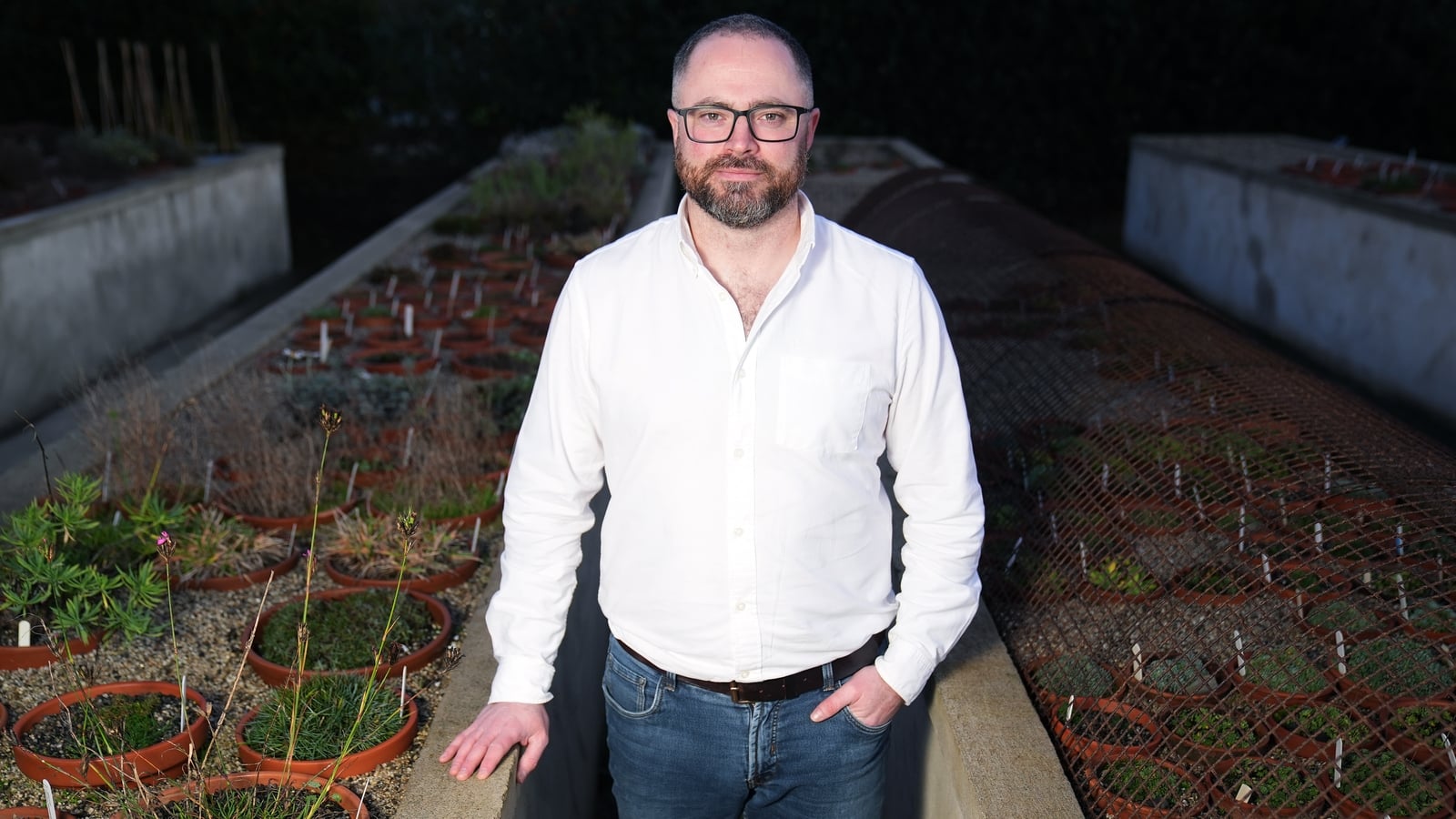
rte.ieConservationists Ellyn Baker and Kevin McGinn lead efforts to collect and store seeds from Wales' native plant species at the National Botanic Garden of Wales in Carmarthenshire. The initiative aims to create a genetic library for restoring ecosystems after disasters or local extinctions. Seeds are stored in freezers within a small lab at the garden.
Wales has about 60 plant species endemic to the region, meaning their loss would result in global extinction. One-sixth of all plants in Wales face extinction threats, which could affect ecosystems, pollinators, crop yields, soil health, and flood mitigation.
Kevin McGinn, the curator of the seed bank and herbarium, stated that loss of plant species reduces ecosystem resilience to climate change, disease, and extreme weather.
Seeds have already been used to restore populations, such as Shore Dock after a landslide in Southerndown, Vale of Glamorgan. The pair plan collections during brief seasonal windows, sometimes just days, to gather viable seeds from rare plants. Challenges include locating populations, timing ripening, and ensuring enough seeds, with a target of about 10,000 per collection.
11% of Wales' 15,000 species have been banked so far.
Species like Juniper have proven difficult, as only female shrubs produce seeds that ripen every three years. The team relies on notifications from botanists across Wales to identify locations and times for collection. If seeds are not fully ripe, the pair return later, though they risk finding them dispersed or eaten.
Summers involve travel across the country to gather healthy seeds. The work addresses both global catastrophe scenarios and localized losses from events like floods or droughts.
The seed bank was established in 2018 after the Millennium Seed Bank identified that 75% of Welsh plants lacked banking.
Since then, more than five million seeds have been collected. Half are stored in the lab's freezers, upgraded from initial household units, and the other half sent to the Millennium Seed Bank's secure vault in Sussex, which holds over two billion seeds worldwide.
In 2024, the team banked nearly 500,000 seeds from 19 crop wild relatives, including those related to lettuce, parsnip, strawberry, radish, quinoa, blackberry, and alfalfa.
Dr. Christopher Cockel, UK conservation projects co-ordinator for the Millennium Seed Bank, noted that one quinoa relative may contain cancer-fighting compounds, though further research is required. The next two years focus on 100 collections from Wales' Sites of Special Scientific Interest.
Genetic diversity from these seeds, including wild relatives like sea radish and sea cabbage, provides resistance to pests and pathogens lost in cultivated crops. Without this banking, lost plant populations would lack backups for restoration.
Key Facts
Story Timeline
4 events- 2024
Team banked nearly 500,000 seeds from 19 crop wild relatives.
1 sourceBBC - 2018
Wales' seed bank created after identifying 75% of plants unbanked.
1 sourceBBC - Recent (post-landslide)
Shore Dock population restored using banked seeds after landslide.
1 sourceBBC - Ongoing summers
Conservationists travel Wales to collect seeds during seasonal windows.
1 sourceBBC
Potential Impact
- 01
Preserved genetic diversity supports crop resistance to pests and diseases.
- 02
Restored plant populations enhance local ecosystem resilience to weather events.
- 03
Banked seeds enable restoration after localized extinctions from landslides or floods.
- 04
Increased pollinator support from diverse plants boosts crop yields and economies.
- 05
Soil health improves through maintained plant diversity for farmland and flood control.
Transparency Panel
Related Stories
NASA Releases Thousands of Photos from Artemis II Lunar Mission
NASA has released over 12,000 images from the Artemis II mission, which orbited the moon in April 2026. The photos capture views of Earth, the lunar surface, and a solar eclipse observed during the crew's return. Astronauts from the mission also visited the United Nations headqua…
newscientist.comHoutman Abrolhos Corals Show High Resilience to 2025 Heatwave, Unlike Global Losses
Coral reefs at the Houtman Abrolhos Islands off Western Australia endured a prolonged heatwave in early 2025 virtually unscathed, unlike widespread global die-offs. Researchers found exceptional heat tolerance across multiple species, with lab tests showing survival rates far exc…
deccanchronicle.comThree Die in Hantavirus Cases on MV Hondius Cruise Ship
A hantavirus outbreak on the MV Hondius cruise ship has killed three passengers and sickened seven others, prompting an international response coordinated by the World Health Organization. The ship, carrying 147 people from 23 nationalities, is set to sail to Spain's Canary Islan…