Substrate
technology

Corrosion Found in Lunar Gateway Modules as NASA Pauses Program for Lunar Surface Focus

NASA Administrator Jared Isaacman confirmed corrosion issues in the HALO and I-HAB modules of the Lunar Gateway during congressional testimony. The program has been paused to focus on lunar surface activities, with repairs underway on HALO. Stakeholders are exploring repurposing the hardware for surface applications.
Ars Technica
1 source·Apr 24, 2:47 PM(12 days ago)·2m read
|
Corrosion Found in Lunar Gateway Modules as NASA Pauses Program for Lunar Surface FocusArs Technica
Audio version
Tap play to generate a narrated version.
Developing·Limited corroboration so far. This page will refresh as more sources emerge.

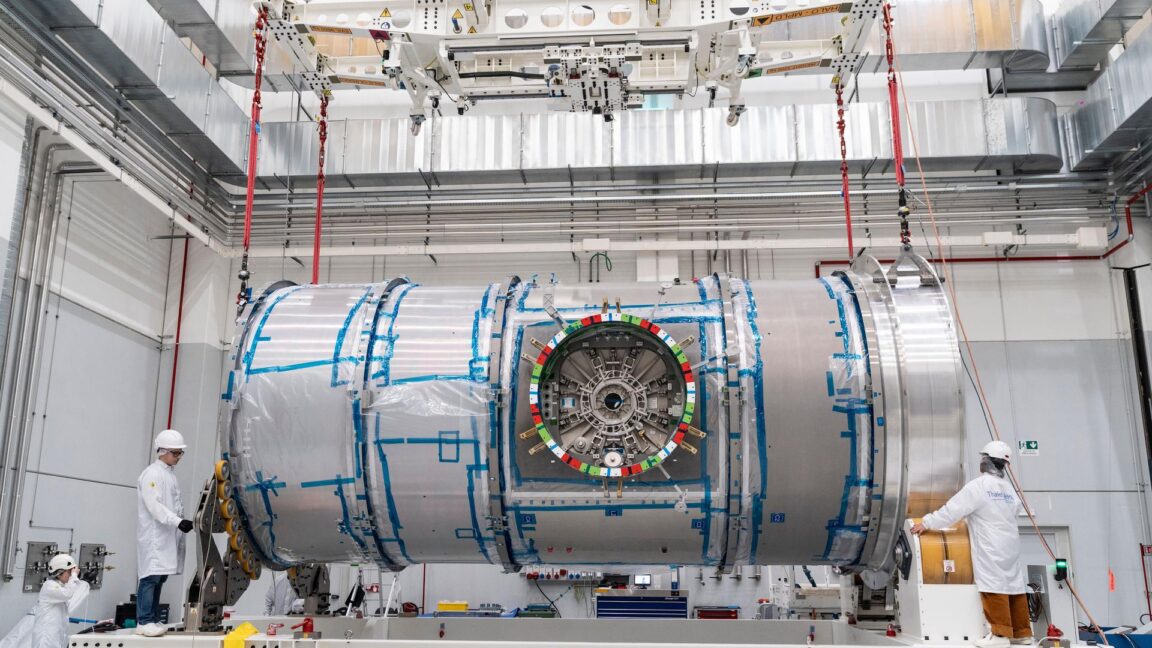
NASA confirmed during congressional testimony that corrosion affects both the Habitation and Logistics Outpost (HALO) and I-HAB modules of the Lunar Gateway space station project. This issue would have delayed, probably beyond 2030, the application of Gateway. Half a dozen sources who worked on or near the Lunar Gateway program confirmed to Ars Technica that the corrosion was real and serious.

Northrop Grumman, the primary contractor for HALO, acknowledged the problem and said it is completing repairs using NASA-approved processes after a manufacturing irregularity. The company expects to finish these repairs by the end of the third quarter.

The European Space Agency attributed the issue to a “combination of factors,” including materials. “Following the identification of corrosion on HALO, a comprehensive investigation was promptly initiated,” a European Space Agency spokesperson said. ” After the issue was discovered, the European Space Agency established a “tiger team” to investigate.

“Based on the investigation and available data, the corrosion issue was understood to be technically manageable and did not constitute a showstopper for I‑HAB, which was, in any case, in better conditions than HALO from [a] corrosion point of view,” the spokesperson said.

The I-HAB module remains under construction and has not yet been delivered to NASA. Thales Alenia Space, which built the primary structure of HALO for Northrop Grumman and is building the I-HAB module along with a future communications and refueling module known as ESPRIT, has not yet provided a detailed comment.

Ars Technica reached out to Thales Alenia Space on Wednesday evening for a comment about the corrosion issues. A spokesperson responded on Friday morning, “We are working on statement.” Northrop Grumman provided a comment within several hours of a request on Wednesday.

In March, the Gateway was being paused so NASA could focus on the lunar surface. During testimony before the US House Committee on Science, Space, and Technology, a representative asked about NASA’s budget. “You’ve also canceled an order for the Habitation and Logistics Outpost,” the representative said.

” Since the demise of Gateway, Northrop has been pushing NASA to re-purpose the HALO module for use on the lunar surface as part of the space agency’s Moon base. The representative's district includes major elements of Northrop Grumman. “I appreciate the contributions and look forward to working with them on how we could potentially repurpose hardware to surface applications,” a NASA official replied.

The HALO module was delivered from Italy to the United States about a year ago.

NASA promoted the idea of building a space station around the Moon known as the Lunar Gateway for a decade. The Lunar Gateway was touted as a platform for exploring the lunar environment and testing technology needed for deep-space habitation. The first component of the Lunar Gateway was originally due to launch in 2022.

The first component module was later decided to launch in tandem with the HALO in 2024. The core of the Lunar Gateway was slated to be joined by the I-HAB pressurized habitation module contributed by international partners in 2026.

Key Facts

Corrosion confirmed in modules
Jared Isaacman stated both HALO and I-HAB modules are corroded, delaying Gateway beyond 2030.
Program pause announced
In March, NASA paused Lunar Gateway to focus on lunar surface activities.
Repairs underway
Northrop Grumman expects to complete HALO repairs by end of third quarter using NASA-approved processes.
Investigation by ESA
European Space Agency initiated a tiger team investigation, finding corrosion manageable and not a showstopper for I-HAB.
Repurposing discussions
Northrop Grumman pushing to repurpose HALO for lunar surface Moon base, with Isaacman open to collaboration.

Story Timeline

6 events
  1. 2026-03

    NASA Administrator Jared Isaacman announced that the Gateway was being paused to focus on the lunar surface.

    1 sourceArs Technica
  2. 2026 recent

    Jared Isaacman publicly confirmed corrosion in HALO and I-HAB modules during U.S. House Committee testimony.

    1 sourceArs Technica
  3. 2025 approximate

    HALO module delivered from Italy to the United States about a year ago.

    1 sourceArs Technica
  4. 2024 planned

    First component module decided to launch in tandem with HALO.

    1 sourceArs Technica
  5. 2022 planned

    First component of Lunar Gateway originally due to launch.

    1 sourceArs Technica
  6. 2020

    Massimo Claudio Comparini commented on Thales Alenia Space contracts for Lunar Gateway.

    1 sourceArs Technica

Potential Impact

  1. 01

    Shift in NASA resources toward lunar surface base development, accelerating Moon base initiatives.

  2. 02

    Repurposing of HALO could save costs and utilize existing hardware for surface applications.

  3. 03

    Potential delay in cislunar exploration timelines if corrosion issues extend to other modules.

  4. 04

    Ongoing repairs may influence contractor relationships and future module manufacturing standards.

  5. 05

    European partners may adjust participation in U.S.-led space projects based on Gateway's fate.

Transparency Panel

Sources cross-referenced1
Framing risk0/100 (low)
Confidence score75%
Synthesized bySubstrate AI
Word count537 words
PublishedApr 24, 2026, 2:47 PM
Bias signals removed5 across 4 outlets
Signal Breakdown
Loaded 2Speculative 1sensational 1Framing 1

Related Stories

OpenAI Co-Founder Brockman Testifies About 2017 Musk Proposal for Greater Control and For-Profit Shiftunder30ceo.com
ai1 hr agoUpdated

OpenAI Co-Founder Brockman Testifies About 2017 Musk Proposal for Greater Control and For-Profit Shift

Greg Brockman, OpenAI president and co-founder, testified in Oakland federal court during the second week of a month-long trial. Elon Musk alleges Brockman, Sam Altman and OpenAI violated the 2015 founding agreement by shifting to a for-profit structure and seeks their removal pl…

The New York Times
BBC News
The Guardian
Ars Technica
Wired
+1
6 sources
Alphabet, Microsoft and xAI to Give US Government Early Access to Advanced AI Modelsinsurancejournal.com
technology1 hr agoFraming55Framing risk55/100Rewrite inherits mild consensus framing and lede misdirection by centering the voluntary pact and process details over the substantive national-security risks being addressed.Click to jump to full framing analysis

Alphabet, Microsoft and xAI to Give US Government Early Access to Advanced AI Models

The companies will submit advanced models to the Commerce Department's Center for AI Standards and Innovation for evaluations on national security, cybersecurity and biosecurity risks. The voluntary pacts expand earlier agreements reached under the Biden administration and incorp…

SE
The Washington Post
BBC News
New York Post
4 sources
Apple Settles Class-Action Lawsuit Over Apple Intelligence Feature Timelines for $250 Millionkoreaherald.com
ai1 hr ago

Apple Settles Class-Action Lawsuit Over Apple Intelligence Feature Timelines for $250 Million

The agreement covers roughly 36 million iPhone 15 and iPhone 16 devices purchased in the United States between June 2024 and March 2025. Eligible buyers may receive between $25 and $95 per device after court approval.

The New York Times
BBC News
The Guardian
Wired
4 sources