Substrate
finance

Crypto Executives at Consensus Miami Discuss Role of Diverse Input in Product, Policy, and Hiring

Senior executives from Mastercard, Crypto Council for Innovation and Clerisy discussed at CoinDesk's Consensus Miami conference how external perspectives altered their approaches to crypto infrastructure, staking policy and team diversity. Panelists shared specific examples of reframing challenges for better outcomes. Separately, Kraken's co-CEO stated the exchange is 80% ready for an IPO.
CoinDesk
1 source·May 5, 9:57 PM(11 hrs ago)·2m read
|
Crypto Executives at Consensus Miami Discuss Role of Diverse Input in Product, Policy, and HiringCoinDesk
Audio version
Tap play to generate a narrated version.
Developing·Limited corroboration so far. This page will refresh as more sources emerge.

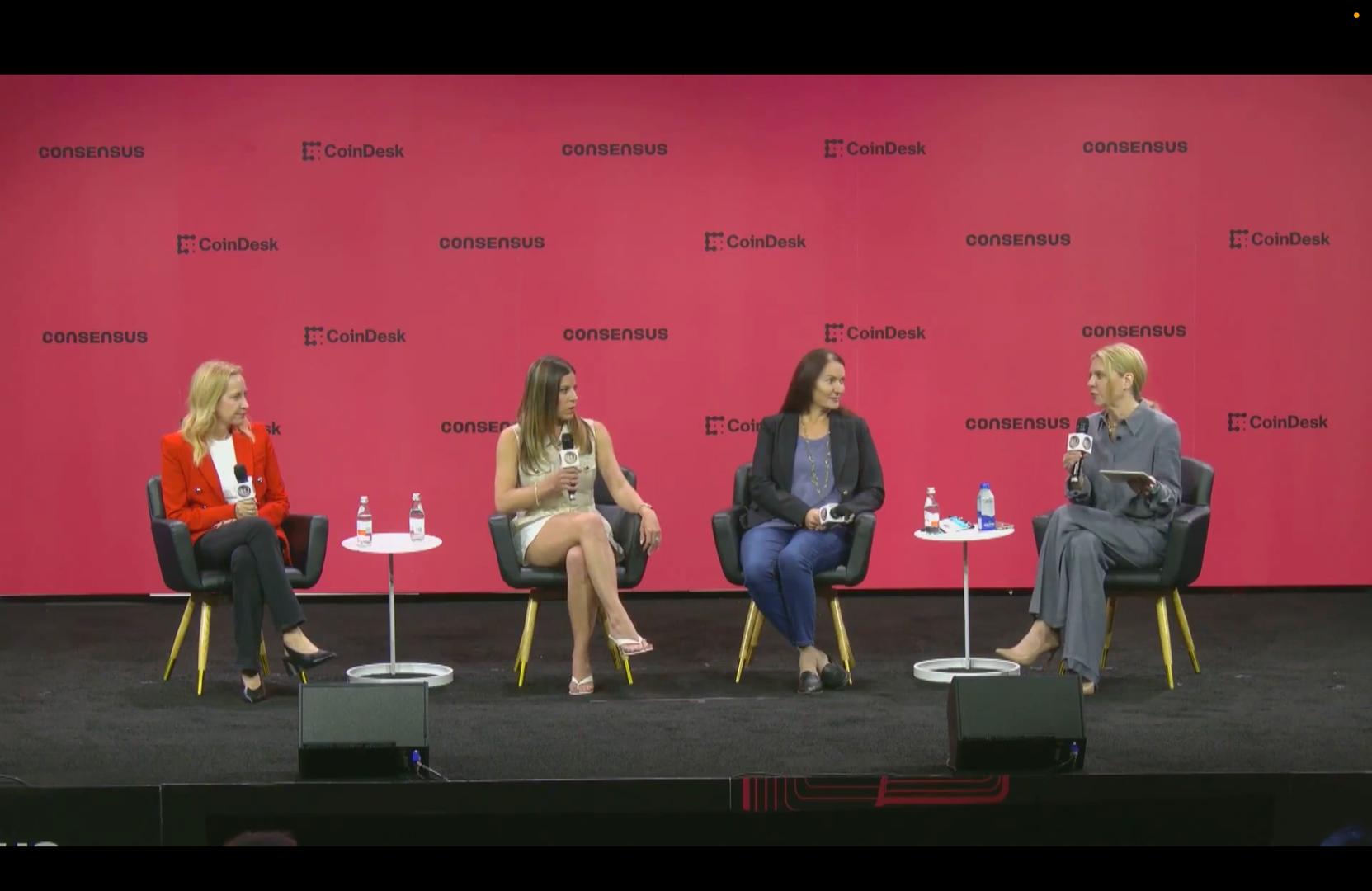
Senior leaders from Mastercard, the Crypto Council for Innovation and Clerisy stated at CoinDesk’s Consensus Miami conference on Tuesday that incorporating diverse voices into discussions on product development, policy and hiring can alter outcomes in the cryptocurrency sector.

The event, held on May 5, 2026, featured Mastercard SVP for Blockchain & Digital Assets Maja Lapcevic, Crypto Council for Innovation Chief Strategy Officer Alison Mangiero and Clerisy Co-Founder and Managing Partner Alexandra Wilkis Wilson as speakers.

CoinDesk reported these executives cited real-world examples where outside input reshaped internal strategies, from usability-focused crypto tools to refined policy positions on staking.

Lapcevic described how Mastercard’s crypto team initially prioritized infrastructure as the primary driver for crypto adoption. 'We probably all thought about infrastructure to be the winning formula for crypto,' she stated. An outside partner then assisted in shifting the focus toward making crypto more accessible and user-friendly, leading Mastercard to develop cards linked to stablecoins for users in markets with limited access to traditional financial services.

That partner 'actually really helped shed light on how we make crypto accessible, not complex, very simple to use,' Lapcevic added. This reframing moved the company beyond complex infrastructure to practical applications that address real-world financial exclusion.

CoinDesk reported this example illustrated how external perspectives can pivot a major firm's crypto strategy toward simplicity and broader adoption.

Mangiero explained that the Crypto Council for Innovation’s policy work on staking evolved after including builders of staking primitives in discussions. 'Sometimes we might think we understand, or we’ll put things into a bucket. We’ll take a shortcut and say, oh, that sounds like a fund.

Oh, that sounds like interest or yield, when in actuality what’s going on under the hood is different,' she stated. Following this input, the organization began describing staking as a technical service rather than a financialized product. Mangiero further noted the industry's current momentum in policy circles.

' she stated. She emphasized that effective policy requires reflecting diverse communities, including token holders and those building on blockchain networks, while protecting consumers and fostering innovation. Wilkis Wilson addressed diversity in hiring, pointing out a common bias where people tend to hire those who resemble themselves or evoke their younger selves.

'Many of us fall into a very comfortable bias of hiring people who not only might look like ourselves or remind you of your younger self,' she stated. She cited a 10-person startup where a Myers-Briggs analysis revealed eight extroverts on the team.

'It’s really important, when you’re growing teams, to not only bring in diversity on the outside, but also to think about diversity on the inside,' Wilkis Wilson added.

CoinDesk reported this example underscored the need for internal diversity to avoid echo chambers in expanding crypto teams. The panelists collectively highlighted how such inclusive approaches lead to more robust decisions across the sector. In related developments covered by CoinDesk at the conference, Kraken co-CEO Arjun Sethi stated that the cryptocurrency exchange is 80% ready for an initial public offering.

This announcement came amid discussions of industry growth and partnerships, including Kraken's collaboration with MoneyGram to facilitate crypto-to-cash conversions. Sethi's comment reflects ongoing preparations for public listing in the evolving crypto market.

Key Facts

Diverse voices reshape crypto decisions
Panelists at Consensus Miami cited examples where external input changed product focus, policy framing and hiring practices.
Mastercard's crypto shift
Company moved from infrastructure emphasis to usability, developing stablecoin-linked cards for underserved markets.
Staking policy evolution
Crypto Council for Innovation reframed staking as a technical service after builder discussions.
Hiring diversity emphasis
Clerisy executive highlighted biases and need for internal diversity, citing a startup with eight extroverts out of ten.
Kraken IPO readiness
Co-CEO stated the exchange is 80% prepared for a public offering.

Story Timeline

6 events
  1. 2026-05-05

    CoinDesk’s Consensus Miami conference occurred, featuring speakers Maja Lapcevic, Alison Mangiero and Alexandra Wilkis Wilson.

    1 sourceCoinDesk
  2. 2026-05-05

    Maja Lapcevic stated Mastercard initially viewed infrastructure as key to crypto adoption but shifted focus after partner input.

    1 sourceCoinDesk
  3. 2026-05-05

    Alison Mangiero described how staking policy changed after input from builders.

    1 sourceCoinDesk
  4. 2026-05-05

    Alexandra Wilkis Wilson discussed hiring biases and the need for internal diversity.

    1 sourceCoinDesk
  5. 2026-05-05

    Kraken co-CEO Arjun Sethi stated Kraken is 80% ready for an IPO.

    1 sourceCoinDesk
  6. prior to 2026-05-05

    A 10-person startup underwent Myers-Briggs analysis revealing eight extroverts.

    1 sourceCoinDesk

Potential Impact

  1. 01

    Increased adoption of user-friendly crypto tools like stablecoin cards in emerging markets.

  2. 02

    Shift in regulatory discussions on staking, potentially influencing U.S. policy frameworks.

  3. 03

    Greater emphasis on diverse hiring in crypto firms, leading to more innovative team structures.

  4. 04

    Broader industry consensus on balancing innovation with consumer protection.

Transparency Panel

Sources cross-referenced1
Confidence score70%
Synthesized bySubstrate AI
Word count529 words
PublishedMay 5, 2026, 9:57 PM
Bias signals removed4 across 4 outlets
Signal Breakdown
Loaded 1positive framing 1colloquial hype 1suggestive 1

Related Stories

Sen. Tim Scott Criticizes Fed Chair Powell's Plan to Stay After Term EndsThe United States Senate - Office of Senator Kelly Loeffler / Wikimedia (Public domain)
finance5 hrs agoFraming55Framing risk55/100Lede misdirection foregrounds Scott's criticism over Powell's substantive decision to stay on the Fed board amid investigations, burying the core event.Click to jump to full framing analysis

Sen. Tim Scott Criticizes Fed Chair Powell's Plan to Stay After Term Ends

Republican Sen. Tim Scott criticized Federal Reserve Chair Jerome Powell for planning to remain on the Fed's Board of Governors after his chair term ends on May 15, 2026. Scott said the move breaks 75 years of precedent and suggested it might be aimed at President Trump. Powell c…

cnbc.com
New York Post
RealClearPolitics
3 sources
finance1 hr ago

UAE Leaves OPEC After 60 Years of Membership, Reducing Group to 11 Producers

The United Arab Emirates departed the Organization of the Petroleum Exporting Countries on Tuesday, reducing the group's membership to 11 nations. OPEC members now account for about 33% of global crude oil output. The exit occurs amid high oil prices and the ongoing closure of th…

BBC News
The Guardian
OilPrice.com
3 sources
US, Japan, and South Korea Stock Indices Reach Record Highs Despite Iran War DisruptionsEuronews
finance3 hrs agoDeveloping

US, Japan, and South Korea Stock Indices Reach Record Highs Despite Iran War Disruptions

Major stock indices in the United States, Japan and South Korea reached new all-time highs this week, even as the war in Iran disrupts global energy markets and shipping routes. Oil prices stand at a four-year high, with 10-12 million barrels a day disrupted in the Strait of Horm…

Euronews
Semafor
2 sources