Escherichia coli Bacteria Spin Microscopic Pucks Without Physical Contact
Researchers have observed Escherichia coli bacteria rotating small pucks using only the motion of their cell bodies and tails. The bacteria maintain a distance from the pucks during this interaction. This finding provides new insights into bacterial locomotion and potential applications in microfluidics.
 NIAID / Wikimedia (Public domain)
Escherichia coli bacteria, commonly known as E. coli, have been observed spinning microscopic pucks without direct physical contact. According to a report in Nature, the bacteria achieve this rotation through the hydrodynamic effects generated by the rotation of their cell bodies and flagella, or tails.
The study demonstrates that these single-celled organisms can manipulate objects at a micrometer scale solely via fluid dynamics. The experiment involved placing E. coli bacteria in a controlled aqueous environment with small, disk-shaped pucks made of polystyrene.
The bacteria swam near the pucks, and their helical flagella propelled them in a way that induced rotational flow in the surrounding fluid. This flow caused the pucks to spin at speeds up to several rotations per second, as measured by high-speed imaging techniques. No physical touching occurred between the bacteria and the pucks, with distances maintained at approximately 10 to 20 micrometers.
The report states that the phenomenon relies on the bacteria's natural swimming patterns, which create torque in the fluid medium. Researchers used computational models to confirm that the observed spinning aligns with predictions from low Reynolds number hydrodynamics, where viscous forces dominate over inertial ones.
Implications for Biological and Engineering Fields This discovery highlights the capabilities of bacterial motility in non-contact manipulation, which could inform designs in synthetic biology and microscale robotics.
For instance, similar principles might be applied to develop tiny actuators or sensors that operate without mechanical linkages. The study also contributes to understanding how bacteria interact with their environment in natural settings, such as in biofilms or host tissues. The research was conducted using standard laboratory strains of E.
coli, ensuring reproducibility. Future experiments may explore variations in puck size, fluid viscosity, or bacterial density to quantify the limits of this interaction. As of the report's publication, no immediate applications have been implemented, but the findings open avenues for interdisciplinary research.
The stakes involve advancing knowledge in microbiology and potentially influencing fields like drug delivery systems, where precise control at the cellular level is essential. Affected parties include scientists in biophysics and engineers working on lab-on-a-chip technologies. Next steps likely include peer-reviewed validations and extensions to other bacterial species.
Story Timeline
2 events- 2026 (publication year inferred)
Nature reported observation of E. coli bacteria spinning microscopic pucks via hydrodynamic effects.
1 source@Nature - Prior to publication
Researchers conducted experiments using E. coli and polystyrene pucks in aqueous environments.
1 source@Nature
Potential Impact
- 01
Advances understanding of bacterial-environment interactions in natural and lab settings.
- 02
Informs development of microscale devices in synthetic biology and robotics.
- 03
Supports research into non-contact manipulation for microfluidics applications.
- 04
Encourages studies on other bacterial species for similar hydrodynamic behaviors.
Transparency Panel
Related Stories
 NASA Johnson Space Center / Wikimedia (Public domain)
NASA's Artemis II Completes First Manned Moon Mission Since 1972, Sets Distance Record
NASA's Artemis II mission completed a flight around the moon and splashed down in the Pacific Ocean on Saturday. The mission marks the first manned moon mission since 1972 and set a record for the furthest humans have travelled into space at 252,756 miles (406,771km). Meanwhile,…
 Science News
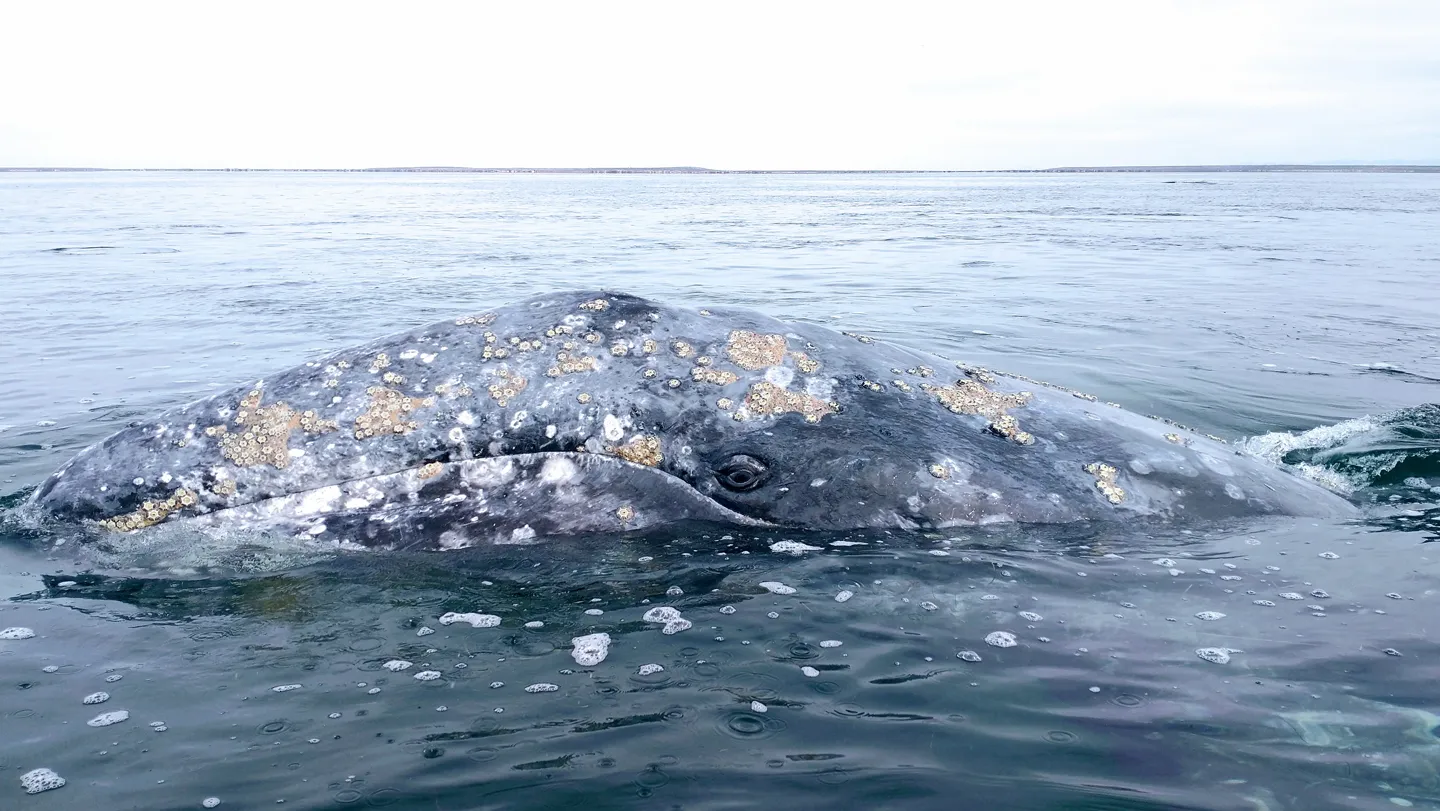
Nearly 1 in 5 Gray Whales Entering San Francisco Bay Die There, Study Finds
Researchers report that approximately 18 percent of photo-identified gray whales visiting San Francisco Bay from 2018 to 2025 died after entering the area. The deaths, often from vessel strikes, coincide with a population decline linked to reduced Arctic food availability. The fi…
 Stat
StatSpyre Therapeutics' SPY001 Drug Meets Primary Goal in Phase 2 Ulcerative Colitis Trial
Spyre Therapeutics announced positive results from the first batch of data in its Phase 2 SKYLINE study for SPY001, an experimental treatment for ulcerative colitis. The drug achieved a 9.2-point decrease in disease activity and induced remission in about 40% of participants afte…