Democrats Consider Independent Candidates in Several Republican-Leaning States
Democratic operatives in Nebraska, Montana, South Dakota, and Alaska are weighing support for independent Senate candidates over party nominees. The shift follows recent primaries and reflects concerns about the party's brand in conservative states.
 Washington Examiner
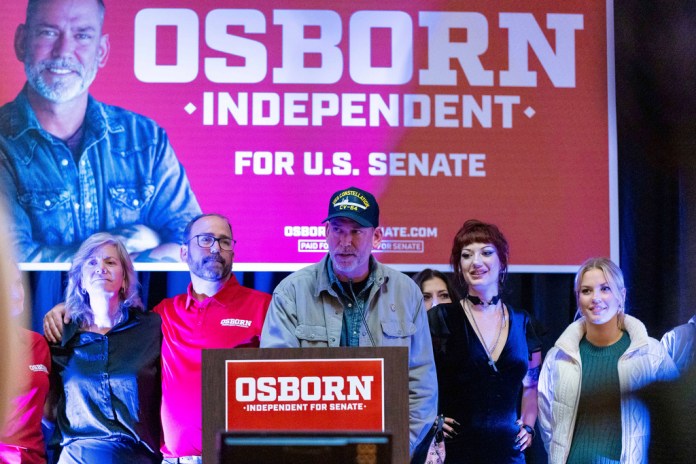
Democratic groups in multiple Republican-leaning states are exploring support for independent candidates in upcoming Senate races instead of their own nominees. In Nebraska, Democratic Senate candidate Cindy Burbank has signaled she may leave the race to consolidate support behind independent Dan Osborn. Osborn ran against Sen. Deb Fischer (R-NE) in 2024.
In Montana, independent candidate Seth Bodnar, former president of the University of Montana, raised more funds than the combined Democratic primary field and Republican nominee Kurt Alme. Democratic Senate candidate Alani Bankhead stated on Instagram this week that she will not drop out.
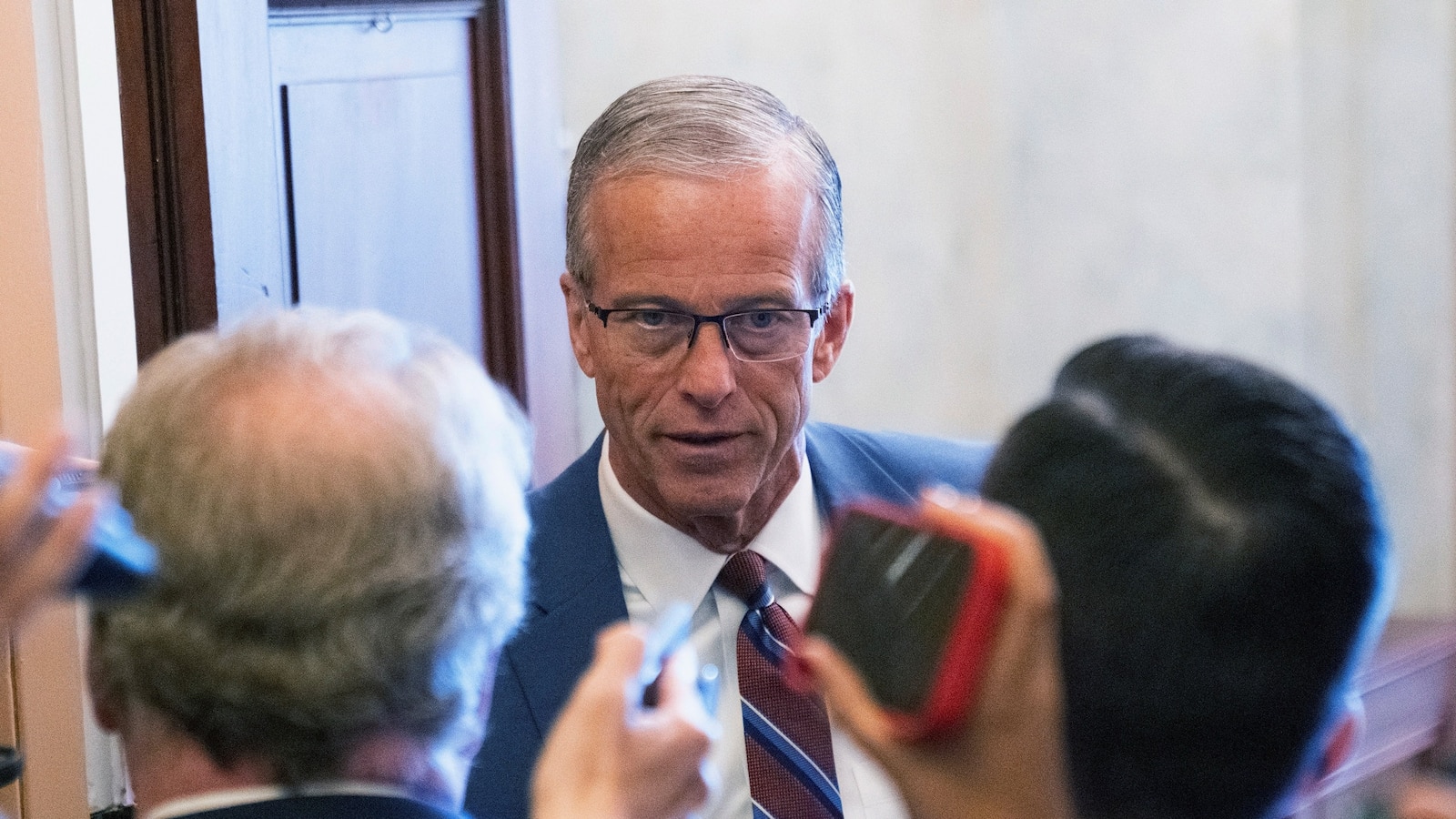
In South Dakota, some Democratic operatives have turned attention to independent Brian Bengs after the party nominated Julian Beaudion. Bengs previously ran against Senate Majority Leader John Thune (R-SD) as a Democrat in 2022.
In Alaska, independent candidate Bill Hill raised more than $780,000 in the first quarter, exceeding Democrat Matt Schultz's total. Delegates at the Alaska Democratic convention declined to endorse Schultz. ” Democratic strategist Jon Reinish noted that independent candidates carry no commitment to caucus with Democrats if elected.
Two independents currently serve in the Senate and both caucus with Democrats.
Transparency
Story details
Related Stories
 The Hill
Brown Leads Husted 53-45 in Ohio Senate Race, Fox News Poll Finds
A Fox News survey of 1,015 Ohio registered voters found 53 percent support for the Democratic Senate nominee and 45 percent for the Republican nominee. President Trump's favorability in the state stood at 42 percent.
 ABC News
Senate Republicans Advance $70 Billion Border Security Package
The Senate cleared a procedural vote Wednesday for a nearly $70 billion border and ICE funding measure. Amendments targeting a now-defunct $2 billion Justice Department fund could alter the bill's path.
 arstechnica.com
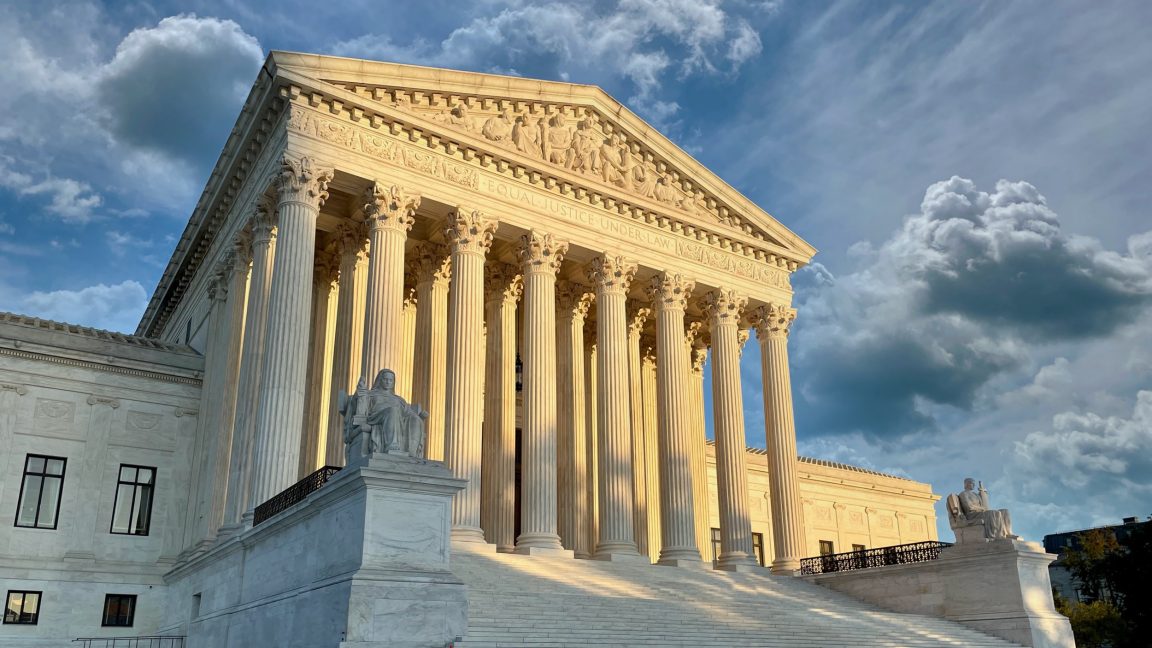
Supreme Court Allows FCC In-House Fines Against Wireless Carriers, Rejects Jury-Trial Challenge in 8-1 Ruling
The U.S. Supreme Court ruled 8-1 that the FCC can continue issuing initial penalties through internal proceedings. The decision resolves a split between appeals courts over AT&T and Verizon challenges.