Flooding on Hawaii's North Shore Raises Concerns Over Pesticide and Bacterial Contamination in Agricultural Areas
Severe flooding from late February to March on Hawaii's North Shore has led to contamination worries among residents and farmers, particularly regarding pesticides from upstream agriculture and bacteria in mud and water. State officials report that heavy rainfall likely diluted any pesticide risks, though test results are pending. The incident coincides with failed state legislation to restrict pe
 Los Angeles Times
Heavy rains from Kona low storms dumped 62 inches of water on Hawaii's North Shore between late February and March, causing widespread flooding that affected residential and agricultural areas. The storms delivered approximately 2 trillion gallons of rain statewide, leading to mud and debris accumulation on properties.
Residents in areas like Waialua have been cleaning up sludge amid concerns about exposure to farm chemicals from surrounding agriculture.
State health officials have issued contaminated water advisories for more than two weeks in flood-affected North Shore regions due to detected pathogens. Testing of mud and water samples revealed E. coli, salmonella, and enterococcus, which officials described as consistent with regional expectations.
Results for staph and campylobacter bacteria are still pending.
Contamination Risks and Testing Four sites on the North Shore have been tested for 22 legacy pesticides, including banned substances like DDT and heptachlor.
The Hawaii Department of Health anticipates results within two weeks. Officials state that the volume of floodwater likely diluted any pesticides to below hazardous levels. Qing Li, a professor at the University of Hawaii’s molecular bioscience and bioengineering department, assessed the pesticide risk as low due to dilution from 62 inches of rain.
Li, who specializes in agricultural chemistry, food, and human health, identified bacteria as the greater concern. The state is monitoring for additional health effects linked to pesticide exposure, such as neurological, respiratory illnesses, and cancers.
“— Qing Li, University of Hawaii professor, date not specified (Los Angeles Times)”
Impacts on Farming Operations Floodwaters have deposited mud on farms, destroying crops and machinery while threatening organic certifications. Organic farms require buffer zones, such as berms or 100-foot untended areas, to prevent pesticide drift from conventional agriculture. Some buffers may have failed during the extreme flooding, potentially contaminating organic lands. Organic farmers could lose U.S. Department of Agriculture certification and face a three-year wait to regain it after clearing land. The University of Hawaii College of Tropical Agriculture and Human Resilience is providing three months of free soil testing for affected farmers to check for nutrients, diseases, and pesticide residues. Testing details are being finalized, according to Patrick Williams, the college's communications director. Christian Zuckerman, vice president of the Hawaii Farmers Union, noted concerns over asphalt and roadway contaminants leaching into soils. Future harvests of leafy greens may absorb any residual pesticides, though dilution reduces this risk, said Esther Riechert, manager of the Hawaii pesticides branch. The union is planning recovery seminars with the North Shore Economic Vitality Partnership.
Regulatory Context The Hawaii Department of Agriculture regulates over 8,000 restricted-use pesticides, but does not track their specific locations or usage times. Several bills to enhance restrictions, including increased reporting and a ban on the fumigant 1,3-Dichloropropene (Telone) used by Dole Food Company Hawaii, failed in the current legislative session. One bill to digitize reports remains active. The Safe Farms, Safe Food coalition reported that over 400,000 pounds of carcinogenic fumigants and neurotoxic insecticides were used in the Wahiawa-Waialua region from 2020 to 2022, with about 300,000 pounds applied by Dole on 400 acres of pineapple lands. Telone is linked to cancer, respiratory problems, and neurological damage. Dole testified that a ban would reduce its Hawaii productivity by nearly 75%. At the federal level, recent steps promote domestic glyphosate production, a chemical associated with non-Hodgkin lymphoma and other cancers through multibillion-dollar lawsuits. The ongoing federal Farm Bill proposes relaxing pesticide labeling rules and potentially preempting state lawsuits against agrochemical companies. U.S. Rep. Jill Tokuda, a member of the House Agriculture Committee, stated that the bill favors Republican priorities despite some Democratic support. State Rep. Amy Perruso, who represents Wahiawa and Waialua, highlighted concerns over chemicals from upstream operations washing onto local lands. Anne Frederick, executive director of the Hawaii Alliance for Progressive Action, noted the influence of powerful interests in the failed Telone ban, which had nearly 3-to-1 testimony support.
Story Timeline
5 events- March 2024
State Department of Health issues contaminated water advisories due to detected bacteria in flood-affected areas.
1 sourceLos Angeles Times - Late February to March 2024
Kona low storms cause severe flooding on Hawaii's North Shore with 62 inches of rain.
1 sourceLos Angeles Times - 2024 legislative session
Hawaii lawmakers reject bills to restrict pesticide use, including a ban on Telone fumigant.
1 sourceLos Angeles Times - 2020-2022
Over 400,000 pounds of carcinogenic fumigants and neurotoxic insecticides used in Wahiawa-Waialua region.
1 sourceLos Angeles Times - Early 2024
Federal government promotes domestic glyphosate production amid ongoing Farm Bill negotiations.
1 sourceLos Angeles Times
Potential Impact
- 01
Federal Farm Bill relaxes labeling rules, influencing Hawaii's agrochemical regulations.
- 02
Organic farmers on North Shore lose USDA certification due to potential pesticide contamination.
- 03
Dole Food Company Hawaii continues Telone use on 400 acres without state ban.
- 04
Residents face health risks from bacteria like E. coli in flood mud and water.
- 05
Soil testing reveals residual pesticides, affecting leafy green harvests for up to three years.
- 06
Failed state bills maintain current pesticide reporting gaps, limiting usage tracking.
Multi-source corroboration verifies facts, not framing. This panel scores the Substrate rewrite you just read (top score) and the raw source bundle it came from. A positive delta means the rewrite stripped framing from the sources; a negative or zero delta means our neutralizer let some through.
Flood dilution and expert assessments indicate minimal pesticide threat, allowing farmers to recover operations with state support and maintain food production.
- Valence skewnotable“pesticides linked with cancers; anxiety amid polluted runoff; bills killed despite support”systematic negative adjectives on pesticides and regulationsAdjectives and adverbs systematically slant toward one interpretation even though the underlying facts are neutral.
- Selective sourcingminor“quotes from Rep. Perruso, Anne Frederick, Christian Zuckerman; no pro-agrochem voices”experts and advocates all highlight risks without balanceEvery quoted expert shares one viewpoint; no counter-expert is given meaningful space.
- Omitted counterpointminor“no mention of benefits from federal deregulation or industry productivity gains”ignores potential upsides of relaxed pesticide rulesA reasonable alternative reading of the facts isn't represented anywhere in the source bundle.
Transparency Panel
Related Stories
 NASA Johnson Space Center / Wikimedia (Public domain)
NASA's Artemis II Completes First Manned Moon Mission Since 1972, Sets Distance Record
NASA's Artemis II mission completed a flight around the moon and splashed down in the Pacific Ocean on Saturday. The mission marks the first manned moon mission since 1972 and set a record for the furthest humans have travelled into space at 252,756 miles (406,771km). Meanwhile,…
 Science News
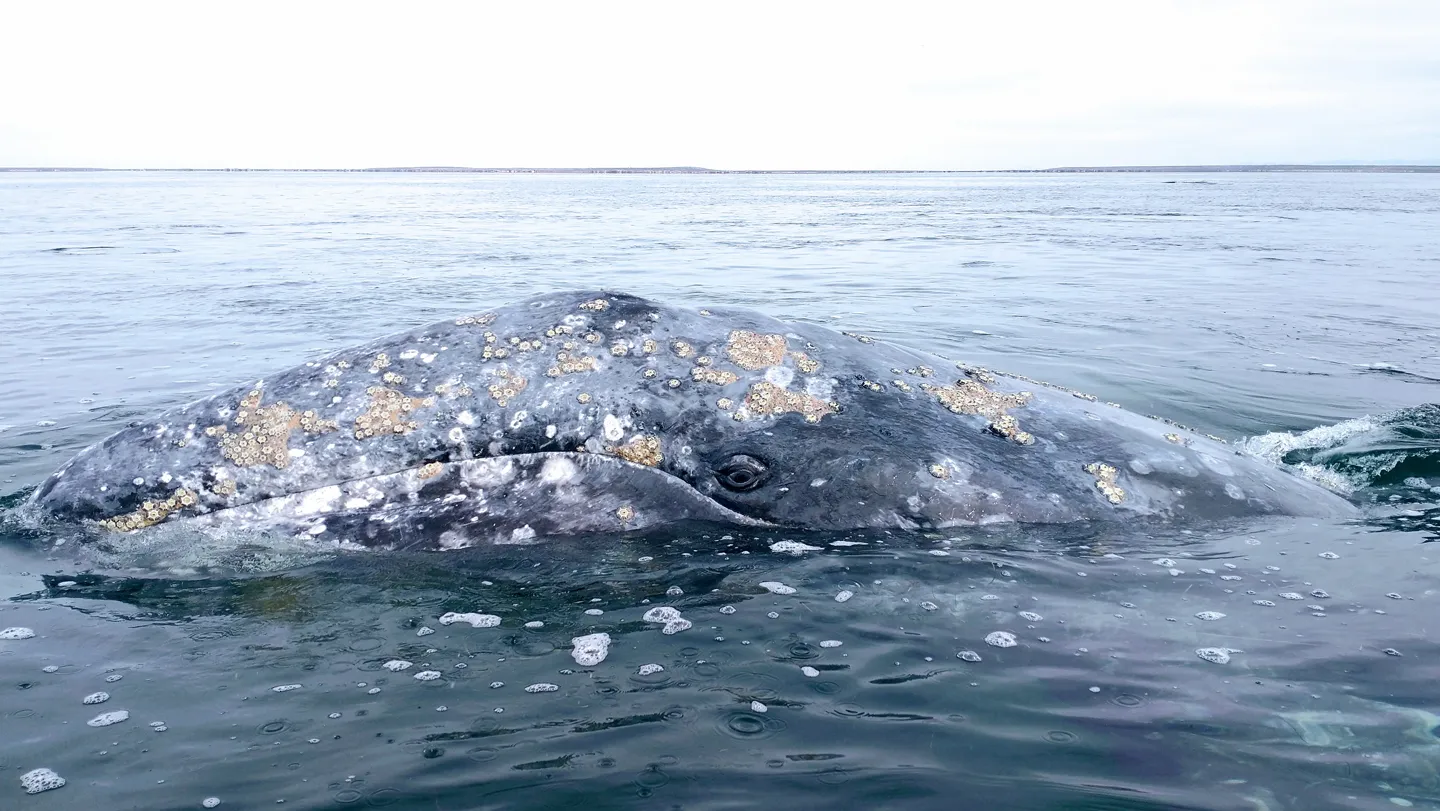
Nearly 1 in 5 Gray Whales Entering San Francisco Bay Die There, Study Finds
Researchers report that approximately 18 percent of photo-identified gray whales visiting San Francisco Bay from 2018 to 2025 died after entering the area. The deaths, often from vessel strikes, coincide with a population decline linked to reduced Arctic food availability. The fi…
 Stat
StatSpyre Therapeutics' SPY001 Drug Meets Primary Goal in Phase 2 Ulcerative Colitis Trial
Spyre Therapeutics announced positive results from the first batch of data in its Phase 2 SKYLINE study for SPY001, an experimental treatment for ulcerative colitis. The drug achieved a 9.2-point decrease in disease activity and induced remission in about 40% of participants afte…