Families Call for More Research into Progressive Supranuclear Palsy
Families of people diagnosed with progressive supranuclear palsy described the challenges of living with the rare neurological condition and called for greater awareness and research. The disease affects about 5,000 people in the UK and is often initially misdiagnosed as dementia or Parkinson's disease.
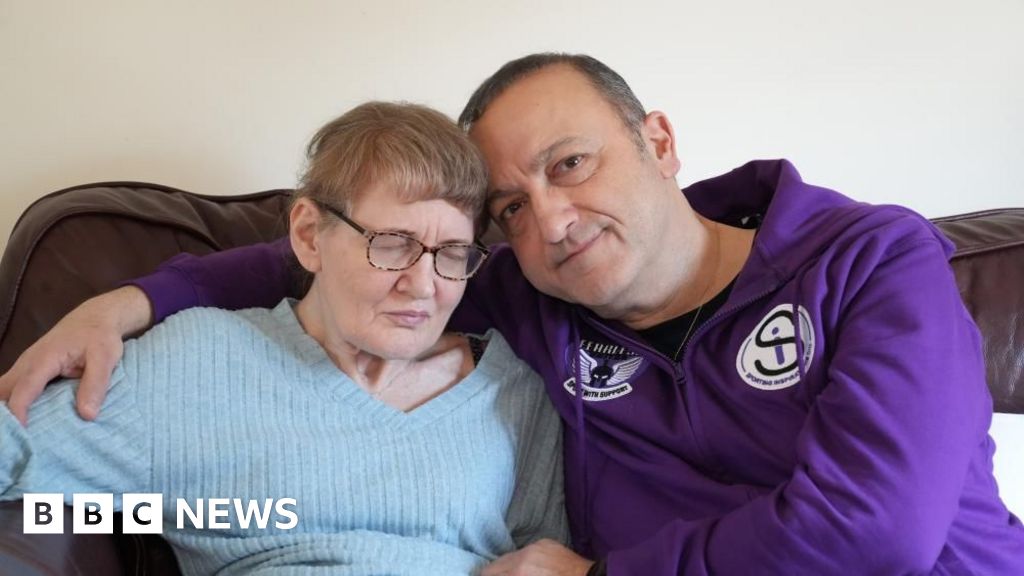
The BbcFamilies of people with progressive supranuclear palsy have called for more research into the rare degenerative neurological condition after several loved ones were initially misdiagnosed. One caregiver described living with someone who has the condition as feeling like drowning at times.
The disease affects balance, movement, speech and vision. It affects about 5,000 people in the UK. Symptoms were first noticed in one case in September 2022 and initially attributed to menopause. The person received an initial dementia diagnosis in 2023 before being correctly diagnosed with progressive supranuclear palsy earlier this year after assessment by a consultant neurologist at Addenbrooke's Hospital in Cambridge.
The patient, a mother of two and former head receptionist, now requires round-the-clock care. The caregiver called the experience heart-breaking, emotionally draining and a complete rollercoaster. "It's a rare illness, it's hard to diagnose and easier to misdiagnose," the caregiver added.
Another patient was diagnosed with progressive supranuclear palsy in 2022 after symptoms were first mistaken for Parkinson's disease. The 77-year-old had moved to Norfolk in 2008 for retirement, where he volunteered as a fireman and station master on a heritage railway and led ramblers' walks.
The couple later relocated again to be near their daughters due to his ill-health. He remains able to talk but cannot walk unaided, uses a wheelchair and needs help with personal care. His daughter said her father had been active, curious and fiercely independent.
She described the situation as a life lost for both her father and her mother, who is now his full-time carer. The patient said he misses the retirement he had planned, which included travel and time with loved ones. He still enjoys looking at photographs from trips to India, Australia, New Zealand and the USA.
Both families are participating in research at Addenbrooke's Hospital. One patient and his daughter have signed up to donate their brains and spinal cords for research after death. A consultant neurologist at the hospital who sees between 80 and 100 patients with the condition said early symptoms can be subtle and are often first linked to Parkinson's disease.
He noted that patients may not respond to Parkinson's treatments, which then leads to reconsideration of progressive supranuclear palsy. There is no medication that can slow the disease, though Parkinson's medication can help with symptoms. The chief executive of the charity PSPA, which supports people with progressive supranuclear palsy and corticobasal degeneration, said the progressive nature of the condition impacts balance, speech, vision, swallowing and mobility over time.
The charity reported that most people have never heard of it, including some in healthcare settings. "For one in three people, it takes over a year just to be referred to a neurologist, and 60% are misdiagnosed along the way," the chief executive said.
Earlier diagnosis allows for better care, support and time for families to plan. A Department of Health and Social Care spokesperson said steps are being taken to ensure those affected receive support as early as possible. The department is investing in the Rare Disease Research UK platform, which works with patients, relatives, charities and researchers to improve early assessment, diagnosis and treatment.
The families are seeking to raise awareness of the condition.
Key Facts
Story Timeline
5 events- September 2022
Family first noticed behavioural changes in one patient.
1 sourceThe Bbc - March 2023
Further behavioural changes observed following a car crash.
1 sourceThe Bbc - 2023
One patient initially diagnosed with dementia.
1 sourceThe Bbc - 2022
Second patient diagnosed with PSP after Parkinson's misdiagnosis.
1 sourceThe Bbc - January 2026
One patient correctly diagnosed with PSP earlier this year.
1 sourceThe Bbc
Potential Impact
- 01
Delayed diagnoses prevent timely access to appropriate care and support services.
- 02
Families experience prolonged emotional and practical caregiving burdens.
- 03
Brain and spinal cord donations will support future scientific study of the disease.
- 04
Increased research funding may improve diagnostic tools for rare neurological conditions.
Transparency Panel
Related Stories
tass.comEight Hantavirus Cases Confirmed on MV Hondius Cruise, Three Fatal
Health officials have confirmed eight cases of Andes hantavirus tied to an expedition cruise aboard the MV Hondius, with three deaths reported. The World Health Organization assesses the broader public health risk as low. An epidemiologist highlighted rapid spread of misinformati…
Al JazeeraIsrael Orders Evacuations in Southern Lebanon and Strikes Hezbollah Sites
The Israeli military issued forced displacement orders for nine towns and villages in southern Lebanon on Saturday while conducting strikes on more than 85 Hezbollah sites in 24 hours. The actions followed rocket fire toward Israeli forces. Israeli drone and artillery attacks wer…
thedrinksbusiness.comLVMH's Arnault Visits Seoul Stores as US Treasury Secretary Travels to Asia
LVMH Chairman and CEO Bernard Arnault is expected to visit South Korea next week for the first time in three years, touring newly opened Louis Vuitton outlets in major department stores. Separately, U.S. Treasury Secretary Scott Bessent plans a one-day stop in Seoul en route to C…