NASA's Artemis II Mission Completes Successful Crewed Journey to Moon and Back
The Artemis II mission involved four astronauts traveling 252,756 miles to the Moon and returning safely to Earth via splashdown in the Pacific Ocean. The crew, consisting of Reid Wiseman, Victor Glover, Christina Koch, and Jeremy Hansen, conducted a test flight of the spacecraft and rocket. The mission marked the first human spaceflight on these systems since Apollo.
 NASA Headquarters / NASA/Aubrey Gemignani / Wikimedia (Public domain)
The Artemis II mission launched four astronauts from the Kennedy Space Center in Florida aboard a 98-meter-tall rocket. This test flight represented the first time humans flew on both the rocket and spacecraft since the Apollo program.
During the ascent, the rocket's boosters and engines produced a deafening roar and a force that observers felt physically. Live video from inside the capsule showed the astronauts adapting to microgravity in a confined space comparable to a minibus.
The crew had no privacy and shared facilities, including a $23 million Universal Waste Management System that experienced plumbing issues, requiring contingency urine devices.
Journey to the Moon After launch, the crew viewed Earth from space, with Victor Glover stating that the planet looked beautiful.
The spacecraft's main engine burn initiated a 250,000-mile journey to the Moon. En route, the astronauts broke Apollo 13's record for the furthest distance traveled from Earth by humans. The crew captured thousands of images and audio descriptions of the lunar surface during their close approach.
They named a visible crater on the Moon after Carroll, the late wife of commander Reid Wiseman, leading to an emotional moment among the team. Messages from Apollo astronauts Charlie Duke and Jim Lovell were played to the crew during the flight.
Mission Control and Risks At the Johnson Space Center in Houston, mission control monitored spacecraft systems including navigation and life support.
The team managed data streams to ensure the test flight's success, acknowledging inherent risks. Before launch, Jeremy Hansen discussed with his family the possibility of not returning, and Reid Wiseman had similar conversations with his daughters as a single father.
NASA's administrator Jared Isaacman emphasized building on Apollo's legacy with plans for a 2028 lunar landing, a Moon base, and eventual Mars missions.
He stated that human exploration involves risks but is essential. The mission's total estimated cost was $93 billion.
Return and Splashdown The return phase involved re-entry through Earth's atmosphere, reaching temperatures half as hot as the Sun's surface.
Communications dropped for six minutes during descent, causing tension in mission control. " Celebrations erupted in mission control upon confirmation of the safe return. The crew, now back on Earth, described the experience as extraordinary and noted their close bonds formed during the mission.
Christina Koch highlighted the camaraderie, comparing the team to family. The astronauts are scheduled to return to Houston following the splashdown. The mission lasted 10 days and drew global attention through live streams and media briefings.
Story Timeline
5 events- Recent — splashdown in Pacific Ocean
Crew capsule splashed down safely after re-entry and parachute deployment.
2 sourcesThe BBC · The New York Times - 10 days ago — launch from Kennedy Space Center
Rocket carrying four astronauts lifted off for the Moon journey.
2 sourcesThe BBC · The New York Times - During mission — lunar close approach
Astronauts imaged lunar surface and named a crater after Carroll.
1 sourceThe BBC - En route to Moon — record-breaking distance
Crew traveled 252,756 miles, surpassing Apollo 13's distance record.
1 sourceThe BBC - Post-launch — Earth view
Victor Glover commented on Earth's appearance from space.
1 sourceThe BBC
Potential Impact
- 01
Test flight validates rocket and spacecraft for future crewed flights.
- 02
NASA advances plans for 2028 lunar landing mission.
- 03
Path opens for human missions to Mars in subsequent decades.
- 04
Mission data supports development of Moon base infrastructure.
- 05
Global interest increases funding support for space exploration programs.
- 06
Crew experiences inform improvements to spacecraft life support systems.
Transparency Panel
Related Stories
 NASA Johnson Space Center / Wikimedia (Public domain)
NASA's Artemis II Completes First Manned Moon Mission Since 1972, Sets Distance Record
NASA's Artemis II mission completed a flight around the moon and splashed down in the Pacific Ocean on Saturday. The mission marks the first manned moon mission since 1972 and set a record for the furthest humans have travelled into space at 252,756 miles (406,771km). Meanwhile,…
 Science News
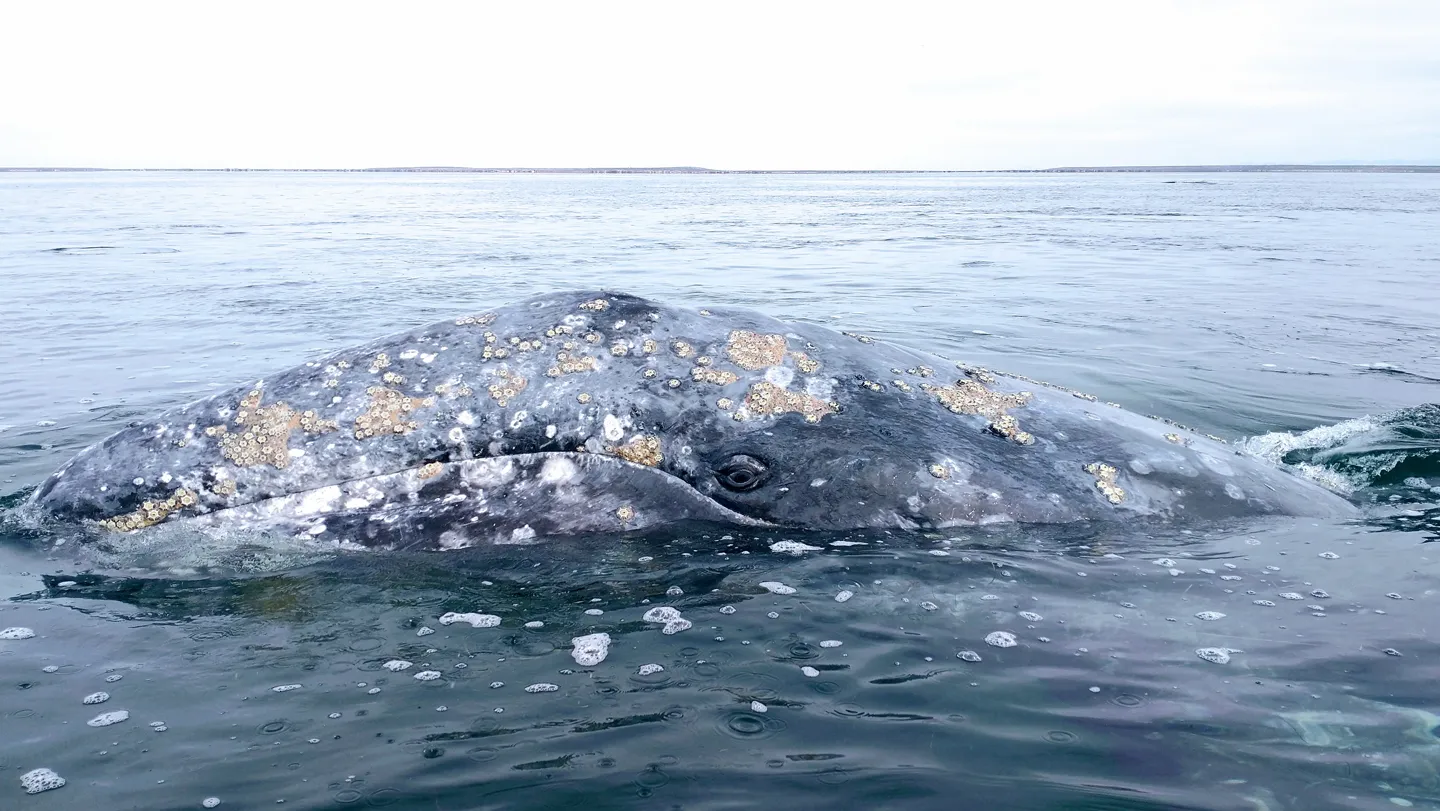
Nearly 1 in 5 Gray Whales Entering San Francisco Bay Die There, Study Finds
Researchers report that approximately 18 percent of photo-identified gray whales visiting San Francisco Bay from 2018 to 2025 died after entering the area. The deaths, often from vessel strikes, coincide with a population decline linked to reduced Arctic food availability. The fi…
 Stat
StatSpyre Therapeutics' SPY001 Drug Meets Primary Goal in Phase 2 Ulcerative Colitis Trial
Spyre Therapeutics announced positive results from the first batch of data in its Phase 2 SKYLINE study for SPY001, an experimental treatment for ulcerative colitis. The drug achieved a 9.2-point decrease in disease activity and induced remission in about 40% of participants afte…