Unbiased AI-powered news
Forbes has compiled excerpts from interviews conducted over more than a century with American business figures including Henry Ford, Thomas Edison and Sam Walton. The collection, released on February 12, 2026, presents the individuals' own words on innovation, business strategy and their visions for the future.
forbes.comForbes reported on February 12, 2026, that it had assembled a collection of its interviews with prominent American business figures spanning more than a century. The publication presented excerpts in which the individuals discussed their approaches to innovation, operations and future opportunities.
The earliest entry is from January 1928, when Henry Ford addressed the development of the Model A following the end of Model T production in 1927. Ford Motor Company had introduced the new model to compete with Chevrolet. "We didn’t start from Model T and attempt to improve that.
We started from scratch. " Ford said in the Forbes interview on January 1, 1928. In 1929, Thomas Edison spoke with Forbes about electrical power and untapped energy sources including solar power. The 82-year-old inventor addressed his ongoing work and dismissed certain technologies of the period.
"I have done enough to make me 115 years old, working as other men do. And I hope to keep on for 20 years more," Edison said on June 15, 1929.
, president of IBM from 1914 to 1952, discussed business ethics with Forbes in April 1930 at the start of the Depression. Watson, who built the company into a global technology firm, emphasized practical decision-making. "No one has to be a genius to succeed in business.
One does not have to lie awake nights worrying about his job," Watson said on April 1, 1930. In an October 15, 1942, interview, Kaiser outlined a philosophy of action and improvisation. Three years after the war, he founded what became Kaiser Permanente to provide health care for his employees.
"When you’re in trouble, do something—even if it may be wrong," Kaiser said.
Lear discussed the success of his Learjet company in an April 15, 1966, Forbes interview. The engineer, who also developed the 8-track audio cartridge, had predicted far higher sales of business jets than industry forecasters. "They were wrong. I was right.
Even the most optimistic forecasters in 1961 were predicting a maximum of 300 business jets would be sold. I predicted 3,000 through 1975," Lear said. That same year, Ruth Handler of Mattel addressed production challenges with the Barbie doll, which her husband Elliot Handler had cofounded the company to produce in 1945.
The doll was named after their daughter Barbara. Handler described missteps in building a new plant and outsourcing manufacturing. "We had underestimated the communication and control problems, and we incurred operating expenses that could only have been justified on a plant twice the size," she said on June 15, 1966.
In 1977, Sam Walton, who had cofounded Walmart 15 years earlier, spent a day with Forbes at a Missouri store. The company’s stock had risen more than 700 percent since going public seven years prior. Walton attributed success to his team. "It’s a mistake to think this is a one-man company.
We have a big accumulation of talent," he said on December 1, 1977.
Milken explained his approach to finance in an August 25, 1986, Forbes interview. At Drexel Burnham Lambert, he had developed high-yield bonds that financed leveraged buyouts. Milken described finance as an art focused on future companies and management capability.
"The scarce resource today is management, knowledge, vision, dealing with change," Milken said. In 1991, Microsoft cofounder Bill Gates, then 35, discussed the company’s operating system strategy with Forbes. At the time, MS-DOS was the standard on most personal computers and Windows 3.0 was gaining adoption.
"Believe me, it was not IBM who made MS-DOS the standard. It was up to us to get people to focus their development on it," Gates said. The compilation includes additional figures through Elon Musk and presents their statements without added commentary.
Single source — no framing comparison available.
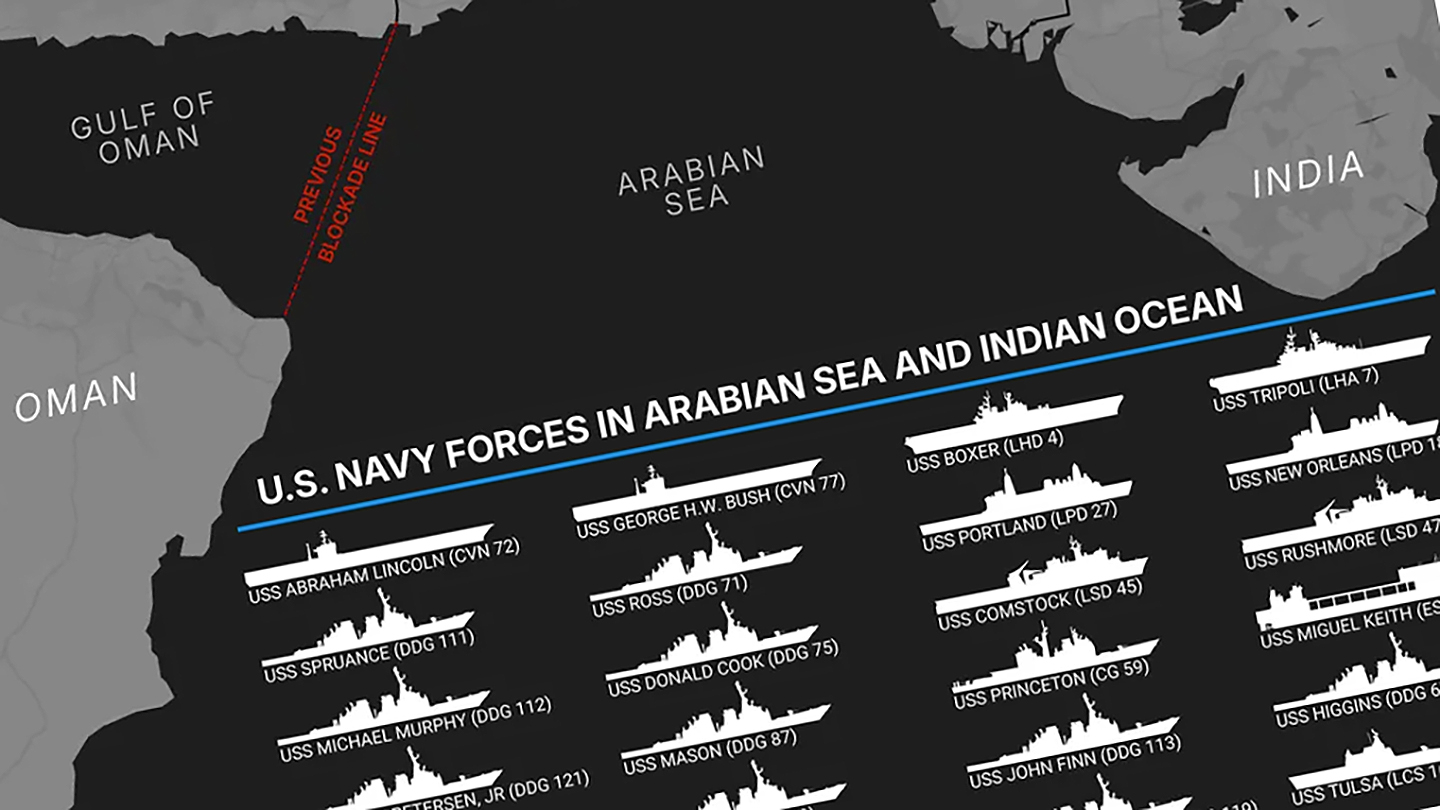
The War ZoneThe United States reinstated a naval blockade of Iran on July 14, 2026 at 2000 GMT. The measure applies to all vessels regardless of flag and covers every Iranian port and oil terminal. U.S. Central Command reported two commercial vessels redirected and one kinetically disabled i…
uctoday.comSenior defense officials have examined early-stage plans for possible military action against Cuba, including an air assault by the 101st Airborne Division. The review comes as Cuba's power grid has failed for the third time in ten days, leaving millions without electricity.
nbcnews.comThe U.S. military conducted a second round of strikes on Iranian targets on July 15, 2026. The attacks focused on sites used to threaten shipping through the Strait of Hormuz.