Substrate
science

Gene Conversion Helps Amazon Molly Persist Asexually for ~100,000 Years, Study Finds

A new study shows the all-female Amazon molly uses frequent gene conversion to limit harmful mutations, offering an alternative to sexual reproduction for maintaining genome health.

bbc.com
1 source·Jun 2, 6:00 AM·2m read
Gene Conversion Helps Amazon Molly Persist Asexually for ~100,000 Years, Study Findsbbc.com
Audio version
Tap play to generate a narrated version.
Developing·Limited corroboration so far. This page will refresh as more sources emerge.

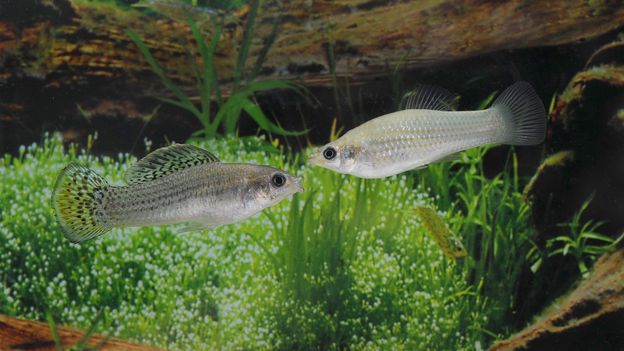
The Amazon molly, an all-female fish species living in the rivers of Mexico and southern Texas, has persisted for around 100,000 years without males. It reproduces via gynogenesis, using sperm from males of related species only to trigger egg development while discarding the male DNA and producing only daughters that are clones of the mother.

A new study used whole-genome sequencing to compare the DNA of Amazon mollies across generations.

The research found that sections of the species' DNA have been repeatedly overwritten by gene conversion occurring more frequently than in most other animals. Edward Ricemeyer, computational biologist at the Ludwig Maximilian University of Munich in Germany and co-author of the study, said gene conversion is doing something similar for the molly's genome to what sex does for sexual species by limiting the accumulation of harmful mutations.

He said gene conversion occurs more often in parts of the genome where the most deleterious mutations are expected.

"The kinds of mutations that you expect to be the worst, the most dangerous, the most deleterious, those are the exact places in the genome where we see gene conversion happening the most often," Ricemeyer said. The Amazon molly arose from a hybridization event around 100,000 years ago between a female Atlantic molly and a male sailfin molly.

It carries genetic material from both ancestral species, providing high genetic variation from the outset.

Male sailfin mollies can provide the Amazon molly with sperm but cannot pass their genes to the offspring. Gene conversion is a form of genetic repair that uses one copy of a gene as a template to repair the other and occurs in many organisms including humans. "The theory has been missing a piece.

And this piece was gene conversion," Ricemeyer said. "We thought sexual reproduction was the only proper way to keep a genome healthy… But now we found out that no, there's another way too. " In sexual species, harmful mutations can be shuffled out of the gene pool via recombination, but in clonal species they accumulate according to Muller's ratchet.

Bdelloid rotifers have existed for tens of millions of years without males. Chiara Boschetti, a leading rotifer expert and zoology lecturer at the University of Plymouth in the UK, said bdelloid rotifers acquire DNA from unrelated organisms via horizontal gene transfer. They can survive being dried, cooked, frozen for 24,000 years in Siberian permafrost, and spaceflight.

" he said.

Transparency

Confidence65%

Reported by a single outlet. This score reflects source tier and factual specificity — corroboration is limited with one source.

Story details

Related Stories

WHO Reports 330 Confirmed Ebola Cases and 49 Deaths as Suspected Tally Falls to 116France 24
science4 hrs agoUpdated

WHO Reports 330 Confirmed Ebola Cases and 49 Deaths as Suspected Tally Falls to 116

The World Health Organization on Tuesday lowered its count of suspected Ebola cases from 906 to 116 after testing ruled out other illnesses. Confirmed cases stand at 330 across the Democratic Republic of Congo and Uganda.

France 24
New York Post
Forbes
Reuters
5 sources
Ebola Response Expands in Eastern DRC Despite Equipment and Tracing Challengeswsws.org
science4 hrs ago

Ebola Response Expands in Eastern DRC Despite Equipment and Tracing Challenges

Dr. Abdou Sebushishe of the International Medical Corps told CNN that efforts to contain the outbreak are growing while protective gear, contact tracing, and public trust remain limited.

Cnn
1 source
**Judge Temporarily Blocks NSF Supercomputer Transfer from NCAR**The Hill
science4 hrs ago

**Judge Temporarily Blocks NSF Supercomputer Transfer from NCAR**

A federal judge issued a preliminary injunction blocking the transfer of a supercomputer used for climate and weather research. The ruling preserves operations at the National Center for Atmospheric Research in Boulder pending further review.

The Hill
Washington Examiner
2 sources