Germany Disputes US Decision to Cancel Long-Range Missile Deployment
The German Ministry of Defense stated there has been no definitive cancellation of plans to station a U.S. Army long-range fires battalion equipped with SM-6, Tomahawk, and hypersonic missiles in the country. The uncertainty follows a rift between Berlin and Washington over the Iran conflict and tariffs, which prompted the U.S. to withdraw 5,000 troops from Germany.
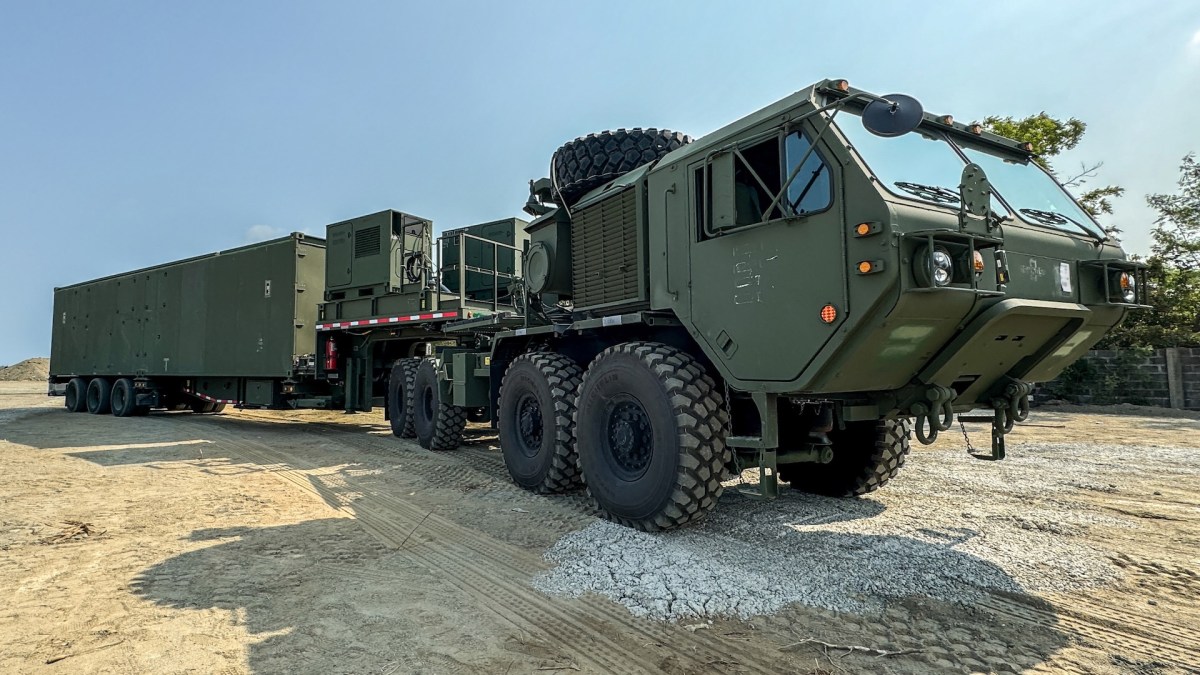
The War ZoneThe German Ministry of Defense said on Wednesday there had been no definitive cancellation by the United States of plans to deploy a long-range fires battalion equipped with advanced conventionally armed missiles to German soil. A ministry spokesperson told Reuters the weapons systems were meant to be stationed in Germany and may well still arrive.
At the same time, the spokesperson confirmed European nations were preparing to procure their own systems should the U.S. missiles not materialize. The clarification came after multiple outlets reported over the weekend that the Pentagon had abandoned deployment of the 2nd Multi-Domain Task Force, or 2MDTF, to Germany.
The unit was slated to provide SM-6, Tomahawk cruise missiles, PrSM precision strike missiles and developmental hypersonic weapons including the Dark Eagle. These systems offer ranges from roughly 300 miles for the PrSM up to more than 1,700 miles for the Dark Eagle, far exceeding the roughly 186-mile reach of the Army Tactical Missile System currently in Europe.
The apparent reversal follows a deterioration in relations between Berlin and Washington. The U.S. announced it would reduce its military presence in Germany by 5,000 soldiers, representing 14 percent of the 36,000 U.S. troops stationed there. Pentagon spokesman Sean Parnell said the decision followed a review of force posture in Europe and reflected theater requirements.
The withdrawal is expected to occur over the next six to 12 months. Tensions escalated after German Chancellor Friedrich Merz criticized President Donald Trump’s handling of the Iran conflict, stating the United States was being humiliated by Iranian leadership.
Trump has also pressed NATO allies over their level of support during that conflict and has previously discussed reducing the U.S. commitment to the alliance.
Plans for the long-range missile deployment originated under the previous Biden administration. In 2024 the United States and Germany agreed the systems would demonstrate Washington’s commitment to NATO and European integrated deterrence. The weapons were to begin with episodic deployments in 2026 before shifting to longer-term stationing.
The ground-launched SM-6 can function as a quasi-ballistic missile against land and sea targets while the Tomahawk holds targets at risk up to 1,000 miles away. These capabilities were viewed as necessary to counter Russian long-range strike systems.
Russia has deployed the Oreshnik intermediate-range ballistic missile against Ukraine, tested the 9M729 cruise missile that led to the U.S. withdrawal from the Intermediate-Range Nuclear Forces Treaty in 2019, and moved Iskander missiles and nuclear-capable systems closer to NATO’s eastern flank.
The INF Treaty, signed in 1987, had barred ground-launched missiles with ranges between 310 and 3,420 miles until both sides withdrew.
Even as uncertainty surrounds the U.S. deployment, European NATO members are moving to develop their own standoff capabilities. Interim measures could include range-extension kits for existing Storm Shadow, Taurus and MdCN cruise missiles. France announced in late April it would restart production of the MdCN naval cruise missile.
European nations are also eyeing off-the-shelf options from South Korea, Turkey or Ukraine. Longer-term efforts center on the European Long-Range Strike Approach involving France, Germany, Italy, Poland, Sweden and the United Kingdom. The program aims to field a new missile or family of missiles with ranges between 621 and 1,243 miles by the 2030s.
Separately, Germany and the United Kingdom agreed last year to jointly develop a deep precision strike weapon with a range exceeding 1,243 miles, though industrial arrangements have not been finalized. Senator Roger Wicker and Representative Mike Rogers said the moves risked undermining deterrence and sending the wrong signal to Vladimir Putin.
The European Council on Foreign Relations assessed that the 2MDTF would likely remain assigned to the European theater and could still appear in another European country. Without the U.S. systems, however, NATO allies in Europe remain outnumbered and outranged by Russian long-range fires, a gap compounded by the slow pace of European defense programs and competing U.S. demands for munitions.
The current confusion leaves open questions about the precise mix of long-range fires available to deter Russia in the near term. The 2MDTF was intended as an interim solution while European programs matured. Its potential absence accelerates pressure on allies to close the capability gap independently at a time when Russian forces continue to test new systems in Ukraine.
The troop reduction and missile uncertainty mark the latest friction point in transatlantic relations. President Trump has long advocated for greater burden-sharing within NATO and has tied U.S. presence in Europe to allied support on other security priorities.
How the missile deployment ultimately resolves will shape both immediate conventional deterrence posture and longer-term European strategic autonomy.
Key Facts
Story Timeline
5 events- May 2026
German Defense Ministry states no definitive U.S. cancellation of long-range missile deployment to Germany.
1 sourceThe War Zone - May 2026
Pentagon announces withdrawal of 5,000 U.S. troops from Germany over six to 12 months.
1 sourceThe War Zone - Weekend prior to May 7 2026
Multiple outlets report Pentagon decision to abandon 2MDTF missile deployment to Germany.
1 sourceThe War Zone - March 3 2026
President Trump meets with German Chancellor Friedrich Merz at the White House.
1 sourceThe War Zone - 2024
U.S. and Germany announce plans for long-term stationing of long-range missiles beginning in 2026.
1 sourceThe War Zone
Potential Impact
- 01
European NATO nations will accelerate procurement of long-range strike systems including MdCN and joint UK-German projects.
- 02
European defense industrial cooperation on missiles will likely increase in pace and scope.
- 03
U.S. troop levels in Germany will decline by 5,000 personnel over the next year.
- 04
NATO's conventional long-range strike capability in Europe faces a near-term gap versus Russian systems.
- 05
The 2MDTF may be reassigned to another European country instead of Germany.
Transparency Panel
Related Stories
france24.comRussia and Ukraine Exchange Strikes After Kyiv Declares Unilateral Ceasefire
Moscow proposed a two-day truce from Friday to mark Victory Day while unilaterally declaring a ceasefire from May 8 to 10. Ukrainian officials said Russia ignored Kyiv's open-ended ceasefire and carried out fresh strikes that killed 27 people on Tuesday including two at a Sumy ki…
inquisitr.comU.S. Trade Court Rules Trump’s 10% Global Tariff Exceeds Authority Under 1974 Trade Act
The U.S. Court of International Trade ruled 2-1 on May 7, 2026, that President Donald Trump’s across-the-board 10% tariffs on most imports were not justified under a 1970s trade law. The decision favored small businesses that challenged the tariffs, which took effect Feb. 24. One…
Fox NewsChief Justice Roberts: Supreme Court Justices Are Not Political Actors
Chief Justice John Roberts told a judicial conference that the public misunderstands the Supreme Court as making policy rather than interpreting law. His remarks came days after the court struck down a majority-Black congressional district in Louisiana as an unconstitutional raci…