Chief Justice Roberts: Supreme Court Justices Are Not Political Actors
Chief Justice John Roberts told a judicial conference that the public misunderstands the Supreme Court as making policy rather than interpreting law. His remarks came days after the court struck down a majority-Black congressional district in Louisiana as an unconstitutional racial gerrymander.
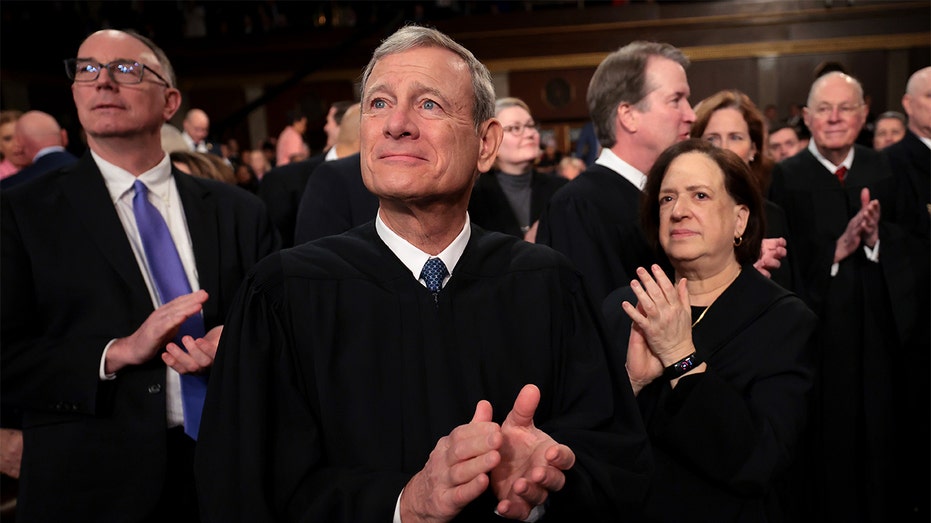 Fox News
Chief Justice John Roberts said Supreme Court justices are not political actors and that their decisions rest on what the law requires rather than policy preferences. Circuit in Hershey, Pennsylvania, Roberts addressed what he described as a basic misunderstanding of the court's role.
"I think, at a very basic level, people think we’re making policy decisions, we’re saying we think this is how things should be, as opposed to what the law provides," Roberts said. The decision narrowed application of Section 2 of the Voting Rights Act, which had been used to create majority-minority districts in several states.
Justice Samuel Alito wrote the majority opinion holding that while the Voting Rights Act can sometimes justify race-based districting, it did not require Louisiana to draw the challenged map. The ruling focused on intentional discrimination rather than disparate impact and took note of increased minority voter participation in the South.
Justice Clarence Thomas, joined by Justice Neil Gorsuch, concurred but argued the court should go further. Thomas maintained that Section 2 of the Voting Rights Act does not cover districting at all and urged the court to stop entertaining such challenges, citing his 1994 opinion in Holder v.
Hall. "Districting systems and electoral mechanisms that may affect the ‘weight’ given to a ballot duly cast and counted are simply beyond the purview of the Act," Thomas wrote in that earlier opinion, which he referenced again in Louisiana v. Callais.
Roberts did not discuss any specific ruling in his remarks but acknowledged that the court must sometimes issue unpopular decisions. He said opinions are grounded in the Constitution even when outcomes provoke disagreement. "One thing we have to do is make decisions that are unpopular," he said.
"Considered criticism is a very good thing. You hope it’s intelligent criticism, but it doesn’t have to be. " He drew a line, however, at criticism that shifts from rulings to personal attacks on judges. Such rhetoric, he warned, can create serious problems.
"There’s a lot of hostility that’s publicized about judicial decisions and which judge wrote those decisions," Roberts said. >"I think, at a very basic level, people think we’re making policy decisions, we’re saying we think this is how things should be, as opposed to what the law provides.
Public approval of the court fell to 40 percent after the 2022 abortion ruling before rebounding somewhat. Three justices appointed by President Donald Trump during his first term — Neil Gorsuch, Brett Kavanaugh and Amy Coney Barrett — form part of the current 6-3 conservative majority.
Roberts emphasized that justices wear black robes, not partisan colors, and that bowing to political pressure would undermine the judicial system. "If you do it cavalierly, overrule precedent just because you think it’s wrong, then the whole system begins to suffer," he said.
The chief justice added that the court is "simply not part of the political process" and exists to interpret the Constitution as it applies to existing law.
Key Facts
Story Timeline
3 events- May 6, 2026
Chief Justice Roberts addressed a judicial conference in Pennsylvania on the Supreme Court's role.
3 sourcesFortune Magazine · Fox News - Late April 2026
Supreme Court ruled in Louisiana v. Callais that a majority-Black district was an unconstitutional racial gerrymander.
3 sourcesFortune Magazine · The Federalist · Fox News - May 7, 2026
Multiple outlets published coverage of Roberts' remarks and the recent Voting Rights Act decision.
3 sourcesFortune Magazine · The Federalist · Fox News
Potential Impact
- 01
Additional states are likely to redraw congressional maps following the Louisiana ruling.
- 02
Fewer majority-minority districts may be drawn in future redistricting cycles.
- 03
Litigation volume over Section 2 of the Voting Rights Act will increase in lower courts.
- 04
Public debate over the Supreme Court's perceived partisanship will continue.
Transparency Panel
Related Stories
 Substrate placeholder — needs review
Trump Endorses Jackson Lahmeyer in Oklahoma 1st Congressional District Republican Primary
President Donald Trump announced his full endorsement of Jackson Lahmeyer, a pastor and business leader running to succeed Rep. Kevin Hern. Trump detailed the candidate’s expected priorities on the economy, border security, energy and the Second Amendment in a Truth Social post.…
Substrate placeholder — needs reviewState Department Reviews All 53 Mexican Consulates After Deaths of Two CIA Officers in Mexico
The review, disclosed Thursday, comes amid heightened tensions following the deaths of two American CIA officers in a northern Mexico counter-narcotics operation last month. Mexican President Claudia Sheinbaum has demanded explanations and requested evidence on U.S. charges again…
 Fox News
Trump Suggests Iranians Would Resist if Armed
President Trump said this week that Iranians would fight back against the government if they had weapons. The remarks have prompted discussion among Iranian dissidents, some Republican lawmakers and analysts about whether the United States should support armed resistance inside I…