science
Global Fungal Network Spans 110 Quadrillion Kilometers, Study Finds
Machine learning models mapped arbuscular mycorrhizal fungi that move 4 billion metric tons of carbon each year. Grasslands hold 40 percent of the biomass while only 5 percent of biodiversity hotspots are protected.
 Grist
GristAudio version
Tap play to generate a narrated version.
Developing·Limited corroboration so far. This page will refresh as more sources emerge.
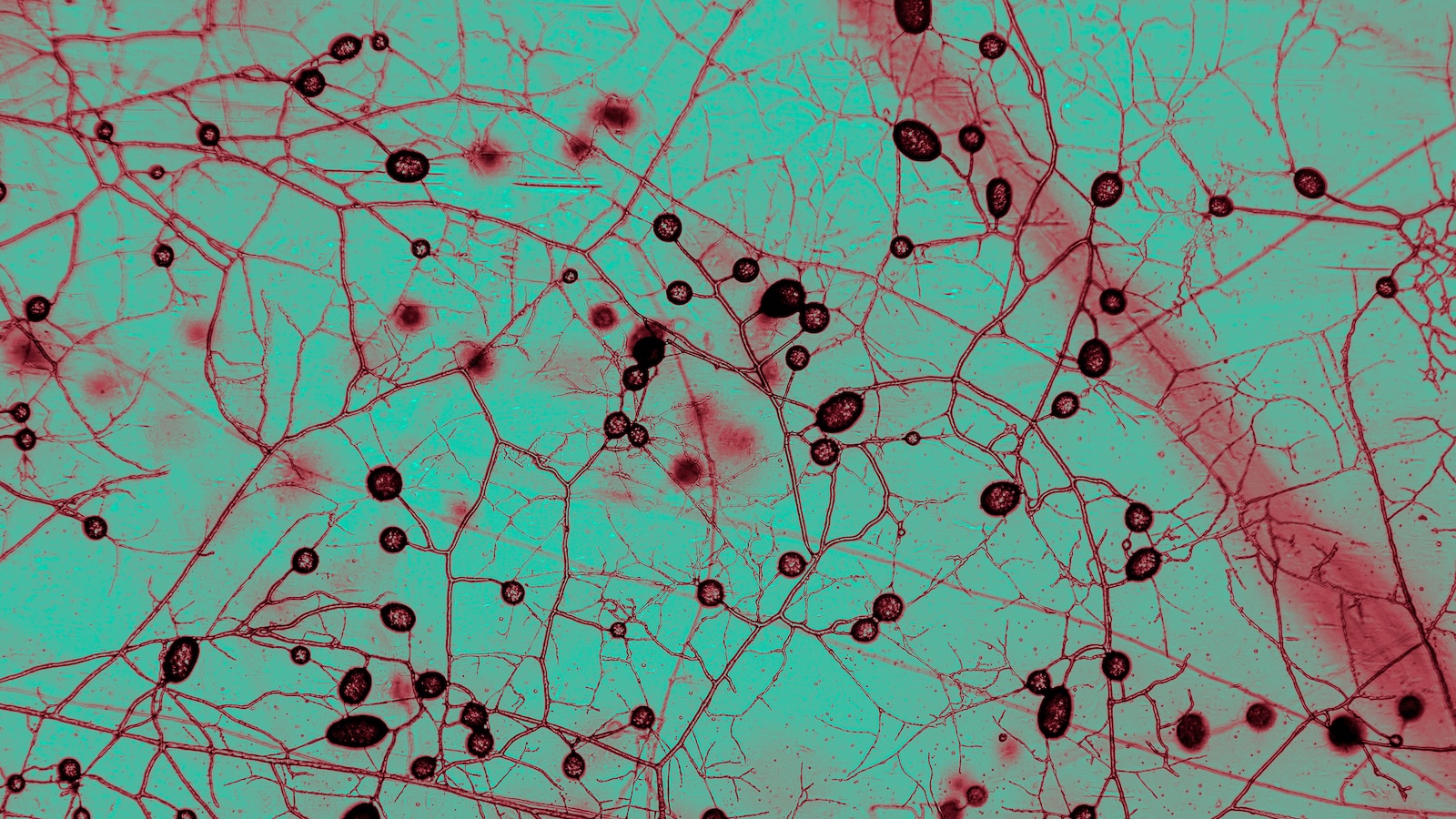
Machine learning models trained on thousands of global soil samples estimate that the underground network of arbuscular mycorrhizal fungi stretches 110 quadrillion kilometers, nearly a billion times the distance from Earth to the sun. The same models calculate that these fungi transport roughly 4 billion metric tons of carbon each year, an amount equal to 11 percent of humanity’s annual CO2 emissions.
A teaspoon of soil can contain 10 meters of fungal strands, and the networks associate with the roots of nearly three-quarters of all plant species.
The study, published in the journal Science, produced maps that predict fungal density even in remote environments. Grasslands account for 40 percent of the predicted global arbuscular mycorrhizal fungal biomass. Only 5 percent of biodiversity hotspots for these fungi lie within environmentally protected areas.
In regions dominated by large-scale agriculture, fungal network densities average about 50 percent lower than elsewhere. Synthetic fertilizers and tillage reduce the need for fungal partnerships and physically disrupt the networks. Researchers collected samples in the mountains of Bhutan to help train the models.
Toby Kiers, executive director of the Society for the Protection of Underground Networks and coauthor of the paper, said the maps move scientists from knowing the system exists to knowing where it is, how dense it is, and where it is threatened. Kiers compared the maps to the first detailed charts of ocean currents or river systems.
Ecologist Smriti Pehim Limbu of Dartmouth College, who was not involved in the study, said the data could help increase fungal biomass in agricultural systems and capture more carbon dioxide.