Gulf Countries Expand Undersea Cable Routes for AI Data Needs
Gulf states are adding terrestrial and subsea cable routes to reduce reliance on narrow maritime corridors. The changes follow cable cuts and rising demand from hyperscale data centers.
 Wired
WiredGulf countries are developing new terrestrial and subsea cable routes to reduce dependence on a small number of maritime corridors. The effort follows cable disruptions and growing data requirements from hyperscale operators. Undersea cables carry an estimated 95 percent of international data traffic.
Much of the region’s connectivity to Europe and the United States still passes through the Red Sea and the Strait of Hormuz.
2025 two cables linking Europe to the Middle East and Asia were cut in the Red Sea. The incident degraded internet connectivity across the Gulf for days and caused an estimated $3.5 billion in damages from lost services. The cuts occurred before many new data centers came online. Hyperscalers are now requiring the same route diversity already used on transatlantic and transpacific paths.
Officials are considering three layers of additional connectivity. One layer would link Gulf landing stations through terrestrial fiber corridors across Saudi Arabia, the UAE, and Oman before extending toward Europe and Asia. A second layer would add subsea-terrestrial systems that bypass chokepoints near Egypt and Bab el-Mandeb.
A third layer would create northern overland corridors through Iraq, Syria, and Turkey. Saudi Arabia’s state telecoms company is investing $800 million to revive a terrestrial link called SilkLink. A consortium of Iraqi and Emirati companies is building the $700 million WorldLink cable, which will run underwater from the UAE to Iraq before continuing overland to Turkey.
Satellite services are also being examined for redundancy. They cannot carry the same volume of data as fiber routes and have higher latency, but they are harder to sabotage or damage accidentally.
Transparency
Reported by a single outlet. This score reflects source tier and factual specificity — corroboration is limited with one source.
Story details
Related Stories
 foxbusiness.com
Trump Shares AI Images of Proposed White House Ballroom and Drone Port Amid Ongoing Legal Battle
President Trump posted AI-generated images of a proposed drone port atop a planned White House ballroom and criticized a federal judge overseeing related litigation. Construction continues while an appeals court holds an injunction in place.
 fortune.com
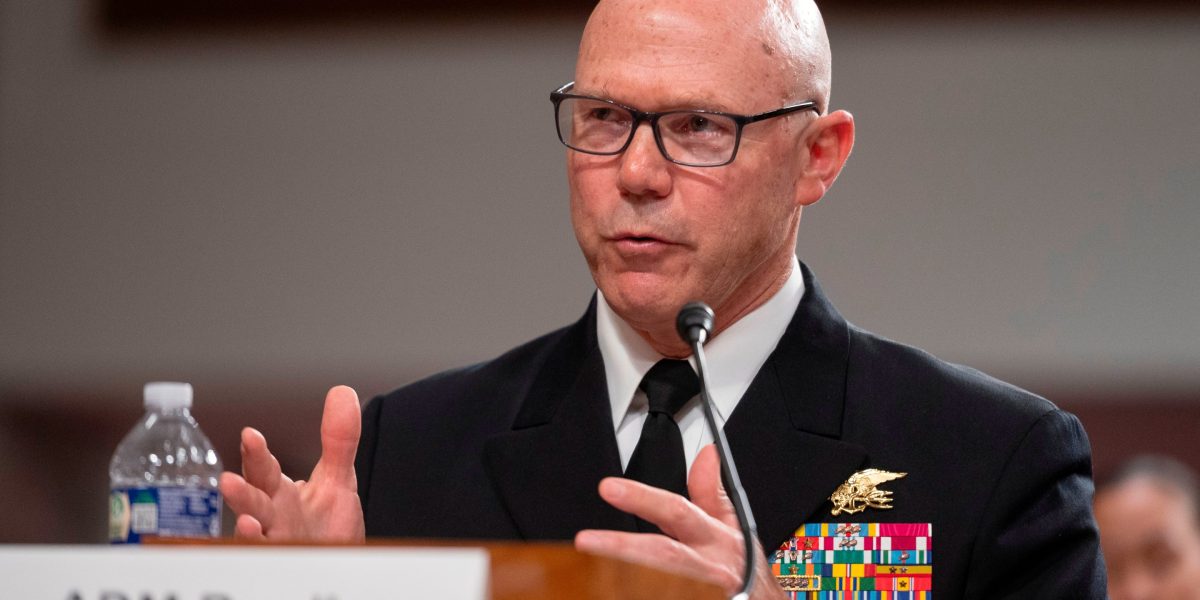
U.S. Special Operations Command Reports Increasing Use of AI to Enhance Targeting and Decision Speed
Admiral Frank Bradley said humans must retain confidence that AI will deliver violence only where intended. Defense Secretary Pete Hegseth continues to push rapid AI adoption across the military.
 The Times
Sapiens International Sets Up London Headquarters to Expand AI Insurance Tools
Private equity-backed Sapiens International is establishing a London headquarters. The company plans to use artificial intelligence to automate portions of insurance work. Abu Dhabi holds a stake in the firm.