India Raises Wheat Procurement Target Amid Lower Production Estimates
The Indian government has increased its wheat procurement target to 345 lakh tonnes from 303 lakh tonnes while relaxing quality norms in major states. A report estimates 2025-26 wheat output at 110.65 million tonnes, below the government's projection of 120.21 million tonnes. This comes as farm-gate prices remain low and procurement trails last year's levels.
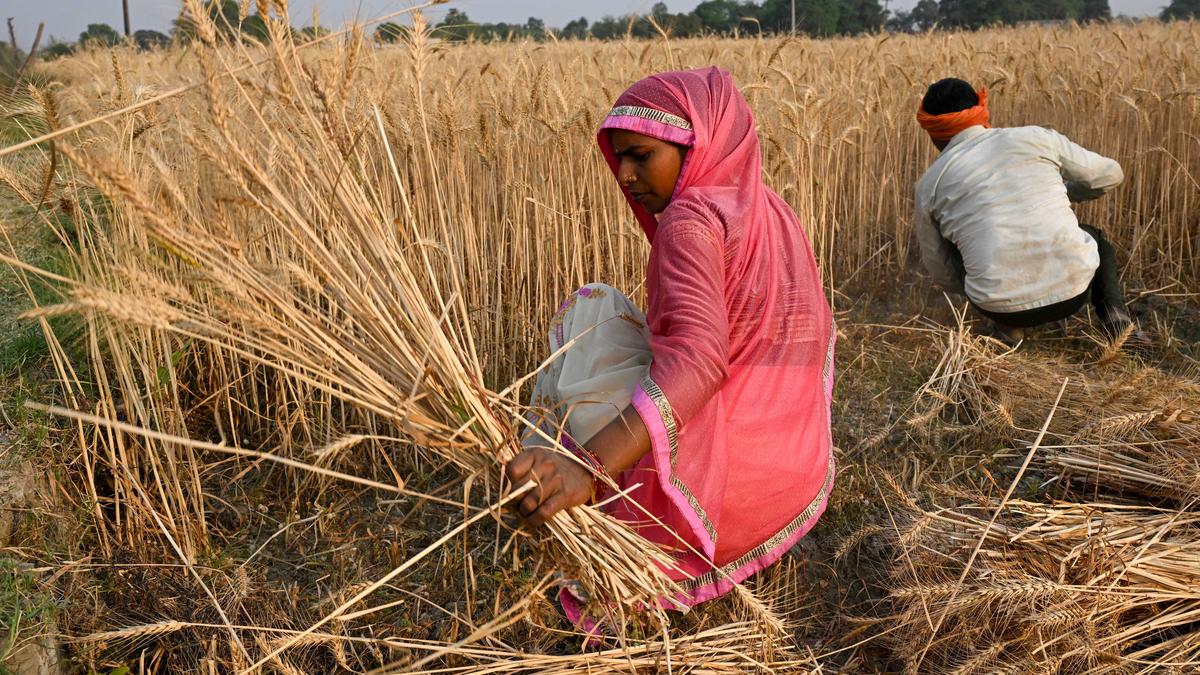
It has also relaxed quality norms in major producing states to support farm-gate prices, which have been ruling lower this year. Union Food Secretary Sanjeev Chopra announced these changes after the release of an annual wheat survey report in New Delhi.
The procurement target increases include Madhya Pradesh to 100 lakh tonnes from 78 lakh tonnes, Uttar Pradesh to 25 lakh tonnes from 10 lakh tonnes, Bihar to 1.80 lakh tonnes from 0.18 lakh tonnes, Rajasthan to 23.5 lakh tonnes from 21 lakh tonnes, and Uttarakhand to 0.50 lakh tonnes from 0.01 lakh tonnes.
These adjustments were made at the request of state governments. Chopra urged flour millers to procure wheat directly from the market rather than relying on government sales.
A report by Agriwatch, commissioned by the Roller Flour Millers Federation of India, estimates India's wheat production for 2025-26 at 110.65 million tonnes. This figure is higher than the 109.63 million tonnes from 2024-25 but below the government's estimate of 120.21 million tonnes for the current season.
The report attributes a drop of over 5 million tonnes from initial assessments to crop damage from unseasonal rains and hailstorms. >"The wheat crop was so good this year that production could have reached 115.7 mt. " — Nalin Rawal, Agriwatch, April 24, 2026 (The Hindu BusinessLine) State-wise, the report pegs output at 31.43 million tonnes in Uttar Pradesh, 27.41 million tonnes in Madhya Pradesh, 15.38 million tonnes in Punjab, 10.61 million tonnes in Haryana, and 10.15 million tonnes in Rajasthan.

It notes higher production in most states except Uttar Pradesh, Bihar, and Punjab compared to the previous year. Navneet Chitlangia, president of the Roller Flour Millers Federation of India, stated that actual output could be between 115 and 116 million tonnes.
of April 23, 2026, wheat procurement reached 164.32 lakh tonnes, compared to 183.49 lakh tonnes in the same period last year. Purchases increased in Punjab to 75.73 lakh tonnes from 59.20 lakh tonnes, in Haryana to 65.16 lakh tonnes from 56.64 lakh tonnes, and in Bihar to 17,281 tonnes from 9,991 tonnes.
However, procurement fell in Madhya Pradesh to 13.19 lakh tonnes from 54.09 lakh tonnes, in Uttar Pradesh to 4.08 lakh tonnes from 5.51 lakh tonnes, and in Rajasthan to 5.7 lakh tonnes from 7.84 lakh tonnes. A flour miller noted that traders and stockists have been absent from the market this year, unlike normal years, contributing to lower prices.
Previous years saw stock limits on stockists, traders, and millers, leading to losses for many who bought aggressively. This caution has persisted despite reports of crop damage. " — A flour miller, April 24, 2026 (The Hindu BusinessLine) Chopra mentioned that the open market sales policy will be released before the new sale season starts in July.
He encouraged millers to be self-reliant in their wheat requirements. The differences in production estimates stem from varying assessment methods and field conditions, with harvesting ongoing in key regions.
The lower production estimate could influence domestic wheat supply and food security in India, which relies heavily on the crop for both consumption and exports. Officials have not commented on the discrepancy between the report and the government's figures.
Wheat is a major crop in India, with production assessments typically conducted around this time of year. The government's measures aim to bolster farm-gate prices amid trailing procurement levels. Experts view the target hike as potentially symbolic, given that actual purchases are below last year's figures.
The report highlights that despite initial promise, weather events reduced potential output significantly.
Key Facts
Story Timeline
4 events- Apr 24, 2026
Government raised wheat procurement target to 345 lakh tonnes and relaxed quality norms.
1 sourceThe Hindu BusinessLine - Apr 24, 2026
Annual Wheat Survey Report 2026 released, estimating output at 110.65 million tonnes.
1 sourceThe Hindu BusinessLine - Apr 23, 2026
Wheat procurement reached 164.32 lakh tonnes, trailing last year's levels.
1 sourceThe Hindu BusinessLine - Recent weeks
Unseasonal rains and hailstorms caused crop damage, reducing potential output by over 5 million tonnes.
1 sourceThe Hindu BusinessLine
Potential Impact
- 01
Domestic wheat supply expectations may adjust downward due to lower production estimates.
- 02
Open market sales policy release in July will guide future wheat distribution.
- 03
Farm-gate wheat prices could stabilize with increased government procurement.
- 04
Flour millers will likely increase direct market purchases, reducing reliance on government sales.
- 05
Exports could face constraints if actual output falls short of government projections.
- 06
State governments may request further procurement adjustments based on local needs.
Transparency Panel
Related Stories
Trump Pauses US Operation in Strait of Hormuz to Advance Iran Deal Talks
President Trump announced a temporary pause to Project Freedom, the U.S. effort to guide ships through the Strait of Hormuz, citing progress toward a settlement with Iran. The blockade on Iranian ports remains in effect, while Secretary of State Marco Rubio stated that the offens…
inquisitr.comTom Homan Discusses Minneapolis Immigration Enforcement After Shooting
Tom Homan, White House Border Czar, stated that mass deportations can proceed in a smarter way. He acknowledged imperfections in the Minneapolis immigration crackdown following a deadly shooting. Homan highlighted efforts to address and fix issues after President Trump sent him t…
Canadian House Committee Hears Testimony on EV Import Deal with China
Industry experts and policy leaders testified before a Canadian parliamentary committee on the economic and security risks posed by a new trade agreement permitting low-tariff imports of Chinese electric vehicles. The deal, signed in January 2026, reduces tariffs and sets import…