Substrate
world

Indigenous Amazon Organizations Urge U.N. to Address Expansion of Illegal Mining, Drug Trafficking and Logging

Indigenous organizations from across the Amazon and Latin America sent a letter to the United Nations on May 11, 2026, warning that criminal networks are expanding and driving violence and environmental destruction. The letter urges governments to avoid heavily militarized responses in Indigenous territories and calls for a dedicated U.N. study. Signatories include COICA, APIB, AIDESEP and CONAIE.

Abc News
winnipegfreepress.com
washingtontimes.com
3 sources·May 11, 2:53 PM(18 days ago)·3m read
|
Indigenous Amazon Organizations Urge U.N. to Address Expansion of Illegal Mining, Drug Trafficking and LoggingAbc News
Audio version
Tap play to generate a narrated version.

Indigenous organizations from across the Amazon and Latin America sent a letter to the United Nations on Monday, May 11, 2026. The letter warns that organized crime including illegal mining, drug trafficking, and logging is driving violence and accelerating environmental destruction in rainforest communities. It urges governments to avoid heavily militarized responses in Indigenous territories.

N. N. N. Permanent Forum on Indigenous Issues. Criminal networks are expanding across parts of the Amazon and other Indigenous lands in Latin America.

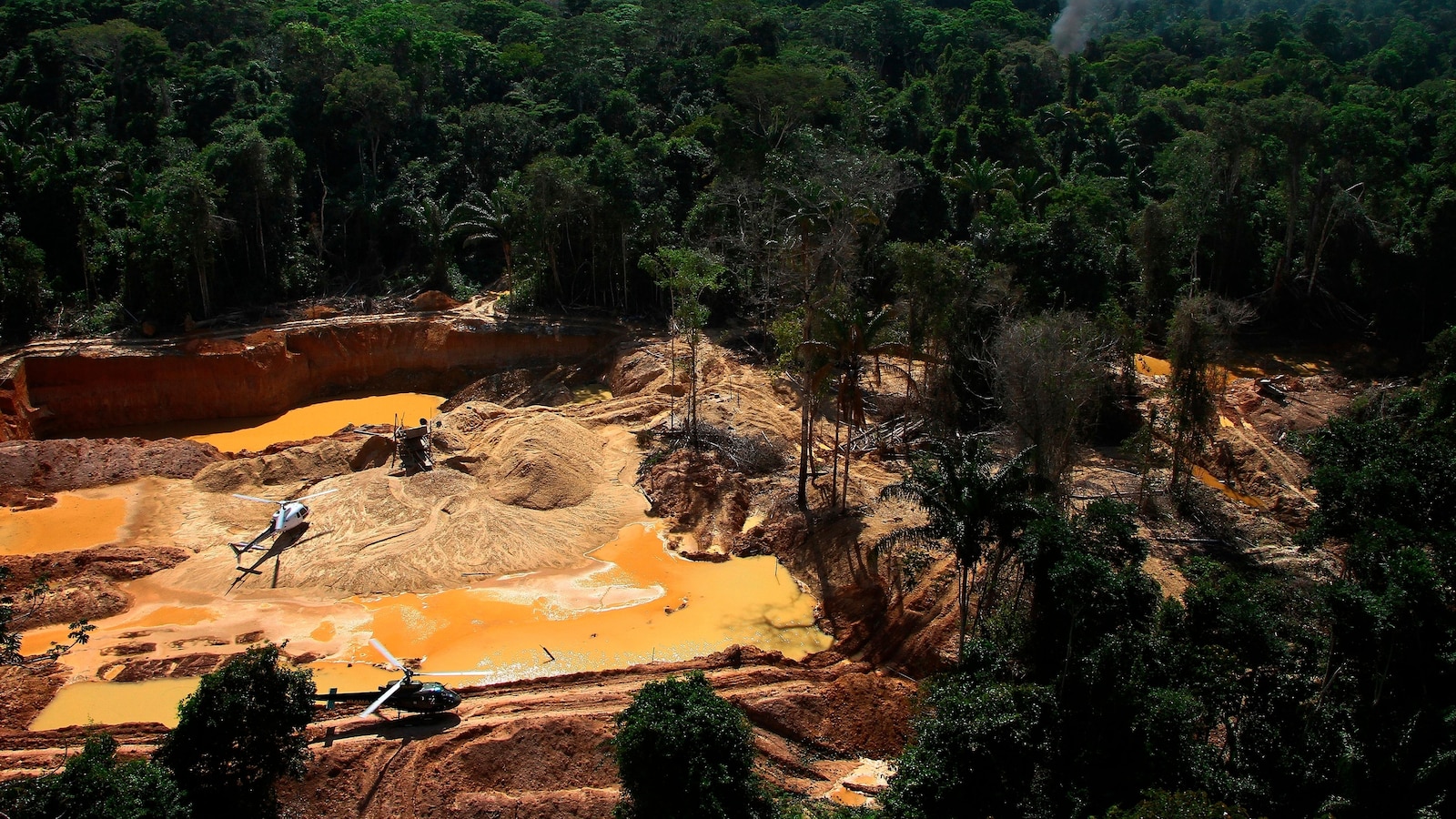
The expansion of organized crime is undermining Indigenous governance systems and threatening communities that have long acted as stewards of some of the world’s most biodiverse ecosystems, according to the signatories. In recent years, illegal gold mining, logging and drug trafficking have spread deeper into remote rainforest regions in Brazil, Peru, Colombia and Ecuador.

These activities have brought violence, mercury contamination and deforestation to those regions.

At least 2,253 land and environmental defenders have been killed or disappeared globally between 2012 and 2024, with Latin America accounting for the vast majority of the cases, Global Witness reported. In Peru, five men are on trial over the 2023 killing of Indigenous defender Quinto Inuma Alvarado, who had repeatedly denounced illegal logging and drug trafficking in his territory.

Raphael Hoetmer, Western Amazon Program Director at Amazon Watch, said the issue has climbed in priority.

“More and more Indigenous Peoples are experiencing the violence and impacts of illicit economies in their territories, so it is higher on the agenda,” Hoetmer stated. “Even four years ago this was not a central topic for most of our partners, but now it is one of the central topics for the wide majority,” Hoetmer added.

He said the expansion of organized crime is increasingly shaping life across large parts of the Amazon.

“The expansion and control of organized crime and violent conflict is taking over more and more of the Amazon, becoming a risk to their ways of living and to the global climate,” he said. Jeremy Douglas, Deputy Director of Operations at the United Nations Office on Drugs and Crime, said drug trafficking in the Amazon often connects with illegal mining, logging and land grabbing.

“Drug trafficking in the Amazon often connects with illegal mining, logging and land grabbing — a criminal ecosystem where environmental degradation disproportionately impacts local populations and Indigenous people,” Douglas stated.

He said pushing back requires territorial protection, prioritizing environmental crimes, and cooperation against transnational organized crime networks active across the Amazon. N. Office on Drugs and Crime had not yet seen the Indigenous organizations’ letter at the time it provided comments to the Associated Press.

UNODC offices in Latin America are working with Indigenous communities and national authorities to strengthen territorial protection and combat environmental crimes tied to organized criminal networks. The letter was signed by the Coordinator of Indigenous Organizations of the Amazon River Basin (COICA), Brazil’s APIB, Peru’s AIDESEP, Ecuador’s CONAIE, dozens of regional Indigenous federations and international advocacy groups.

Ercilia Castañeda, vice president of Ecuador’s Confederation of Indigenous Nationalities of Ecuador (CONAIE), said militarization has not provided answers.

Some communities have faced displacement, fear and psychological harm from militarization, affecting their relationship with the land, water, sacred sites, spiritual life, identity and life of Indigenous peoples, she said. Herlín Odicio, vice president of Organización Regional AIDESEP Ucayali (ORAU) in Peru’s Ucayali region, said organized crime in Indigenous territories has changed its strategies significantly.

They no longer make direct threats. Now they use other strategies,” Odicio stated. He said criminal groups are increasingly embedding themselves in local political structures and campaigns. Odicio said organized crime groups recruit young Indigenous people to work as ‘mochileros’ to transport drugs or supplies and then kill them when they no longer want them or do not want to pay them.

He warned of growing sexual exploitation of Indigenous girls in communities and border areas affected by criminal groups, some as young as 13 and 14. N.

N. agencies to include Indigenous perspectives in anti-crime and anti-corruption policies.

Officials.

Key Facts

Letter sent to multiple U.N. bodies on May 11, 2026
Addressed to U.N. member states, UNODC, and U.N. Permanent Forum on Indigenous Issues; signed by COICA, APIB, AIDESEP, CONAIE and dozens of others
At least 2,253 land and environmental defenders killed or di
Latin America accounted for the vast majority, per Global Witness
Five men on trial for 2023 killing of Quinto Inuma Alvarado
Alvarado had repeatedly denounced illegal logging and drug trafficking

Story Timeline

3 events
  1. 2026-05-11

    Indigenous organizations send letter to the United Nations detailing organized crime impacts and urging non-militarized responses

    3 sourcesAbc News · Associated Press · winnipegfreepress.com
  2. 2023

    Indigenous defender Quinto Inuma Alvarado killed in Peru after denouncing illegal logging and drug trafficking

    1 sourceAbc News
  3. 2012-2024

    At least 2,253 land and environmental defenders killed or disappeared globally, vast majority in Latin America

    1 sourceGlobal Witness via Abc News

Potential Impact

  1. 01

    Undermining of Indigenous governance systems and increased violence in biodiverse territories

  2. 02

    Calls for dedicated U.N. study on organized crime in Indigenous territories

  3. 03

    Potential shift away from militarized responses toward territorial protection and Indigenous inclusion in policy

Transparency Panel

Sources cross-referenced3
Confidence score65%
Synthesized bySubstrate AI
Word count664 words
PublishedMay 11, 2026, 2:53 PM
Bias signals removed2 across 2 outlets
Signal Breakdown
Loaded 2

Related Stories

WHO Chief Visits DRC as Ebola Death Rate Reaches 30-50%The Guardian
world2 hrs ago

WHO Chief Visits DRC as Ebola Death Rate Reaches 30-50%

World Health Organization director-general Tedros Adhanom Ghebreyesus arrived in the Democratic Republic of the Congo to support containment of a new Ebola outbreak. The agency revised the death rate to 30-50% based on confirmed cases and recorded 10 confirmed and 223 suspected d…

SK
The Guardian
2 sources
Greek National Charged in UK With Aiding Iran-Linked Intelligence Servicewesternjournal.com
world2 hrs ago

Greek National Charged in UK With Aiding Iran-Linked Intelligence Service

A 46-year-old Greek man living in Germany was charged under the UK National Security Act with assisting an intelligence service believed to be Iran by targeting a journalist at Iran International.

Reuters
BBC News
2 sources
Bilt Rewards reports $1 billion revenue target for 2026physicianonfire.com
world2 hrs agoDeveloping

Bilt Rewards reports $1 billion revenue target for 2026

Bilt Rewards CEO Ankur Jain said the company's flagship credit card accounts for less than 11 percent of revenue. The firm now processes more than $100 billion in annual housing spend across one in four U.S. apartment buildings.

FO
1 source