finance
Iran Conflict Disrupts Oil and Fertilizer Supplies; U.S. GDP Grows 2%
The ongoing Iran war has led to significant disruptions in global oil and fertilizer supplies, with Exxon Mobil's CEO predicting higher oil prices as mitigation measures exhaust. U.S. GDP grew at a 2% annual rate in Q1 2026 amid the conflict, while fertilizer shortages threaten billions of meals worldwide. President Trump announced increased tariffs on EU vehicles.
SQ
 The Guardian
Audio version
Tap play to generate a narrated version.
Developing·Limited corroboration so far. This page will refresh as more sources emerge.
Exxon Mobil CEO Darren Woods stated that the market has not absorbed the full impact of the oil supply disruption from the Iran war and the closure of the Strait of Hormuz. The disruption has been mitigated by loaded oil tankers in transit during the first month of the war, with strategic petroleum reserves released and commercial inventories drawn down.
One of these supply sources will become exhausted as the conflict continues, leading to increased oil prices while the strait remains closed, Woods said.
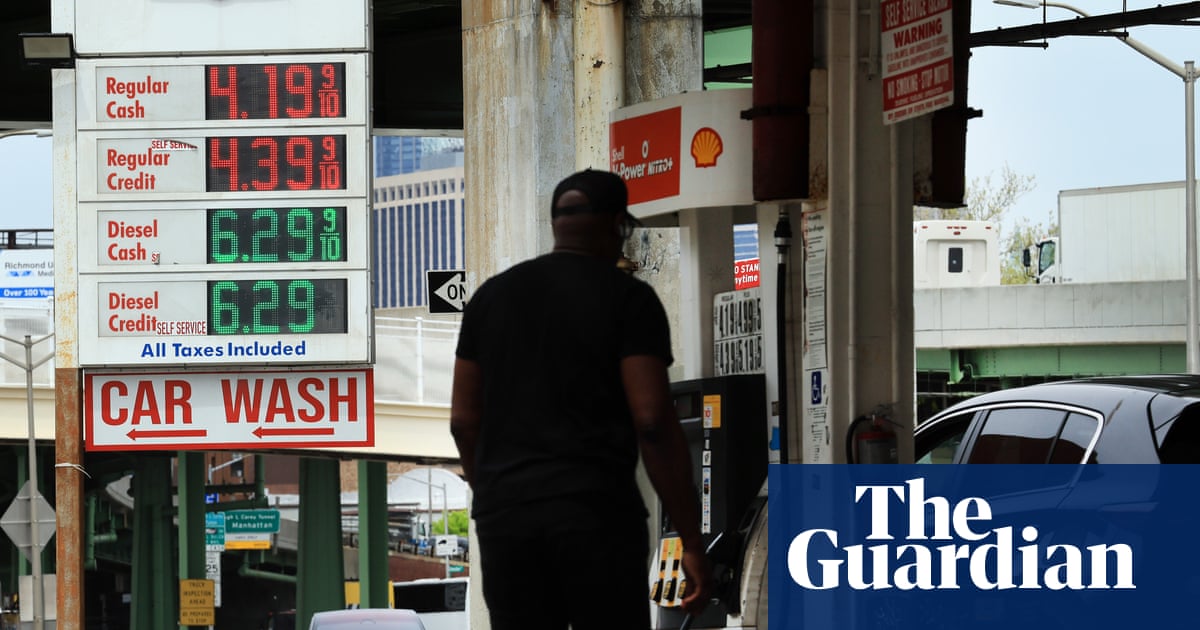
U.S. 38 per barrel and international benchmark Brent down about 2% to $108 per barrel. These oil prices are more consistent with historic levels over the past decade rather than the scale of the disruption in the Middle East, according to Woods.
Oil prices have soared about 57% since the Iran war started through Thursday's settled price.
“It's obvious to most that if you look at the unprecedented disruption in the world supply of oil and natural gas, the market hasn't seen the full impact of that yet.”
“There's more to come if the strait remains closed." — Darren Woods, Exxon Mobil CEO Exxon warned that its production in the Middle East would decline by 750,000 barrels per day compared with 2025 if the Strait remains closed through the second quarter. Throughput to its refineries around the world would fall 3% compared with the fourth quarter of 2025, with about 15% of Exxon's total production impacted by the closure. Iranian attacks on Qatar's liquefied natural gas export hub damaged two production lines that Exxon has an ownership interest in, accounting for about 3% of Exxon's upstream production in 2025, according to a filing with the Securities and Exchange Commission in early April. Exxon shares were down about 1% in midday trading on Friday, with the stock flat over the period since the Iran war started through Thursday. Woods expects oil flows from the Persian Gulf to normalize in a month or two after the strait reopens, as tankers need repositioning, the supply backlog must be worked through, and vessels take time to reach destinations. Governments and industry will need to refill strategic reserves and commercial inventories if stockpiles are depleted when the conflict ends, bringing more demand to the market and putting upward pressure on prices, Woods said. The interruption to supplies of fertilizer and its key ingredients is due to the war in Iran, with hostilities in the Gulf blocking shipping through the Strait of Hormuz, according to Svein Tore Holsether, chief executive of Yara. Up to half a million tons of nitrogen fertilizer are not being produced worldwide right now due to the situation, Holsether said. Lack of fertilizers could mean up to 10 billion meals will not be produced every week, with not applying nitrogen fertilizer reducing crop yields for some crops by as much as 50% in the first season, Holsether stated. Around a third of the world's fertilizers such as urea, potash, ammonia, and phosphates normally pass through the Strait of Hormuz, according to the United Nations. The price of fertilizer has soared by 80% since the beginning of the U.S. and Israel's war on Iran. The Food and Drink Federation forecast that food inflation could reach 10% by December in the U.K., while the Bank of England said food price inflation could rise to 4.6% in September. The U.N. World Food Programme estimates that the combined fallout from the Middle East conflict could push 45 million additional people into acute hunger in 2026, with food insecurity expected to rise by 24% in Asia and the Pacific. U.S. gross domestic product accelerated to an annual rate of 2% in the first three months of 2026, up from an annual pace of 0.5% in the fourth quarter of 2025. The federal government is down 355,000 workers, or 11.8% of the workforce, since October 2024, according to the Bureau of Labor Statistics. Taiwan's gross domestic product expanded 13.7% in the first quarter of 2026 from a year earlier, compared with about 12.7% in the previous three months. The Iran war is referred to as Operation Epic Fury. Iran has closed the Strait of Hormuz during the war. President Trump threatened to destroy bridges and power plants in Iran and implicitly threatened to permanently disrupt Iran's export industry in oil. President Trump stated he is increasing tariffs on E.U. for cars and trucks to 25% next week. The IRGC has begun deploying foreign militias inside Iran for internal security, including the Fatemiyoun Brigade drawn from Afghan Shia recruits and the Zainebiyoun Brigade composed of Pakistani Shia militants, along with several Iraqi factions. Iran has closed off the internet and is recruiting child soldiers.”