technology
James Webb Telescope Maps Cosmic Web from When Universe Was a Few Hundred Million Years Old
A research team has created the highest-resolution map yet of the cosmic web, revealing its structure when the universe was only a few hundred million years old. The observations, published in The Astrophysical Journal, resolve features previously unseen and allow study of galaxy evolution across cosmic time. Engadget reported the findings on May 11, 2026.
May 11, 6:54 PM·2m read1 source
 Engadget
Audio version
Tap play to generate a narrated version.
Developing·Limited corroboration so far. This page will refresh as more sources emerge.
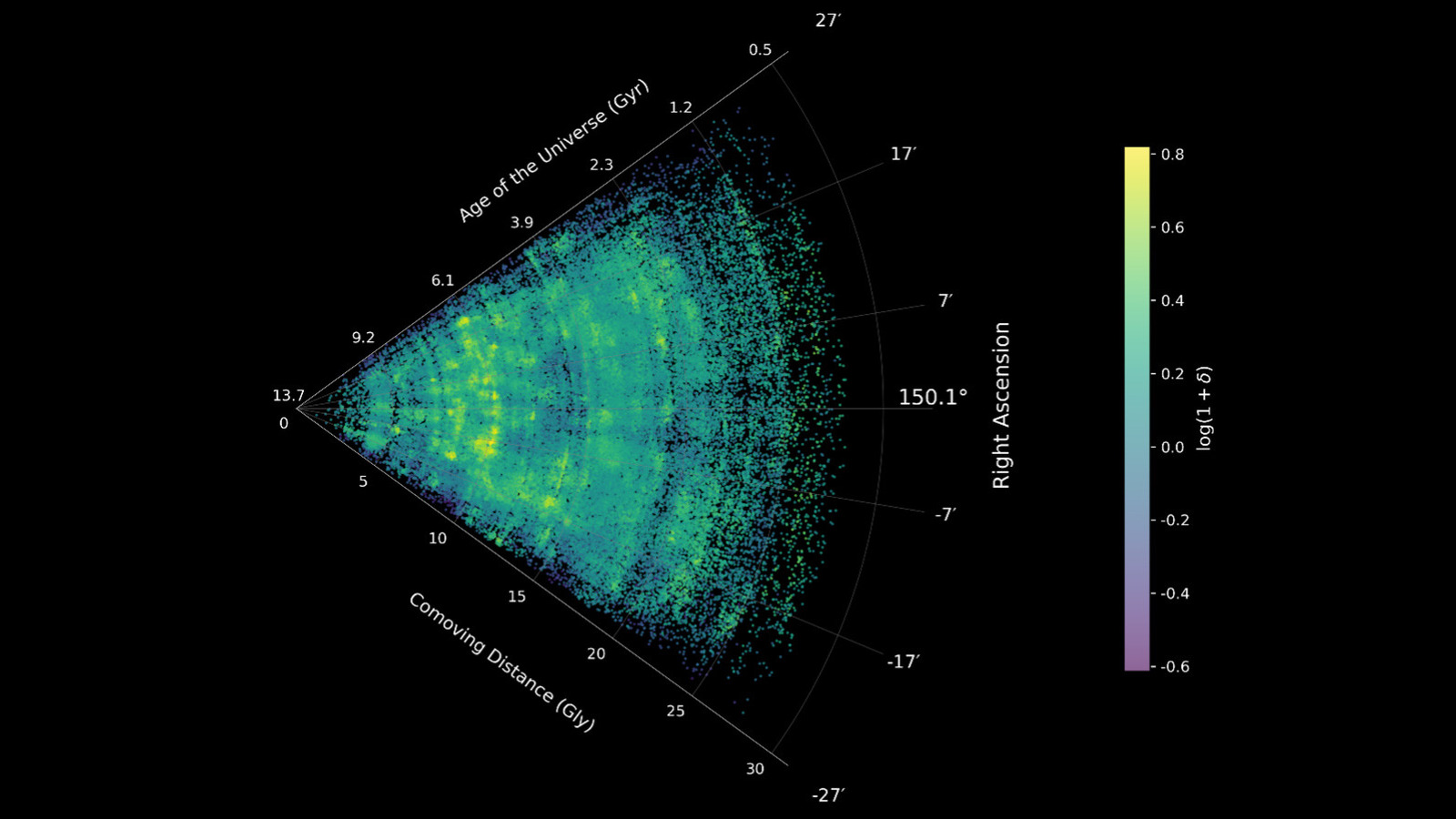
A research team has used the James Webb Space Telescope to produce a high-resolution map of the cosmic web as it existed when the universe was a few hundred million years old. The cosmic web is a collection of dark matter, gas and filaments that connects larger entities in space and forms the underlying architecture of the cosmos, linking galaxies and clusters into a single, intricate, and far-reaching structure.
The new map allows observation of the cosmic web at a time when the universe was only a few hundred million years old.
This era when the universe was only a few hundred million years old was out of reach before JWST. "What used to look like a single structure now resolves into many, and details that were smoothed away before are now clearly visible," Mobasher added.
The jump in depth and resolution of the cosmic web map is truly significant. "For the first time it is possible to study the evolution of galaxies in cluster and filamentary structures across cosmic time, all the way from when the universe was a billion years old up to the nearby universe," according to Hossein Hatamnia, the lead author of the study, a graduate student at UCR and Carnegie Observatories.
The academic paper covering the development of this survey was published in The Astrophysical Journal.
Engadget reported these findings in an article published on May 11, 2026. The images captured with the James Webb Space Telescope have long drawn attention for their clarity, yet the latest effort underscores that the instrument's value extends far beyond visuals into fundamental questions about cosmic architecture.