KC-135 Tanker Spotted With New Dorsal Antenna at RAF Mildenhall
A U.S. Air Force KC-135 appeared at RAF Mildenhall with a new trapezoidal antenna mounted on the rear fuselage. The modification is part of ongoing efforts to improve satellite communications and networking on the tanker fleet.
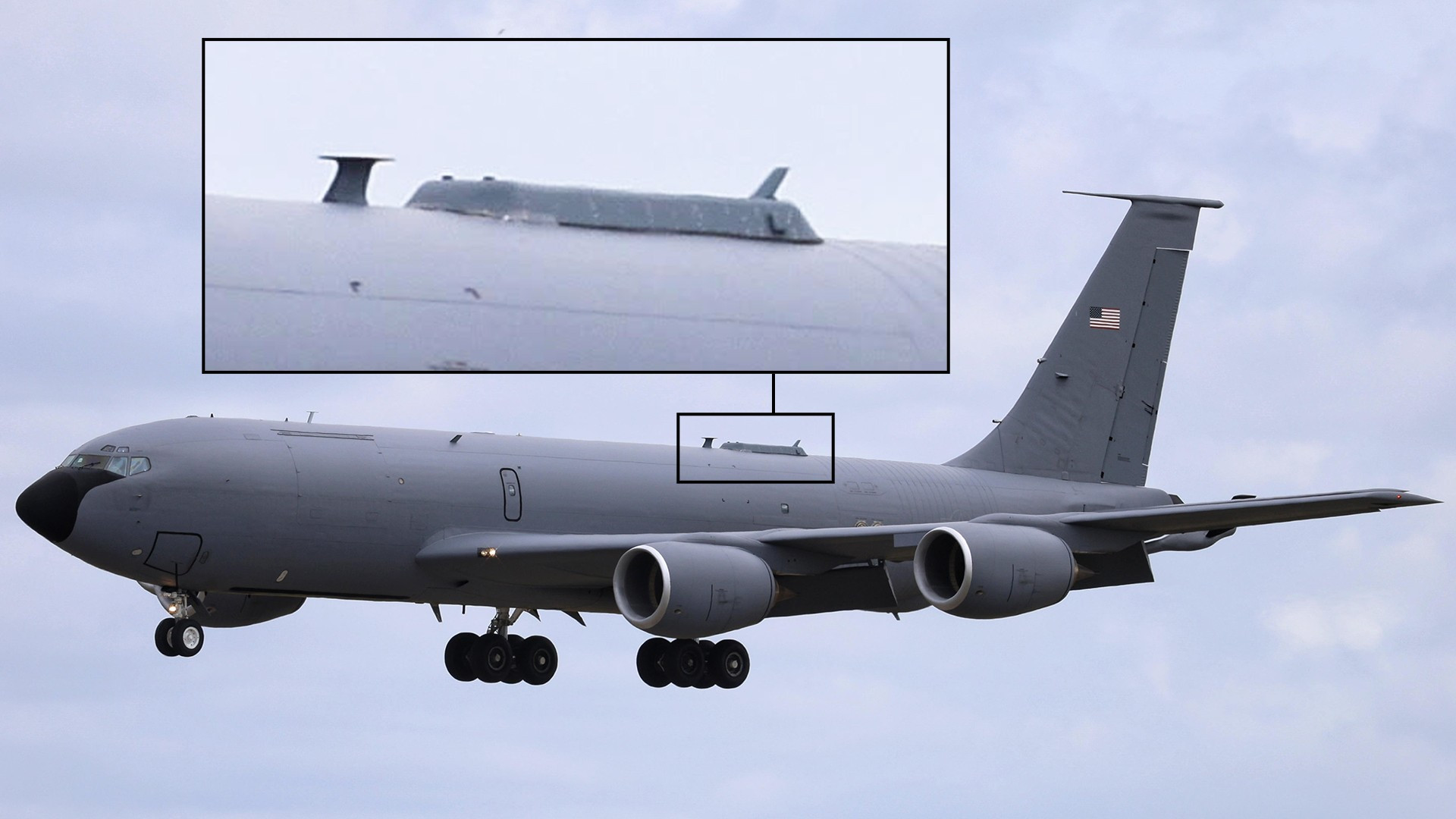 The War Zone
A U.S. Air Force KC-135 tanker was photographed at RAF Mildenhall with a new dorsal antenna installed on the rear fuselage. The antenna has a roughly trapezoidal shape with a flat top and a small blade at the rear. The aircraft was seen this weekend by aviation photographer Alessandro Ledda. Flight tracking data indicated the serial number 63-7976, though markings had been removed from the plane.
The new antenna sits directly behind an existing platter-shaped unit used for ultra-high-frequency satellite links. Its size and shape align with high-bandwidth satellite communications systems already in use on other military and commercial aircraft.
A similar antenna was photographed on a KC-135 in April, though the location and date of that image remain unclear. It is not known how many aircraft have received the modification so far.
The antenna may be linked to the Airlift/Tanker Open Mission Systems program or its successor, MAF NEXUS, both developed by the Sierra Nevada Corporation. These systems use Starshield terminals to provide beyond-line-of-sight connectivity. The Air Force budget request for fiscal year 2027 also lists a Hybrid SATCOM capability and a MAF Connectivity project aimed at linking tankers to government and commercial satellite constellations.
The Air Force had 368 KC-135s in inventory at the start of fiscal year 2026. At least some of the aircraft are planned to remain in service through 2050. The service has conducted multiple communications upgrade efforts on the KC-135 fleet in recent years, including roll-on/roll-off suites and a demonstration by the Air National Guard of a data node inside a modified refueling pod.
" — Air Force Lt. Gen. Rebecca Sonkiss, February 2026 (The War Zone) Officials have stated that improved connectivity supports battlespace awareness and allows tankers to relay data between different networks. The Air Force has said full fleet connectivity for the KC-135 is expected within about six years.