world
Lebanese Army Withdraws From Southern Village Base; Israeli Forces Advance Nearby
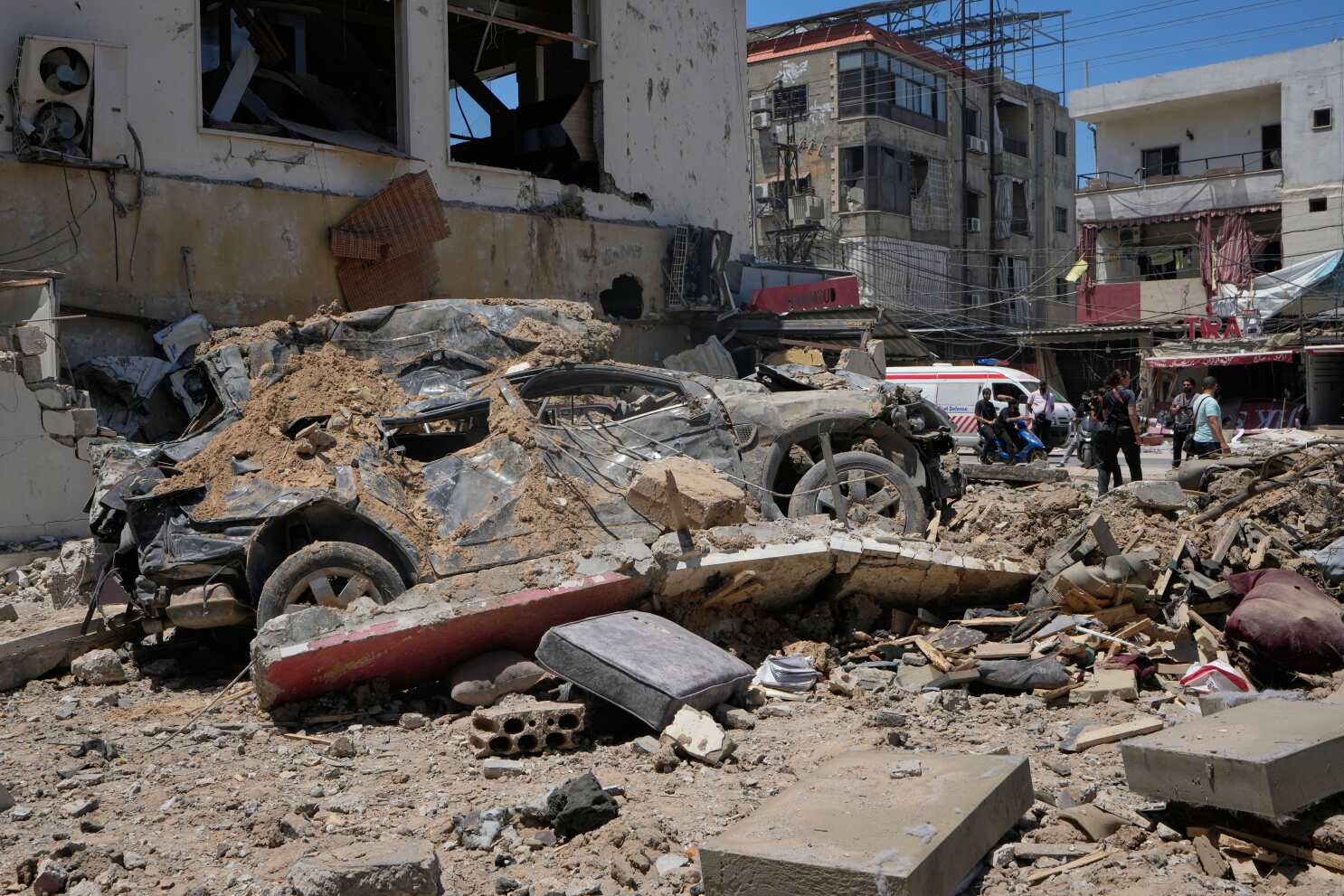
Lebanese troops left a barracks in Kfar Tebnit on Saturday after Israeli forces moved into the area. The move followed Israeli evacuation warnings and airstrikes near Nabatiyeh.
 Los Angeles Times
Audio version
Tap play to generate a narrated version.
Developing·Limited corroboration so far. This page will refresh as more sources emerge.
The Lebanese army withdrew its troops from a base in the southern village of Kfar Tebnit on Saturday after Israeli forces advanced nearby, a military official said. The departure came as the Israeli military issued evacuation warnings for about 20 locations, including the city of Nabatiyeh and nearby villages.
Lebanon's state-run National News Agency reported airstrikes on villages near Nabatiyeh that killed two people in Deir al-Zahrani, along with artillery shelling in Nabatiyeh itself.
Background on the fighting A senior Lebanese military official told the Associated Press that the army moved its forces from the Kfar Tebnit barracks after an Israeli incursion into the area. The official spoke on condition of anonymity. Israeli troops were reported to be attempting to capture the strategic Ali Taher hill on the edge of Kfar Tebnit.
The hill overlooks large parts of Nabatiyeh and roads linking the city with nearby villages. Israeli forces previously held the hill for 18 years until withdrawing from Lebanon in May 2000.
Israeli actions Hezbollah said its fighters carried out several attacks on Saturday, including a morning drone strike targeting Israeli troops on the edge of Kfar Tebnit. The group has used fiber-optic drones since the start of the current war. Later on Saturday, an Israeli drone first missed a Lebanese soldier traveling near a hospital in Nabatiyeh and then struck the same soldier on the road to Kfar Rumman, seriously wounding him.
Ceasefire status and casualties Attacks by both sides have continued despite a truce that took effect April 17 and has been renewed several times. Israel continues to occupy large areas of southern Lebanon while battling Hezbollah fighters. More than 3,700 people have been killed in Lebanon in the latest fighting, according to the Lebanese Health Ministry.

