Substrate
business

Melbourne Steel Mill Draws Over Half Its Power from Renewables

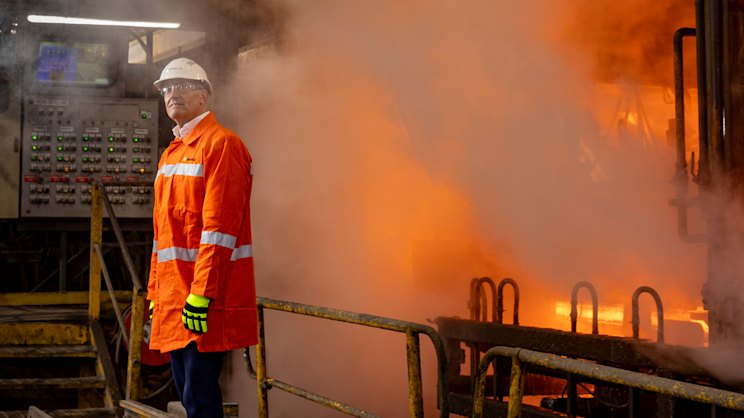
A steel mill near Melbourne has begun sourcing more than half its electricity from a wind farm under a new supply deal that started April 1. The facility uses electric arc furnaces to melt scrap metal.

The Sydney Morning Herald
1 source·May 17, 7:00 PM(11 days ago)·2m read
|
Melbourne Steel Mill Draws Over Half Its Power from RenewablesThe Sydney Morning Herald
Audio version
Tap play to generate a narrated version.

A steel mill on the industrial edge of Melbourne has become the first in Australia to draw more than half of its power from renewable energy sources. Since activating a new energy supply deal on April 1, InfraBuild’s Laverton steel mill in Melbourne’s west has been contracting enough electricity from a wind farm to cover more than 50 per cent of the power it needs to melt scrap metal into molten steel.

The rest of the power for the mill’s furnace continues to be drawn from the grid, which relies on a fluctuating mix of fossil fuels, renewable energy and storage.

Steelmaking accounted for up to 8 per cent of the global output of greenhouse gas emissions, InfraBuild chief executive Francisco Irazusta said. “This means a significant reduction of carbon dioxide emissions per tonne of steel that we produce,” he said.

“Our objective is to go to 100 per cent renewable. ” InfraBuild runs another electric furnace in Sydney’s Rooty Hill, which sources a quarter of its power from renewables.

and Challenges InfraBuild, with its two steel mills and a network of manufacturing, recycling and distribution sites across Australia, ranks as the second-largest local steel company behind BlueScope. The company is part of British billionaire Sanjeev Gupta’s fraying global empire, GFG Alliance, which was thrown into financial turmoil after the collapse of its financier in 2021, leading to the South Australian government pushing its Whyalla steelworks into administration last year due to unpaid royalties and debts.

InfraBuild says it is “ringfenced” from the wider group and has separate financing. Despite the upheaval at GFG, Sydney-based InfraBuild is planning a major expansion in Australia, aiming to increase the Laverton plant’s production volumes from 750,000 tonnes of steel to 1 million tonnes by the end of 2028, and to lift Rooty Hill’s output from 620,000 to 680,000 tonnes.

” It would also seek to lock in supplies of biomethane as a cleaner replacement for the natural gas currently used in parts of its mills that cannot be readily switched to electricity.

75 per cent of InfraBuild’s steelmaking emissions come from electricity. The rest come from natural gas. The use of cleaner energy at steel mills would appeal to customers who increasingly wanted to lower the carbon footprint of their end products, said Davina Rooney, chief executive of the Green Building Council of Australia.

Embodied carbon was about 16 per cent of Australia’s total “built environment” emissions in 2019, and it was set to make up an even larger share as the grid continued decarbonising, Rooney said. “Without other interventions, it will balloon to 85 per cent in 2050,” she said.

Industry leaders caution that limitations remain, including that there is not enough high-quality scrap metal available in the world to meet growing demand.

Key Facts

50% renewable power
Laverton mill now sources over half its electricity from wind farm
Production targets
Laverton to reach 1 million tonnes by end of 2028
Emissions share
Steelmaking accounts for up to 8% of global greenhouse gases

Story Timeline

3 events
  1. April 1

    InfraBuild’s Laverton steel mill activated new renewable energy supply deal.

    1 sourceThe Sydney Morning Herald
  2. 2021

    Financier of GFG Alliance collapsed, triggering financial turmoil.

    1 sourceThe Sydney Morning Herald
  3. Last year

    South Australian government placed Whyalla steelworks into administration.

    1 sourceThe Sydney Morning Herald

Potential Impact

  1. 01

    InfraBuild plans to expand Laverton output to 1 million tonnes by 2028.

  2. 02

    Company aims to reach 100% renewable power for its two furnaces within a couple of years.

  3. 03

    Customers may prefer steel with lower carbon footprint for building projects.

Transparency Panel

Sources cross-referenced1
Confidence score75%
Synthesized bySubstrate AI
Word count506 words
PublishedMay 17, 2026, 7:00 PM

Related Stories

EU Fines Temu €200 Million Over Unsafe ProductsLos Angeles Times
business2 hrs ago

EU Fines Temu €200 Million Over Unsafe Products

The European Commission imposed a €200 million fine on Chinese e-commerce platform Temu for failing to assess risks from illegal goods. The penalty is the second issued under the Digital Services Act.

Los Angeles Times
The New York Times
BBC News
3 sources
Aggreko to Build Off-Grid Hybrid Plant for Eva Copper MineAbc
business22 hrs ago

Aggreko to Build Off-Grid Hybrid Plant for Eva Copper Mine

Global energy company Aggreko will construct Australia's largest off-grid renewable hybrid power facility at the Eva Copper Mine in North West Queensland. The 15-year project will supply 72 megawatts of power using solar, battery storage and thermal generation.

Abc
1 source
EU fines Temu more than $230 million over illegal product salestheyeshivaworld.com
business1 day ago

EU fines Temu more than $230 million over illegal product sales

The European Commission imposed a €200 million penalty on the Chinese e-commerce platform after finding consumers are very likely to encounter illegal items. Temu has until August 26 to submit a compliance plan or face further penalties.

The New York Times
The Verge
2 sources