science
NASA Satellite Images Show Phytoplankton Bloom Off Mid-Atlantic Coast
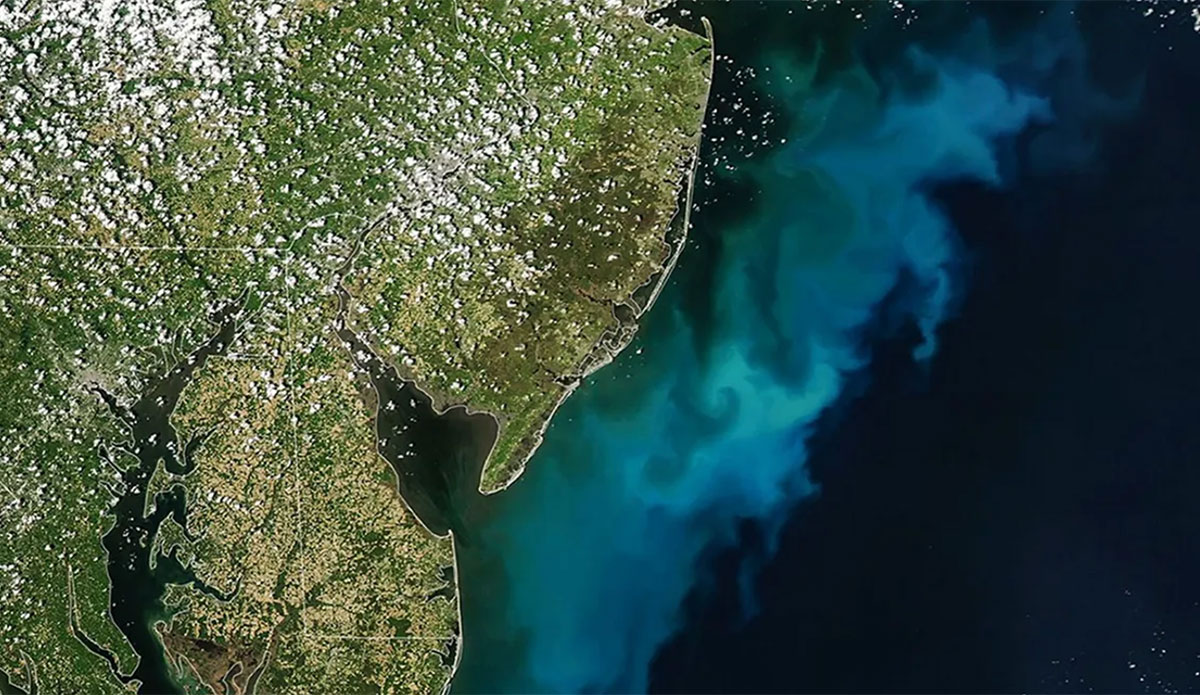
Satellite data from NASA show a phytoplankton bloom producing turquoise water along the Jersey Shore and other Mid-Atlantic beaches. The bloom began in early April and remains visible in coastal zones from New Jersey to Virginia.
May 27, 4:27 AM·1m read1 source
 theinertia.com
Audio version
Tap play to generate a narrated version.
Developing·Limited corroboration so far. This page will refresh as more sources emerge.
Satellite imagery from NASA shows patches of bright turquoise water extending along the Jersey Shore and other parts of the Mid-Atlantic coast. The color change results from high concentrations of phytoplankton near the surface. The bloom started in early April and has been most visible where waters from Raritan Bay, Delaware Bay, and Chesapeake Bay meet the Atlantic Ocean.
NASA’s Earth Observatory and Goddard Space Flight Center have tracked the event as it expanded across the Mid-Atlantic Bight, the coastal region between Cape Hatteras, North Carolina, and Martha’s Vineyard, Massachusetts.
Phytoplankton are microscopic plant-like organisms that contain chlorophyll. When sunlight strikes dense concentrations of these organisms, the water reflects blue-green wavelengths that appear turquoise from the air and from orbit. The Mid-Atlantic coast normally appears darker green or gray because of sediment, algae, and colored dissolved organic matter carried by rivers.
The current bloom overrides those usual conditions in shallow areas.
Oceanographers at Rutgers University stated the bloom will likely fade within weeks once surface nutrients are depleted. Similar blooms occur each spring, though the scale and vivid coloring of this year’s event have drawn attention. Officials said the bloom poses little danger to swimmers, surfers, or beachgoers.
Extremely large blooms can occasionally reduce oxygen levels if large amounts of phytoplankton die at once, but researchers described any such effects as limited and short-lived. Last year’s bloom produced bright blue water in Atlantic and Cape May counties for several weeks before dissipating.