National Science Foundation to Decommission $368M Ocean Observatories Initiative as Part of Research Infrastructure Reprioritization
The $368 million system includes nearly 900 instruments across the Pacific and Atlantic. Alaska stakeholders say the loss removes real-time data used for fisheries and storm planning.
 Inside Climate News
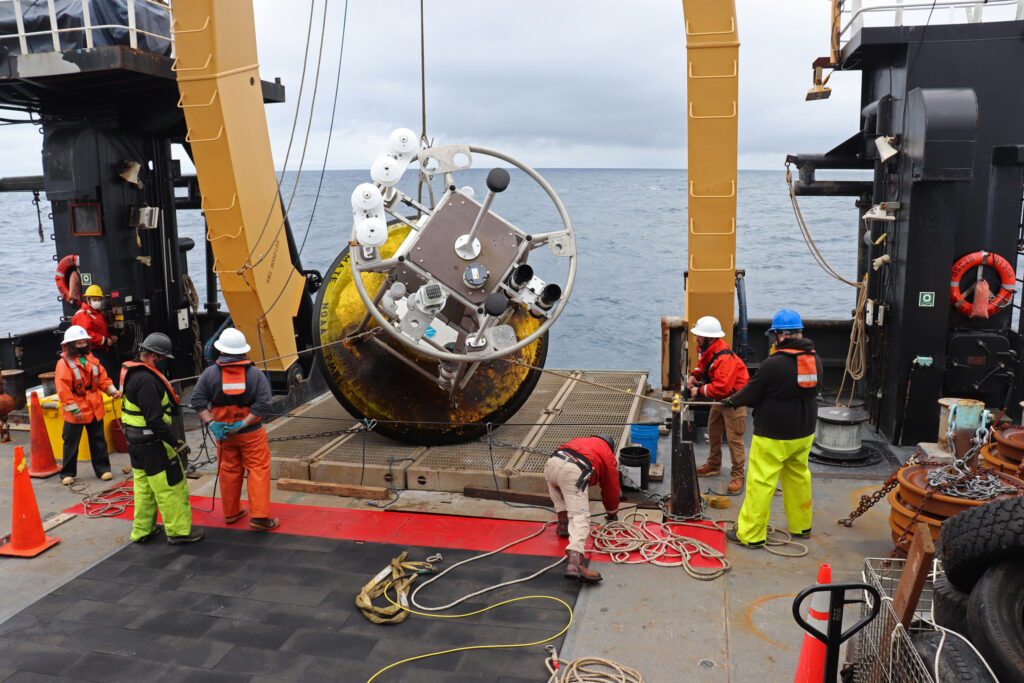
The National Science Foundation announced plans in May to decommission the Ocean Observatories Initiative, a nearly $368 million network of scientific instruments distributed across the Pacific and Atlantic Oceans. The network consists of some 900 deep-sea instruments that track ocean chemistry, wave action, water temperature, salinity and additional metrics.
All previously collected data will remain accessible.
Ocean Station Papa, one component of the network, sits in the Gulf of Alaska at a depth of nearly 14,000 feet. The station supplies real-time information on ocean temperatures, salinity, currents, wave height and direction, and wind stress. Alaska is the nation’s top fish-producing state.
3 billion and employs nearly 42,000 people, according to a McKinley Research Group report prepared for the Alaska Seafood Marketing Institute. Alaska temperatures are warming twice as quickly as the global average. Michelle Stratton, executive director of the Alaska Marine Community Coalition and a fisheries scientist, said the loss of Ocean Station Papa removes one of the state’s only systems that documents how the ocean is changing in real time.
“We’re in the middle of salmon crashes, crab collapses and repeated marine heatwaves, and this decision takes away the data we rely on to understand what’s happening and how to manage these fisheries,” Stratton said. Jan Newton, University of Washington affiliate professor of biological oceanography, said the observatories help users anticipate conditions.
“It helps us see where we’re going and what’s coming at us,” Newton said.
Rick Thoman, climate specialist with the University of Alaska Fairbanks who spent 30 years at the National Weather Service, said the network provides oceanographic information from the entire water column. Typhoon Halong largely destroyed the Western Alaska villages of Kipnuk and Kwigillingok last October. The mostly Yupik villages were home to more than 1,000 people.
Many residents evacuated to Anchorage and remain there. Tim Bristol, executive director of the nonprofit SalmonState, said the decision runs counter to repeated calls for more data. “No matter where you are on a particular issue, you hear a desire, a call for more information, better data, more in-depth analysis, and this seems to be, you know, a sprint in the wrong direction,” Bristol said.
Cassandra Eichner, an NSF spokesperson, said the decision aligns with the agency’s strategy of a nimbler approach to prioritize support for evolving scientific priorities and emerging technologies, as well as smart lifecycle management within its research infrastructure portfolio.
Eichner added that the NSF remains committed to ocean science. Thoman noted that other nations could place instruments at the same locations in international waters.
“You know the Chinese could come and plunk down a buoy there tomorrow if they’re inclined,” Thoman said.