NATO Range in Latvia Tests European Counter-Drone Systems
Demonstrations at the Sēlija testing range last week showed both successful intercepts and repeated misses by European startup drones. Officials noted that drone technology remains ahead of current countermeasures.
 Defense News
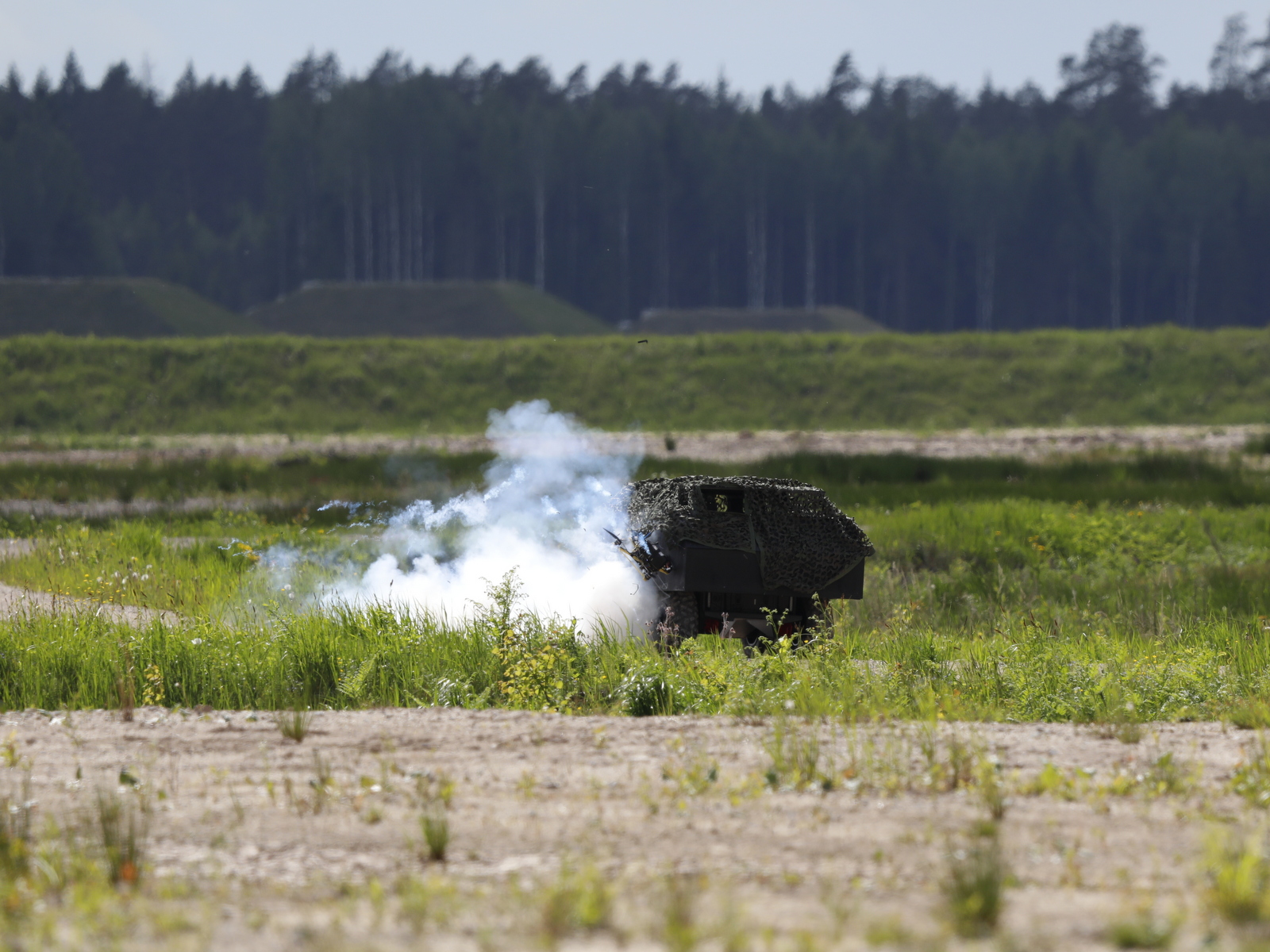
Demonstrations at NATO’s Sēlija testing range in central Latvia last week displayed mixed results for European counter-unmanned aerial systems. Several startup interceptors recorded hits on target drones, while others missed on initial attempts or failed to engage.
Maj. Modris Kairišs, head of Latvia’s Autonomous Systems Competence Center, said on May 26 that drone technology is “a couple of steps ahead” of countermeasures. He noted that interceptors must succeed every time, whereas a single attacking drone can cause damage.
100 hit its target on the first pass, missed on the second, and succeeded on the third. Origin Robotics’ Blaze interceptor, equipped with radar and computer-vision software, identified and struck a Temeso target drone. Eraser’s initial attempt with a slower drone version failed.
A later run with a faster version downed the target, though CEO Edgars Gauručs said he was too stressed to confirm whether the intercept occurred autonomously or manually. JetDrones and RDC Systems flew jet-powered and rocket-assisted interceptors but did not conduct live engagements during the event.
Latvia reported repeated incursions by Ukrainian drones believed diverted by Russian jamming last month. In response, the country is deploying mobile teams using Origin Robotics and Eraser interceptors along its eastern border. Maj. Gen. Andis Dilāns, undersecretary of state for logistics in Latvia’s Ministry of Defence, said the Sēlija range will allow NATO allies and industry to test systems and validate concepts.
Latvia signed a letter of intent with the Netherlands last week permitting Dutch forces to use the site. NATO is establishing five innovation ranges under its Rapid Adoption Action Plan, with Sēlija focused on unmanned systems and countermeasures. The goal is to reduce risk for governments purchasing new equipment by proving capabilities in controlled tests.
Transparency
Reported by a single outlet. This score reflects source tier and factual specificity — corroboration is limited with one source.
Story details
Related Stories
 Substrate placeholder — needs review
House Passes Resolution to End U.S. Hostilities With Iran
The House voted 215-208 to approve a concurrent resolution directing the withdrawal of U.S. forces from Iran after the 60-day war-powers deadline expired in early May. Four Republicans joined all Democrats present in support.
 realitytea.com
Trump Orders Federal Agencies to Strengthen Customs Enforcement
President Trump signed an executive order directing the Department of Homeland Security, Department of the Treasury, and Department of Justice to improve detection and interdiction of unlawful and dangerous imports. The directive requires new operational plans within 60 days and…
 realitytea.com
Trump Signs Executive Order Directing Comprehensive Customs Reform
President Donald J. Trump signed an executive order on June 3, 2026 that mandates reforms to strengthen enforcement of U.S. customs laws. The order targets customs fraud that undermines economic strength and national security, triggering new compliance requirements across importe…