Péter Magyar’s Tisza Party Secures Supermajority in Hungarian Parliamentary Election
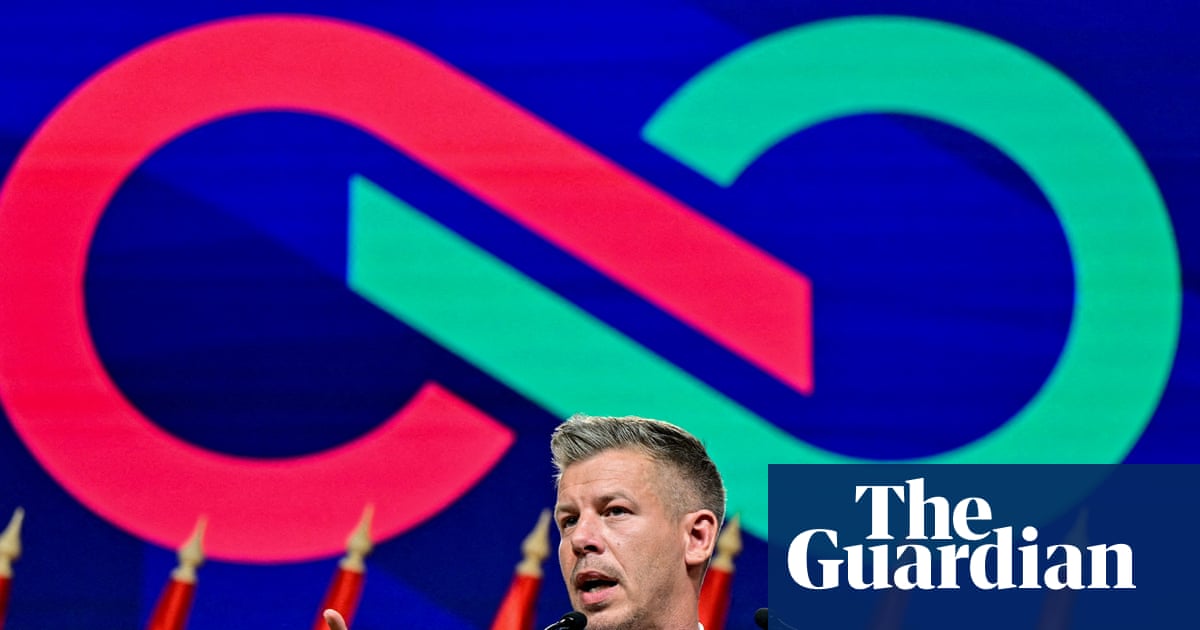
Péter Magyar’s opposition Tisza party secured a supermajority in the April 2026 parliamentary election, bringing an end to Viktor Orbán’s 16 years in power. A post-election poll published on Thursday shows strong support among Tisza voters for ambitious climate policy and LGBTQ+ rights protection. The new prime minister will be sworn in on Saturday.
The GuardianPéter Magyar’s opposition Tisza party won a supermajority in the Hungarian parliamentary election held in April 2026, ending Viktor Orbán’s 16 years in power. The new Hungarian prime minister will be sworn in on Saturday. The election results set off celebrations in Budapest and Brussels in April 2026.
Magyar, a former member of Viktor Orbán’s Fidesz party, has a conservative background. He avoided any pronouncements on progressive issues on the campaign trail. An estimated 80% of Hungary’s media is controlled by Fidesz loyalists.
A poll carried out in the days after the April 2026 Hungarian election was published on Thursday. About 77% of Tisza voters polled said they supported an ambitious climate policy. While 71% of Tisza voters polled supported or somewhat supported the new government protecting the rights of LGBTQ+ people, an area that experienced dramatic rollbacks under Viktor Orbán.
Pawel Zerka of the European Council on Foreign Relations, which commissioned the polling, said: “That was my biggest surprise in this polling. There is a very clear mandate for the new government to have a more progressive stance. ” The actions planned by Magyar and his government on climate and LGBTQ+ rights remain vague despite more than two years of campaigning and a 240-page election manifesto produced by the Tisza party.
The poll also revealed divisions on foreign policy questions central to the EU. While 64% of those polled said they expected the new government to improve relations with Kyiv, only 24% backed Budapest providing financial support for Ukraine and 12% backed the provision of military support. More than half of those surveyed, 52%, were opposed to halting Hungary’s Russian energy imports.
Pawel Zerka said: “Péter Magyar’s landslide victory was a vote for domestic change, not for a geopolitical U-turn. 73% of respondents said they were confident that Hungary would gain access to the frozen recovery funds.
The Guardian reported that the EU’s efforts to reshape its relationship with Hungary will partly depend on whether Magyar can first focus on domestic change. Fidesz holds 52 seats in Hungary’s 199-seat parliament. Pawel Zerka said: “Viktor Orbán still has ways to control the situation, at least partly through his people at various levels of state institutions.
The Guardian reported that the poll highlights conflicting pressures facing the new government as it prepares to take office.
Key Facts
Story Timeline
4 events- 2026-04
Péter Magyar’s Tisza party won a supermajority in the Hungarian parliamentary election, ending Viktor Orbán’s 16-year tenure
1 sourceThe Guardian - 2026-04
Election results triggered celebrations in Budapest and Brussels
1 sourceThe Guardian - 2026-05-07
Post-election poll published showing Tisza voter support for climate action, LGBTQ+ rights, and improved EU relations
1 sourceThe Guardian - 2026-05-09
New Hungarian prime minister scheduled to be sworn in
1 sourceThe Guardian
Potential Impact
- 01
Orbán’s Fidesz retains influence through 52 parliamentary seats and loyalists in state institutions, potentially constraining the new administration
- 02
New government faces pressure to pursue progressive policies on climate and LGBTQ+ rights while navigating divided public opinion on foreign policy
- 03
Limited public support for Ukraine aid may limit Hungary’s alignment with broader EU geopolitical positions
- 04
Improved EU relations could unlock frozen recovery funds, but pushing too hard risks undermining Magyar’s domestic agenda
Transparency Panel
Related Stories
BBC NewsTrump Meets Advisers to Decide on Iran Ceasefire Extension
President Trump said he is holding a Situation Room meeting to make a final decision on a possible deal with Iran. The proposed agreement would extend the ceasefire by 60 days and reopen the Strait of Hormuz.
Trump to Decide on Iran Deal in Situation Room Meeting
President Trump said Friday he is heading into the Situation Room to make a final determination on a potential agreement with Iran. The proposed deal would reopen the Strait of Hormuz without tolls and require destruction of Iran's highly-enriched uranium.
realitytea.comTrump Says U.S. Will Lift Iran Naval Blockade After Nuclear and Hormuz Pledges
President Trump stated the U.S. will end its naval blockade of Iran once Tehran commits to forgoing nuclear weapons and opens the Strait of Hormuz to unrestricted shipping. The announcement came via Truth Social and a live statement.