Researchers Document Rare Humpback Whale Jaw-Gaping Behaviour During Migration
Citizen scientists captured footage of humpback whales performing a jaw-gaping display during their annual migration along Australia's coast. A Macquarie University study of 66 whales suggests the behaviour may serve as a social display rather than feeding. The behaviour has been documented in both western and eastern Australian waters as the migration season begins.
 The Guardian
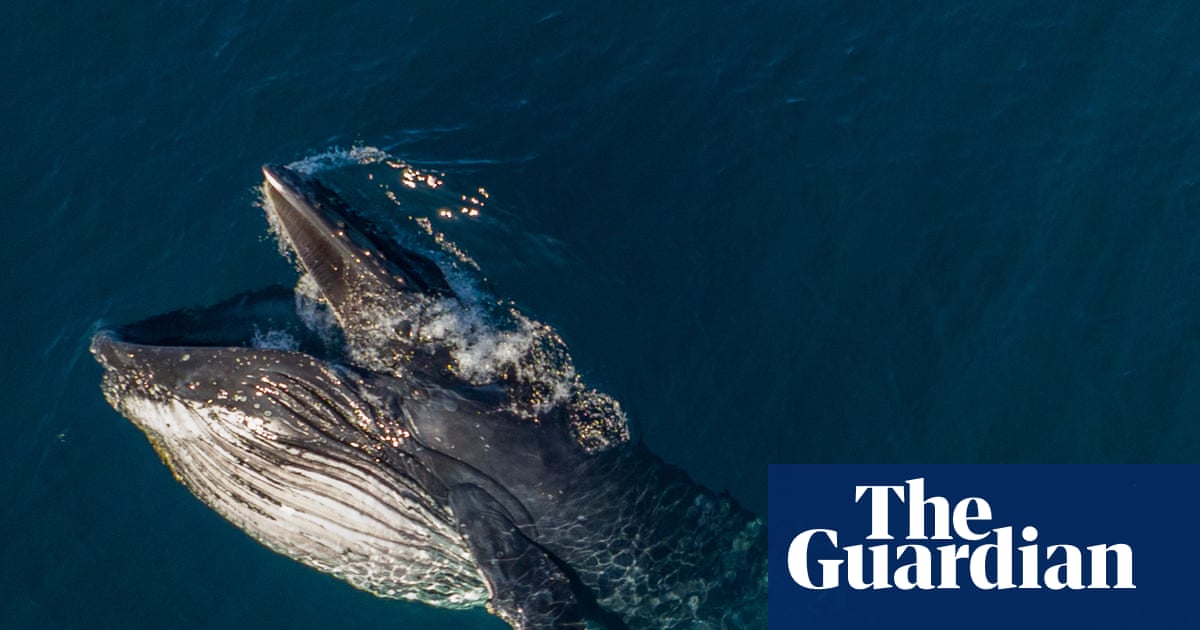
On the coast of Western Australia, a humpback whale was observed pirouetting while sweeping its pectoral fins through the water with its jaw hanging wide open. The animal was surrounded by other whales but was not lunging for food. The footage, captured by an onlooker and shared online, provides one of the clearest examples of a rarely documented behaviour known as gaping.
As autumn arrives, humpback whales begin their annual migration from Antarctic waters to warmer breeding grounds off Queensland and northern New South Wales. May marks the start of this journey, which also signals the beginning of whale-watching season for those with views of the shoreline.
A Macquarie University study released ahead of this year's migration used social media footage from citizen scientists to examine the jaw-gaping behaviour. The study analysed footage of 66 humpback whales, including the individual observed in Western Australia.
Researchers determined that the gaping could function as a social display. The behaviour has been recorded in breeding grounds and along migratory routes.
A whale scientist stated that tourism operators and citizen scientists who spend hours observing whales represent a valuable resource for capturing and reporting on behaviour. The researchers termed the action gaping and suggested it could represent play, social signalling, interaction with debris or calves stretching their jaws.
The behaviour differs from feeding. Baleen whales typically open their jaws wide when feeding on concentrated prey such as fish or krill. This involves acceleration, prey capture and dramatic throat expansion, often coordinated in groups using bubble rings.
In contrast, gaping lacks acceleration and prey capture. The mouth simply hangs open, sometimes above water and sometimes below. The study noted that the behaviour occurs in locations where whales are often fasting during migration and breeding.
An organisation focused on cetacean rescue and research reported that the behaviour is often associated with lunge feeding, a strategy in which a whale accelerates to engulf a large volume of water before expelling it through baleen plates. The new paper presents gaping as a distinct behaviour.
A whale watching operator on the east coast said observing the behaviour there is particularly notable because humpback whales generally do not feed during the four to six months of migration. The animals rely on fat reserves while travelling and breeding.
The operator has also noted an increase in mugging, when whales lift their heads to look at people on boats. East coast whale migration typically runs from mid-May to mid-November. The operator's team plans to begin daily whale encounters on 22 May after early sightings have already been reported.
The rescue organisation recorded a 93 percent spike in hotline calls in March compared with prior periods. Officials noted 19 strandings and 28 entanglements across New South Wales in 2025. As whales move closer to shore, coastal activity raises the risk of vessel strikes and fishing gear entanglements.
The organisation's president stated that this is one of nature's great migrations but also one of its most vulnerable periods. The group emphasised that citizen scientists have become the main drivers of whale tracking due to limited funding. Authorities are reminding the public to maintain distance from whales.
All vessels, surfboards and drones must remain at least 100 metres away, increasing to 300 metres for jetskis or when calves are present. NSW National Parks and Wildlife Service has identified multiple land-based vantage points for viewing the migration, including locations in Sydney Harbour national park, Royal national park and sites further north and south along the coast.
Boat tours may provide the closest views of rare gaping behaviour. The whale watching operator noted that humpback whales are naturally playful and inquisitive, with young whales often observed jumping, splashing and learning to breach.
Key Facts
Story Timeline
5 events- 2026-05-10
Macquarie University study on humpback gaping behaviour is released using citizen science footage.
1 sourceThe Guardian - May 2026
Humpback whale migration from Antarctic waters to eastern Australia begins.
1 sourceThe Guardian - March 2026
Orrca hotline calls spiked 93% amid increased whale activity.
1 sourceThe Guardian - 2025
19 whale strandings and 28 entanglements recorded across New South Wales.
1 sourceThe Guardian - 22 May 2026
Whale Tales plans to begin daily whale encounters.
1 sourceThe Guardian
Potential Impact
- 01
Citizen scientists will continue providing primary data on whale movements and behaviour.
- 02
Increased whale activity near shore may raise vessel strike and entanglement risks.
- 03
Public awareness of distance rules could reduce disturbance during migration.
- 04
Whale watching operators may see higher demand for boat tours to observe rare behaviours.
Transparency Panel
Related Stories
 Npr
NprWHO Director Visits Congo as Ebola Outbreak Spreads
The head of the World Health Organization arrived in Kinshasa to support efforts against a rare Ebola strain. Health workers face equipment shortages, community distrust, and armed conflict in affected provinces.
 medpagetoday.com
FDA Panel Recommends XFG Variant for Fall Covid Shots
Replimune will submit an application to the FDA for the third time. Pfizer and Innovent Biologics reached a collaboration agreement valued at up to $10.5 billion.
Benzinga Publishes Article on Biotech Stocks During Pandemic Recovery
Benzinga published an article titled 'Best Biotech Stocks Right Now' that addresses the sector's position during global recovery from the pandemic. The piece notes government institutions and professional traders are focusing on biotech companies for vaccine and booster developme…