Unbiased AI-powered news
Russia announced a unilateral ceasefire in Ukraine for May 8-9 to mark Victory Day, warning of a massive missile strike on Kyiv if disrupted. Ukraine's president countered with an earlier truce starting May 5-6. Recent attacks killed civilians on both sides amid ongoing conflict.
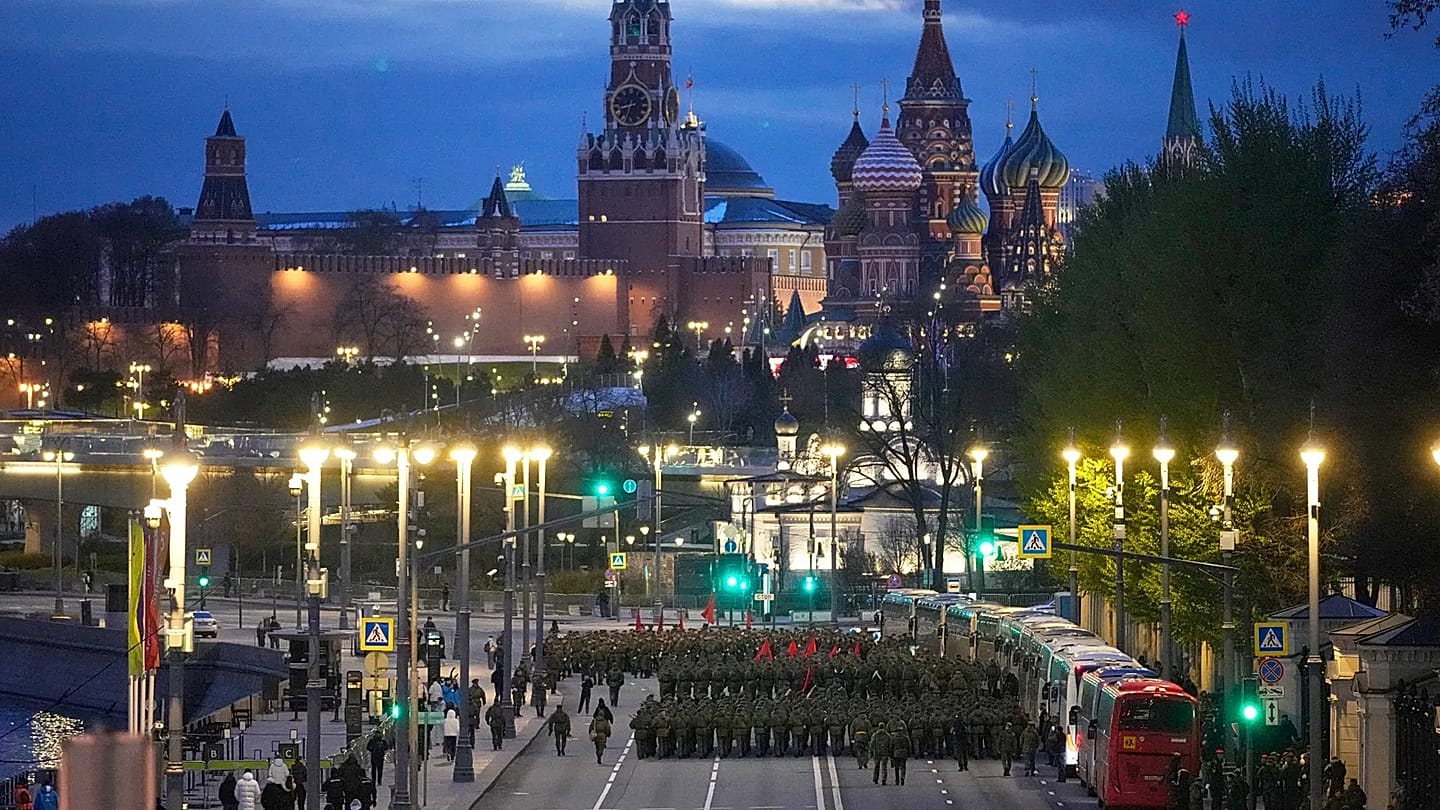
EuronewsRussia's defense ministry declared a unilateral ceasefire in Ukraine from May 8 to 9, 2026, coinciding with the country's Victory Day commemorations marking the 81st anniversary of the World War II victory over Nazi Germany. The announcement, made on Monday, included a threat of a massive missile strike on central Kyiv if Ukraine attempted to disrupt the events.
The ministry expressed hope that Ukraine would reciprocate, while advising Kyiv civilians and foreign diplomatic staff to leave the city promptly. The ceasefire proposal originated from a phone conversation last week between Russian President Vladimir Putin and U.S. President Donald Trump.
Russia's defense ministry stated the truce followed a decision by Putin in his role as supreme commander-in-chief. Separately, Ukraine's President Volodymyr Zelenskyy announced his own ceasefire regime, set to begin at midnight on May 5-6, noting that Russia's proposal had not been officially communicated to Kyiv.
Russia has scaled back its annual Victory Day parade in Moscow, opting to exclude military hardware for the first time in nearly two decades due to fears of Ukrainian drone attacks. The defense ministry cited potential long-range strikes as the reason for paring down the event on Red Square.
Similar adjustments have affected smaller parades across Russia, with some canceled outright for security reasons. Zelenskyy's announcement emphasized reciprocity and urged Russian leaders to take concrete steps to end the war. He highlighted that Russia's defense ministry appeared to acknowledge the parade's dependence on Ukraine's restraint.
The Ukrainian leader's post on X came on Monday night, positioning the earlier start as a realistic path to establishing silence along the front lines.
“We are announcing a ceasefire regime starting at 00:00 on the night of May 5–6. In the time left until that moment, it is realistic to ensure that silence takes effect. We will act reciprocally starting from that moment.”
Monday, Russian missile attacks struck eastern and southern Ukraine, resulting in civilian deaths. In the town of Merefa near Kharkiv, a ballistic missile killed seven people, including men and women, and wounded dozens more, according to Kharkiv regional governor Oleg Synegubov.
He initially reported five fatalities but later updated the toll after two wounded men died in hospital. Synegubov noted that a two-year-old boy was among the injured but did not require hospitalization. The strike targeted civilian infrastructure far from the front line, in an area where Russian forces have been advancing after being pushed back in 2022.
In the southern Zaporizhzhia region, another attack on the village of Vilnyansk killed a married couple—a 51-year-old man and a 62-year-old woman—and wounded their 31-year-old son along with three others, as reported by governor Ivan Fedorov. Fedorov described the incident in Vilnyansk, located near the regional capital toward which Russian troops have been progressing.
Meanwhile, in Russia's Belgorod region, governor Vyacheslav Gladkov reported that a Ukrainian drone strike killed one civilian and wounded seven others, including a 10-year-old boy, in a border area. These incidents occurred as deadly attacks have increased in recent weeks, amid sidelined U.S.-led talks on ending the conflict due to the Iran war.
Day remains a significant holiday in Russia, commemorating the Soviet Union's enormous losses of 27 million people during World War II, known there as the Great Patriotic War. The event has traditionally showcased military might through parades, but this year's restrictions reflect ongoing security threats from the more than four-year conflict.
Putin has positioned the holiday as a pillar of national identity, using it to frame the current war. A similar unilateral ceasefire was declared for 72 hours starting May 7, 2025, with measures like blocking cellphone internet in Moscow to prevent attacks.
The current truce echoes that approach, though Ukraine's response introduces an earlier timeline. The defense ministry's warning about Kyiv included specific threats tied to any attempts to interfere with the May 9 celebrations. No immediate Ukrainian comment followed Russia's initial announcement, but Zelenskyy's later statement addressed the lack of formal notification.
Both sides continue to report cross-border incidents, with Russian forces focusing on territorial gains in Kharkiv and Zaporizhzhia regions.
america.cgtn.comAbelardo de la Espriella defeated Iván Cepeda 49.7 percent to 48.7 percent in Colombia's June 21 runoff. The preliminary tally covered more than 99 percent of ballots and showed a margin under one point.
China placed 10 American companies on an export control list and barred 46 others from government procurement projects. The steps follow a Pentagon decision to add Chinese firms to a list of entities accused of supporting Beijing's military.
news.sky.comPresident Donald Trump stated Sunday that British Prime Minister Keir Starmer will resign, citing failures on immigration and energy policy. The comments coincide with reports of internal Labour Party pressure and a potential leadership challenge.