Russian Opposition Party Elects Ilya Yashin Chairman and Renames Itself at Berlin Congress
Delegates of Peaceful Russia gathered in Berlin on June 12 and 13, elected Ilya Yashin chairman, and changed the party name during a twelve-hour meeting.
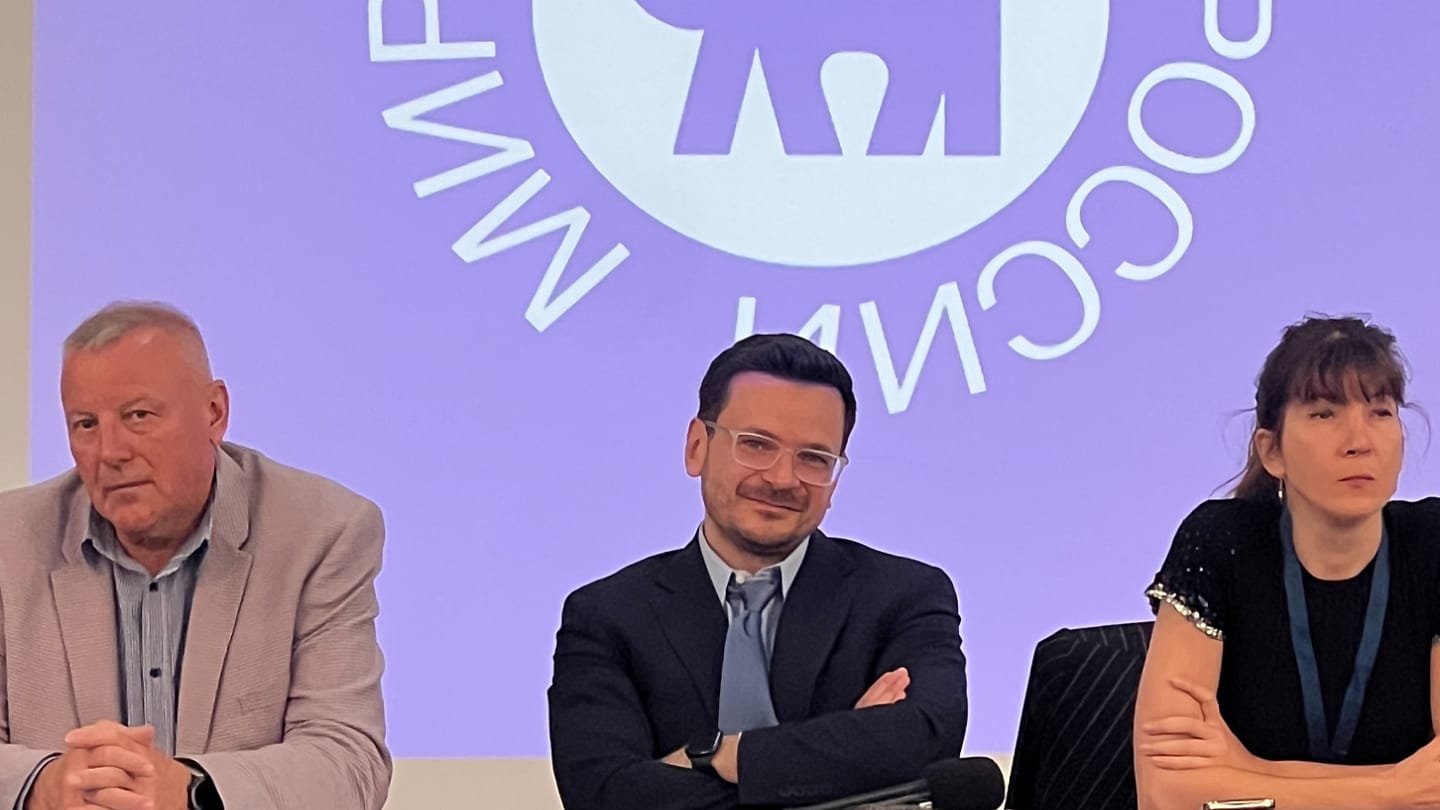 Euronews
Delegates of the Russian opposition party Peaceful Russia gathered in Berlin on June 12 and 13 for a party congress that lasted about twelve hours. A total of 126 delegates were invited to the meeting, which adopted the party program and elected a new chairman. Ilya Yashin, a Russian opposition politician and former political prisoner, was elected chairman with around 60 percent of the vote.
The party also changed its name from Peaceful Forces of Russia to Peaceful Russia during the congress. The word "Forces" was removed to avoid associations with repression in Russia and the war in Ukraine, Igor Kachetkov, a human rights activist and member of the organizing committee, told Euronews. "Ilya is an experienced politician.
He is a gifted speaker," delegate Alexander Archagov said. " Yashin addressed the challenges of operating from exile. "We have taken on this challenge. It is very difficult because we are based in Europe," he told Euronews.
" "Our main target audience is in Russia. Millions of our supporters are there," Yashin said. "Our party program and political message are aimed first and foremost at people in Russia who have no voice.
Yashin acknowledged that the party cannot operate legally in Russia but pointed to historical examples of opposition movements that emerged in exile and later came to power, including Vladimir Lenin's Bolshevik Party before the 1917 Russian Revolution. Delegate Maxim Reznik expressed concerns about the leadership structure. "I do not want Yashin to turn into a mini-Putin," Reznik told Euronews.
" "I think Ilya has chosen the wrong formula. he is trying to recreate a party modeled on the Communist Party of the Soviet Union," Reznik said. " Russia expert Andreas Heinemann-Grüder of the University of Bonn told Euronews that the Russian opposition has long struggled with leadership issues and that the new party must be decentralized and reflect Russia's ethnic diversity to succeed.