technology
Samsung Electronics Faces Potential Strike as South Korea Debates AI Chip Profit Sharing
Samsung Electronics and its labor union failed to reach a wage agreement after government-mediated talks, raising the prospect of an 18-day strike starting May 21. The company reported record operating profit of 43.6 trillion won last year and 57.23 trillion won in the first quarter of 2026, driven by demand for high-bandwidth memory chips used in AI systems.
May 13, 3:54 AM·2m read1 source
 South China Morning Post
Audio version
Tap play to generate a narrated version.
Developing·Limited corroboration so far. This page will refresh as more sources emerge.
South Korea's two largest memory chip makers posted combined operating profits of 90 trillion won ($61 billion) last year amid surging demand for high-bandwidth memory chips used in artificial intelligence systems and data centers. Samsung Electronics, the world's largest memory chipmaker, reported operating profit of 43.6 trillion won for 2025 while its first-quarter 2026 operating profit rose more than eightfold to 57.23 trillion won.
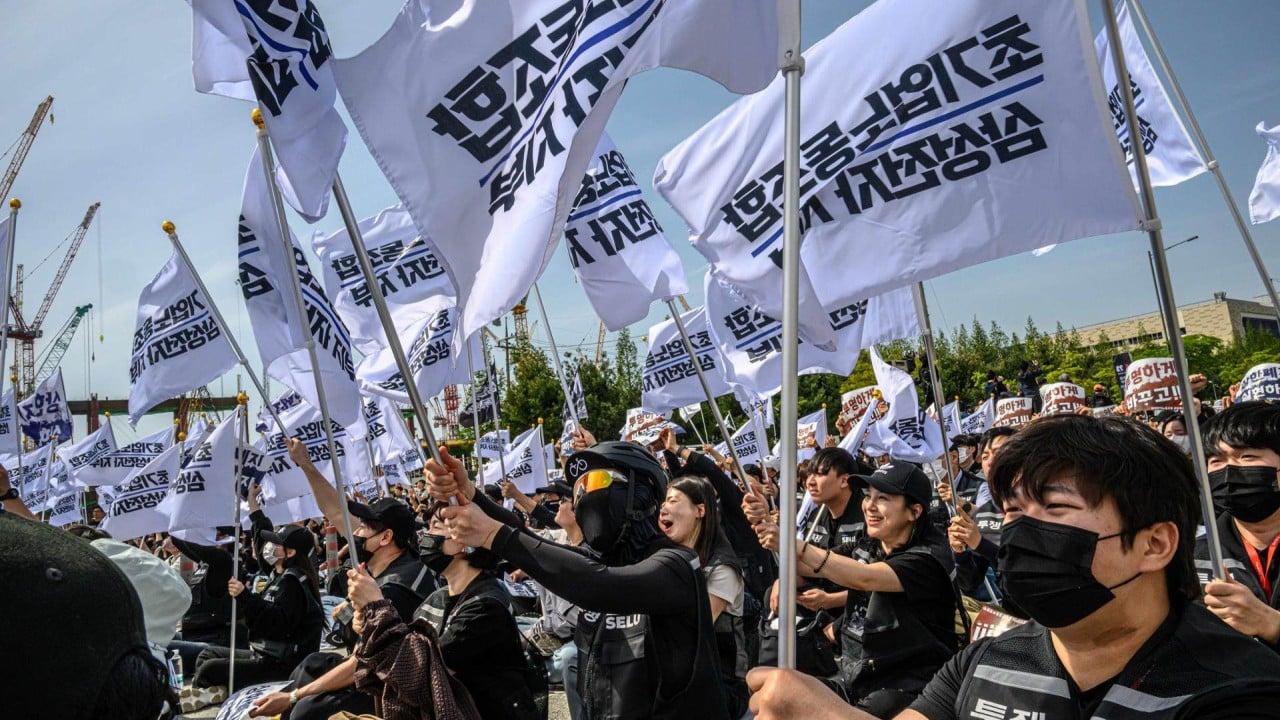
The company and its labor union failed to reach a wage agreement Wednesday despite two days of government-mediated talks. The union is seeking performance-based bonuses equal to 15 percent of operating profit and the removal of caps on bonus payouts.
It has threatened to begin an 18-day strike on May 21 if the demands are not met. SK hynix accepted similar union demands last year, setting bonus payments at 10 percent of operating profits and eliminating the cap on such payments. The outcome has contributed to dissatisfaction among some Samsung Electronics workers who say the company has not sufficiently rewarded staff despite higher earnings and rising stock valuations.
The combined market capitalization of Samsung Electronics and SK hynix represents about 47 percent of the benchmark Korea Composite Stock Price Index. A prolonged work stoppage at Samsung Electronics could affect semiconductor production and the country's export performance. Some estimates have placed potential economic losses from a full strike above 40 trillion won.
The labor dispute has coincided with broader discussion about distributing gains from the AI-driven semiconductor expansion. On Tuesday, the presidential chief of staff for policy suggested using excess tax revenue from the semiconductor supercycle to fund public dividends supporting startup funding, pension programs and worker training.