Strait of Malacca Emerges as Key Global Shipping Chokepoint Amid Regional Developments
Attention has shifted to the Strait of Malacca as a critical trade route following a defense partnership announcement between Indonesia and another major power. The strait handles significant portions of global seaborne trade, including oil and consumer goods. Alternative routes offer limited substitutes due to added distance and costs.
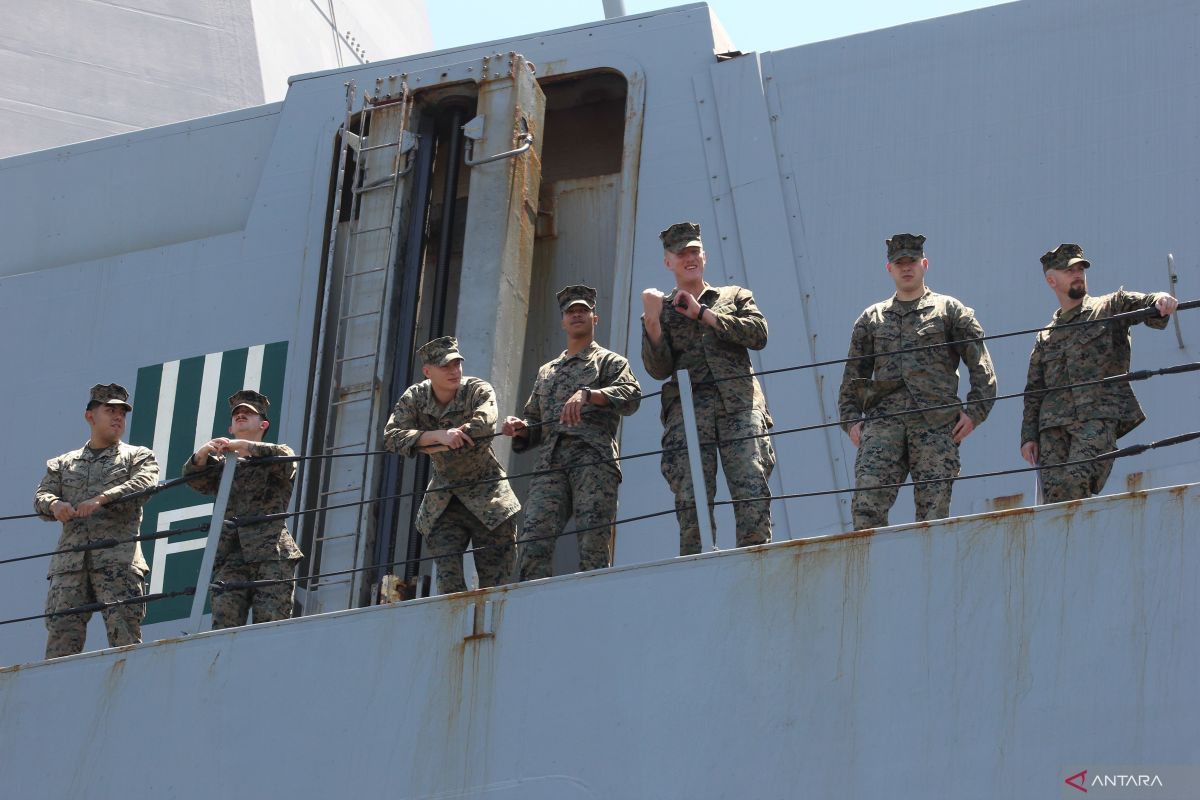
en.antaranews.comWhile global focus has been on the Strait of Hormuz, closed by Iran since late February and disrupting energy supplies, a development in a key region involves strengthened military ties. On April 14, Indonesia and another major power announced a defense cooperation partnership.
Reports indicate this includes efforts to gain wider access to Indonesian airspace. Media outlets reported that Indonesia's president, Prabowo Subianto, approved the proposal.
archipelago spans critical sea routes, including the Strait of Malacca, a vital chokepoint for shipping and trade. The region has seen increased military attention from external powers in recent years. One major power has expanded presence through base access and naval deployments, while China has done so via port networks and naval buildup.
The Andaman and Nicobar Islands, near the strait's western approaches, give India a strategic position. The area is increasingly linked to competition among powers, with the new partnership adding to this dynamic. If tensions rise, such as from a Taiwan crisis or Hormuz spillover, the strait could be central.
The Strait of Malacca connects the Indian Ocean to the South China Sea and Pacific, spanning about 900 kilometers from the Malay Peninsula to Sumatra. Its narrowest point, the Phillips Channel near Singapore, measures 2.8 kilometers wide. Nearly 24 percent of global seaborne trade by volume passes through it.
The strait carries 45 percent of the world's seaborne oil, over 25 percent of internationally traded cars, and 23 percent of dry bulk cargo like grains and soybeans. It also transports European imports of electronics, footwear, toys, machinery, and industrial goods in containers.

Singapore, at the strait's southern entrance, is the second-busiest container port, handling over 40 million containers annually, and the largest ship refueling hub. Port Klang in Malaysia ranks among the top ten, processing 14 million containers yearly.
detours, such as the Lombok Strait within Indonesian territory, are not straightforward replacements. Rerouting adds 1,000 to 1,500 nautical miles, or three to five extra days, plus higher fuel costs and loss of refueling options. The Torres Strait near Papua New Guinea is too shallow for large vessels over 12 meters draft.
Avoiding these requires detouring around Australia, adding ten to 15 days. These factors make the strait difficult to bypass. China recognizes this vulnerability, with former president Hu Jintao coining the 'Malacca dilemma' in 2003. About 75 to 80 percent of China's imported oil passes through it.
Beijing has invested in alternatives like pipelines from Myanmar to Yunnan, with 440,000 barrels per day capacity, compared to China's 11 million daily imports. The China-Pakistan Economic Corridor aims to link Gwadar Port to Xinjiang but faces delays from terrain and security issues.
Central Asian pipelines supply 10 percent of China's imported oil, while rail corridors to Europe are costlier and limited. Arctic routes along Russia's coast are seasonal and marginal. Currently, increased military presence shows no impact on commercial shipping, according to available reports.
However, future conflicts could affect trade-dependent economies like China.
Key Facts
Story Timeline
3 events- April 14
Indonesia and another major power announced a major defense cooperation partnership strengthening military ties.
1 sourceThe Independent - Late February
Iran effectively closed the Strait of Hormuz, disrupting world energy supplies.
1 sourceThe Independent - 2003
Then-president of China Hu Jintao coined the phrase 'Malacca dilemma' to describe strategic exposure.
1 sourceThe Independent
Potential Impact
- 01
Potential tensions might disrupt global supply chains reliant on the strait.
- 02
Increased military ties could enhance regional security cooperation between involved nations.
- 03
Trade-dependent economies could face higher shipping costs if detours become necessary.
- 04
China may accelerate investments in alternative energy routes to reduce vulnerability.
Transparency Panel
Related Stories
Trump Signs Memorandum to Revive Presidential Physical Fitness Award at White House Event
President Donald Trump signed a memorandum on May 5, 2026, restoring the Presidential Physical Fitness Award and reintroducing a competitive fitness test in U.S. schools. The event featured student athletes on the White House South Lawn, where Trump demonstrated his signature dan…
Spirit Airlines Cancels All Flights and Begins Wind-Down After Failed $500M Bailout Talks
Spirit Airlines announced the immediate wind-down of its operations on Saturday, canceling all flights and stranding passengers and workers. The decision followed the collapse of discussions with the Trump administration for a $500 million bailout. Other U.S. airlines offered res…
Democrats in Congress Urge Trump Administration to Acknowledge Israel's Nuclear Program
A group of Democrats in Congress sent a letter to the U.S. Secretary of State urging public acknowledgment of Israel's nuclear weapons program. The lawmakers cited risks of escalation amid the war in Iran and argued that U.S. silence on the issue affects credibility on global nuc…