science
Study Estimates 110 Quadrillion Kilometers of Fungal Networks in Topsoil
New research published in Science on 12 June 2026 provides the first global estimate of arbuscular mycorrhizal fungal networks and their carbon storage role.
 Grist
GristAudio version
Tap play to generate a narrated version.
Developing·Limited corroboration so far. This page will refresh as more sources emerge.
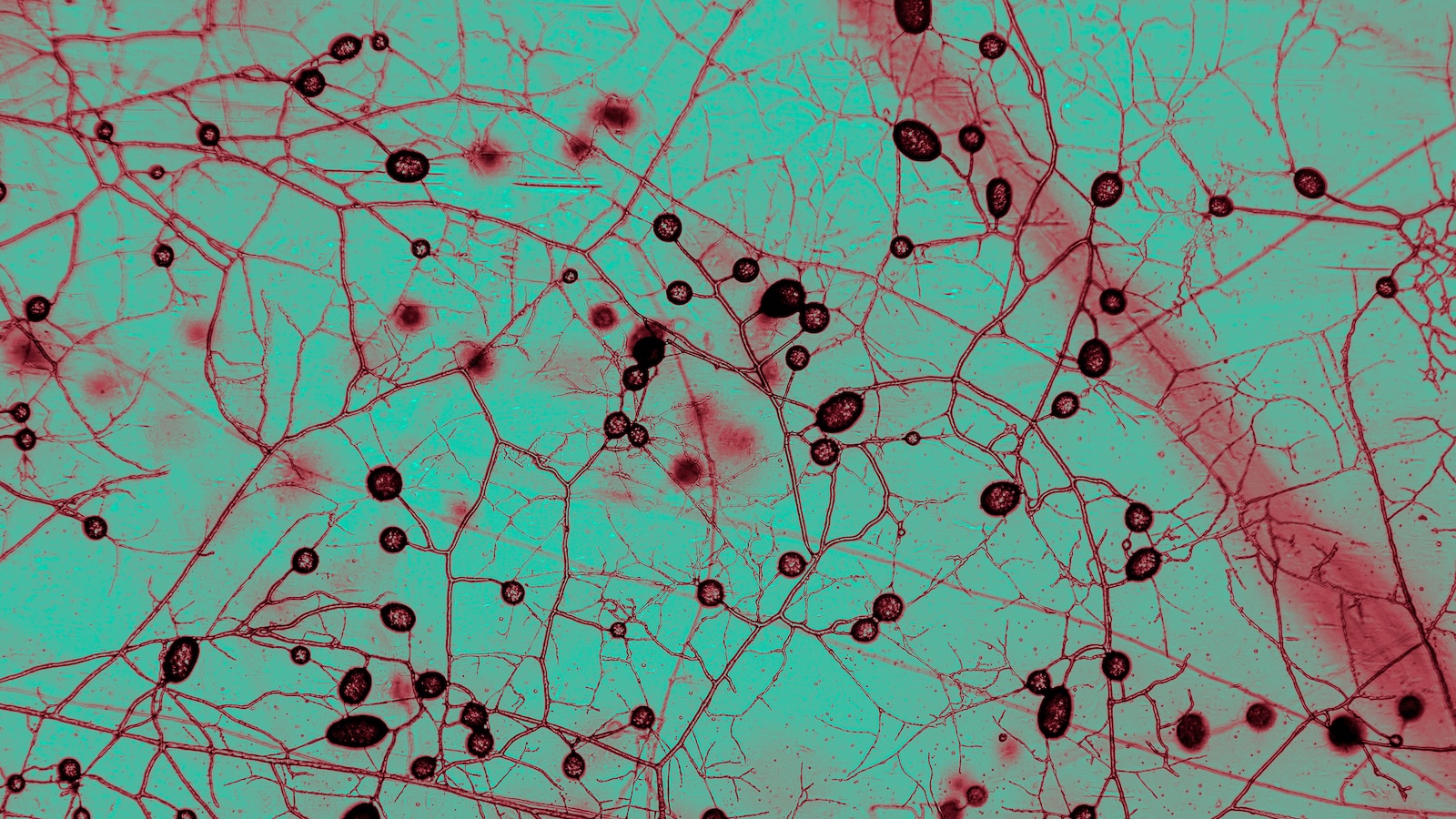
A study published in Science on 12 June 2026 estimates that 110 quadrillion kilometers of arbuscular mycorrhizal fungal networks exist in the top 15 centimeters of Earth's soils. The length equals nearly one billion times the 150-million-kilometer distance between Earth and the sun.
Researchers from the Society for the Protection of Underground Networks, or SPUN, compiled data from 322 studies that included more than 16,000 soil cores and more than 4,000 measurements of fungal thread density.
They applied machine learning to the geolocated samples to predict global network density and worked with the AMOLF research institute in Amsterdam to measure the thickness of more than 300,000 living fungal threads. The networks have an estimated total biomass of 300 million tons, four to six times the total living human biomass.
They sequester approximately 1 billion tons of carbon underground each year and move roughly 4 billion tons of carbon dioxide equivalent from plants into underground ecosystems annually.
Wild grassland ecosystems contain about 40 percent of the world's arbuscular mycorrhizal biomass. Fungal network densities in croplands are approximately half those in wild ecosystems, and grasslands are converted to farmland at four times the rate of forests.
"This is the moment where we went from knowing that this system exists to really knowing where it is, how dense it is and where it's been," said Toby Kiers, executive director and co-founder of SPUN and a co-author of the study.
Justin Stewart, an evolutionary ecologist at SPUN and lead author, said earlier studies resembled describing a forest by counting tree species without measuring its size or structure. Corentin Bisot, an AMOLF biophysicist and co-author, said researchers still lack practical methods to increase fungal density in specific locations.