Substrate
finance

Supreme Court Rules Against Race-Based Gerrymandering in Louisiana Case

The U.S. Supreme Court issued a ruling in Louisiana v. Callais, limiting the use of race as a predominant factor in drawing congressional districts under Section 2 of the Voting Rights Act. Justice Samuel Alito authored the majority opinion, which held that lower courts have sometimes applied the law in ways that encourage race-based discrimination.

TH
TH
The Guardian
GB News
The Federalist
Forbes
+2
8 sources·Apr 29, 2:00 PM(1 day ago)·1m read
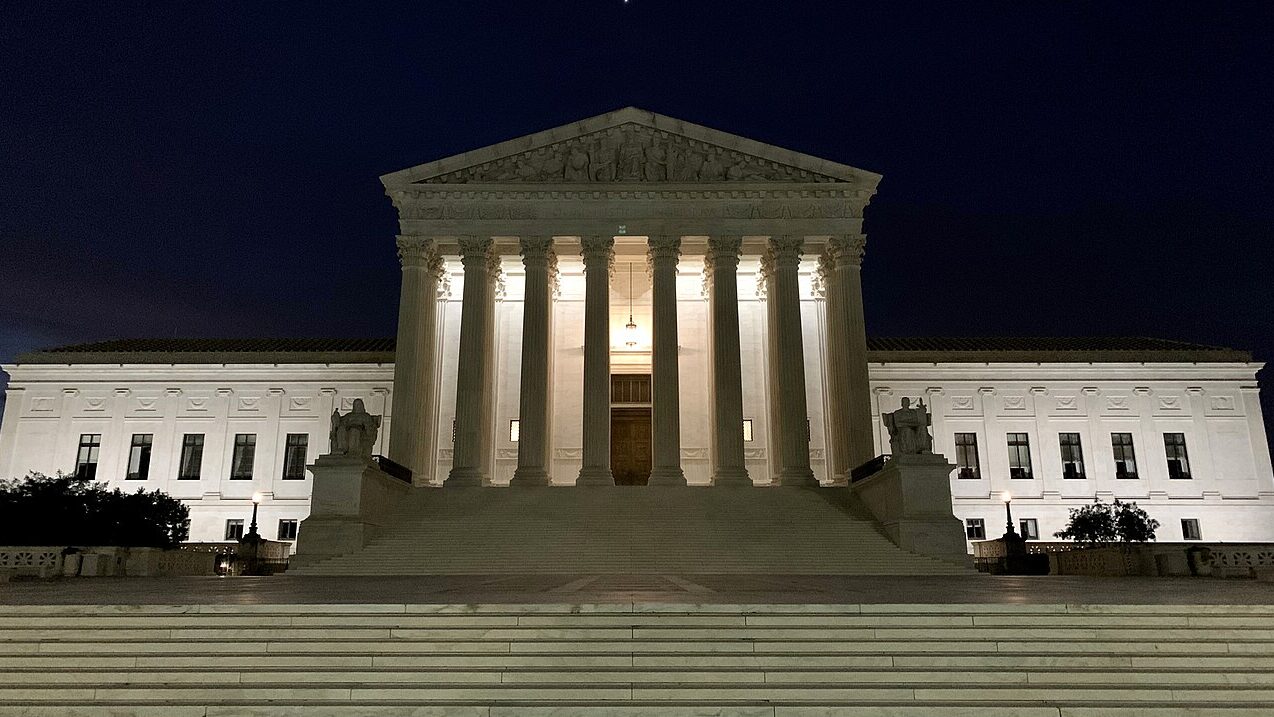
Supreme Court Rules Against Race-Based Gerrymandering in Louisiana CaseDiliff / Wikimedia (CC BY-SA 3.0)
Audio version
Tap play to generate a narrated version.

The U.S. Supreme Court ruled that states must avoid using race as the predominant factor in creating congressional districts, in a decision that clarifies the application of Section 2 of the Voting Rights Act. The case, Louisiana v. Callais, stemmed from Louisiana's creation of a second majority-black congressional district following a lower court order.

The high court found that while Section 2 prohibits intentional racial discrimination in voting, it does not require states to prioritize race in districting to the extent that it violates constitutional principles.

Alito wrote the majority opinion, emphasizing that lower courts' interpretations have sometimes forced states into race-based actions forbidden by the Constitution. The ruling does not eliminate Section 2 but refines its use, potentially enabling challenges to districts where race was the main consideration.

Alito's opinion secured a majority by focusing on practical application rather than fully overturning precedents.

The dispute arose after a lower court determined Louisiana's original map, with one majority-black district, likely violated Section 2. Louisiana then redrew the map to include a second such district, which was challenged as impermissibly race-based.

The Supreme Court's decision reverses the lower court's approach, citing the need to align with constitutional prohibitions on racial discrimination.

This ruling builds on prior decisions where Alito has crafted opinions to form majorities and advance incremental changes in jurisprudence. It references past cases like Hobby Lobby and American Legion, where narrow holdings set groundwork for broader shifts.

The decision could influence ongoing redistricting efforts across states, requiring evidence of intentional discrimination rather than presumptive racial balancing.

If a justice is assigned to write an opinion for the Court, the justice has to try to get at least four colleagues to agree, and that can be a difficult process." — Justice Samuel Alito, 2022 (The Federalist). The opinion highlights the challenges of building coalitions on the court for lasting legal changes.

Key Facts

Section 2
limits race as predominant districting factor
Louisiana v. Callais
case challenging majority-black district
Majority opinion
authored by Justice Samuel Alito
Constitutional prohibition
on intentional racial discrimination upheld

Story Timeline

4 events
  1. May 4, 8:03 PM ET

    1 new source added: The War Zone

    1 sourceThe War Zone
  2. This week

    Supreme Court issues ruling in Louisiana v. Callais limiting race-based districting.

    1 sourceThe Federalist
  3. Prior to ruling

    Lower court orders Louisiana to create second majority-black district.

    1 sourceThe Federalist
  4. 2022

    Justice Alito comments on challenges of building court majorities.

    1 sourceThe Federalist

Potential Impact

  1. 01

    States will review congressional maps for race predominance compliance.

  2. 02

    Future challenges to majority-minority districts will increase using this precedent.

  3. 03

    Redistricting processes in multiple states will adjust to avoid litigation.

  4. 04

    Lower courts will apply stricter scrutiny to Section 2 claims.

  5. 05

    Political parties will adapt strategies for upcoming elections.

Transparency Panel

Sources cross-referenced8
Framing risk25/100 (low)
Confidence score98%
Synthesized bySubstrate AI
Word count329 words
PublishedApr 29, 2026, 2:00 PM
Bias signals removed3 across 2 outlets
Signal Breakdown
Framing 1Loaded 1Diminishing 1

Related Stories

Sen. Tim Scott Criticizes Fed Chair Powell's Plan to Stay After Term EndsThe United States Senate - Office of Senator Kelly Loeffler / Wikimedia (Public domain)
finance5 hrs agoFraming55Framing risk55/100Lede misdirection foregrounds Scott's criticism over Powell's substantive decision to stay on the Fed board amid investigations, burying the core event.Click to jump to full framing analysis

Sen. Tim Scott Criticizes Fed Chair Powell's Plan to Stay After Term Ends

Republican Sen. Tim Scott criticized Federal Reserve Chair Jerome Powell for planning to remain on the Fed's Board of Governors after his chair term ends on May 15, 2026. Scott said the move breaks 75 years of precedent and suggested it might be aimed at President Trump. Powell c…

cnbc.com
New York Post
RealClearPolitics
3 sources
finance1 hr ago

UAE Leaves OPEC After 60 Years of Membership, Reducing Group to 11 Producers

The United Arab Emirates departed the Organization of the Petroleum Exporting Countries on Tuesday, reducing the group's membership to 11 nations. OPEC members now account for about 33% of global crude oil output. The exit occurs amid high oil prices and the ongoing closure of th…

BBC News
The Guardian
OilPrice.com
3 sources
US, Japan, and South Korea Stock Indices Reach Record Highs Despite Iran War DisruptionsEuronews
finance3 hrs agoDeveloping

US, Japan, and South Korea Stock Indices Reach Record Highs Despite Iran War Disruptions

Major stock indices in the United States, Japan and South Korea reached new all-time highs this week, even as the war in Iran disrupts global energy markets and shipping routes. Oil prices stand at a four-year high, with 10-12 million barrels a day disrupted in the Strait of Horm…

Euronews
Semafor
2 sources