Thousands Join May Day Protests Across US Amid Economic Divide Reports
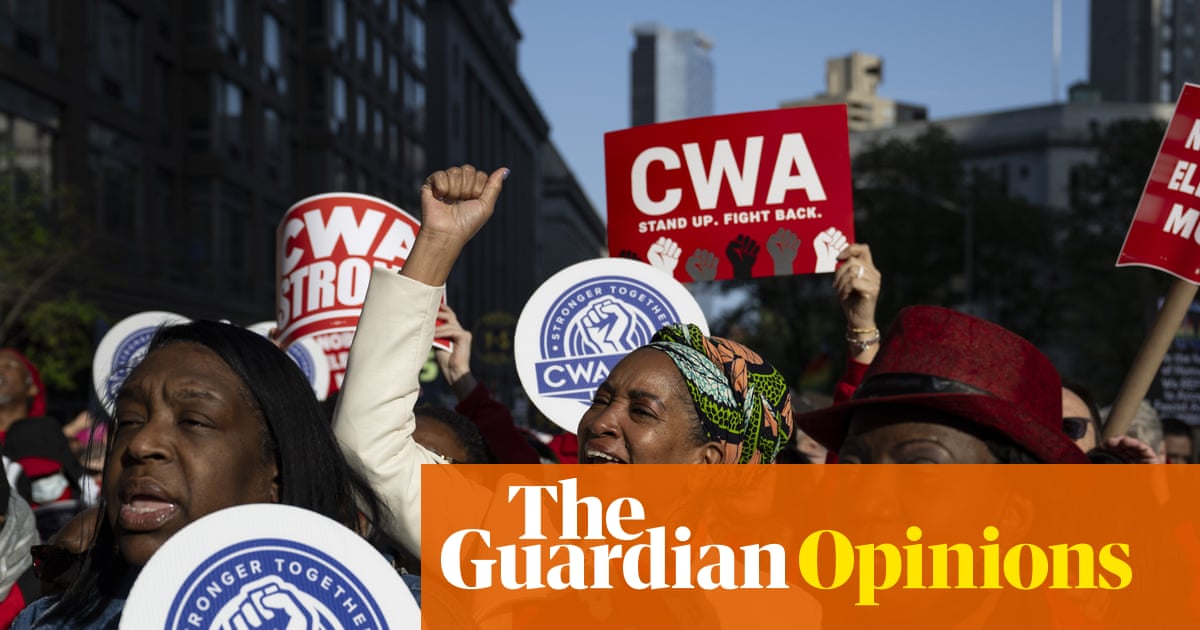
Thousands participated in May Day protests nationwide on May 1, calling for strikes and boycotts against billionaire influence and government policies. The events coincide with new research highlighting a K-shaped spending trend since 2023, where high-income households drive retail growth while others lag. Organizers demand shifts in tax burdens, immigration reforms, and increased public funding.
Chad Davis. / Wikimedia (CC BY-SA 4.0)Thousands of people participated in May Day protests across the United States on May 1, 2026, with organizers urging a boycott of work, school, and shopping. The demonstrations, held in cities including Washington, D.C., New York City, St. Louis, Charlotte, Raleigh, Chicago, and others, focused on issues such as billionaire influence in government, immigration policies, and economic inequalities.
Protests marked International Labor Day and built on prior anti-Trump actions under the 'No Kings' banner. A loose coalition of groups, including labor unions, student organizations, and community advocates, called for shifting the tax burden to the wealthy, eliminating Immigration and Customs Enforcement, ending wars, and limiting corporate sway in elections.
' Similar actions occurred in at least a dozen major cities.
New research from the New York Fed highlighted a K-shaped spending pattern that emerged in 2023, with high-income households—those earning over $125,000 annually—driving retail spending growth. Lower- and middle-income groups saw spending fail to keep pace after COVID-era subsidies ended.
The analysis noted that real net worth has also followed this divergent trend, with higher-income groups benefiting from stock market gains. The New York Fed researchers stated that reliance on high-income spending could make overall growth fragile, especially in a stock market correction.
Lower-income households have faced the hardest inflation impacts, and while they saw higher wage growth in 2023 and 2024, it has since slowed. This economic divide adds context to protest demands for policies prioritizing workers over billionaires.
The National Education Association, with 3 million members, played a key role in organizing the events. NEA President Becky Pringle said the focus is on putting workers ahead of billionaires, citing impacts on bus drivers, teachers, and nurses from underfunded services.

“We know there are bus drivers in New York and teachers in Idaho and nurses in Louisiana who are feeling the impact of a system that has decided … to put billionaires ahead of everyone else.”
In North Carolina, about 20 public school districts closed due to staff absences, with educators rallying in Raleigh for more education funding. Bryan Proffitt, a North Carolina teacher and vice president of the North Carolina Association of Educators, described the aim as increased investment in public schools, ending corporate tax cuts, restoring democracy, and expanding union rights.
The Charlotte-Mecklenburg Board of Education noted the closures stemmed from expected absences, emphasizing support for staff retention. Stacy Davis Gates, president of the Illinois Federation of Teachers and the Chicago Teachers Union, called for the ultra-rich to pay their fair share to fund schools, libraries, and infrastructure.
In Ohio, Nica Delgado, a Kent State University graduate student, helped organize a campus protest of about 100 students against state laws eliminating diversity, equity, and inclusion offices.
Day traces back to 19th-century U.S. efforts for an eight-hour workday, leading to events like the Haymarket Square riots in Chicago. The Fair Labor Standards Act, signed by President Franklin Delano Roosevelt in 1938, eventually set a 40-hour workweek.
Claire Valdez, a New York state assemblymember and union organizer, wrote that Americans are angry at the Democratic party establishment for abandoning the working class and funding actions in Gaza while ignoring domestic crises. She plans to join protests with United Auto Workers members in New York City.
“Americans are fed up – and not just with Donald Trump. People are angry at a Democratic party establishment that has abandoned the working class.”
United Auto Workers President Shawn Fain emphasized deciding the kind of world to live in and what actions to take. The UAW has set contracts to expire on May 1, 2028, calling for other unions to align for potential general strikes.
The White House issued a statement on May 1, declaring it 'Loyalty Day' to celebrate individual liberties. It highlighted the Trump administration's efforts for American workers, including renegotiating trade deals, securing manufacturing investments, slashing taxes on overtime, and border security.
Protests drew varied reactions. In St. Louis, Shayne Clegg of the Missouri Workers Center cited worker fatigue under the current regime and billionaire control. Anthony David of Empower DC in Washington noted displacement of long-standing communities amid investments.
North Carolina state Sen. Amy Galey criticized school closures, saying they harm students with few instructional days left. Organizers reported over 500 groups participating, with more than 3,000 protests nationwide—double last year's number.
Key Facts
Story Timeline
5 events- May 1, 2026
Thousands joined May Day protests nationwide, calling for boycotts and strikes against billionaire influence and Trump policies.
3 sourcesNPR · The Guardian · YahooFinance - May 1, 2026
White House declared May 1 'Loyalty Day' and issued statement on supporting American workers.
1 sourceNPR - 2023
K-shaped spending trend emerged, with high-income households driving retail growth after subsidies ended.
1 sourceYahooFinance - 1938
President Franklin Delano Roosevelt signed the Fair Labor Standards Act, setting a workweek of 44 hours, later reduced to 40.
1 sourceNPR - 1886
Workers struck for an eight-hour workday, leading to Haymarket Square events in Chicago.
1 sourceThe Guardian
Potential Impact
- 01
Protests increase pressure on state legislatures for higher education funding in places like North Carolina.
- 02
School closures in North Carolina disrupt education for thousands of students on May 1.
- 03
Union calls align contracts for 2028, potentially leading to widespread strikes.
- 04
White House response reinforces administration's worker support narrative amid criticism.
- 05
Economic research highlights risks to retail growth if high-income spending slows.
- 06
Demonstrations raise awareness of displacement in cities like Washington, D.C.
Transparency Panel
Related Stories
Trump Signs Memorandum to Revive Presidential Physical Fitness Award at White House Event
President Donald Trump signed a memorandum on May 5, 2026, restoring the Presidential Physical Fitness Award and reintroducing a competitive fitness test in U.S. schools. The event featured student athletes on the White House South Lawn, where Trump demonstrated his signature dan…
Spirit Airlines Cancels All Flights and Begins Wind-Down After Failed $500M Bailout Talks
Spirit Airlines announced the immediate wind-down of its operations on Saturday, canceling all flights and stranding passengers and workers. The decision followed the collapse of discussions with the Trump administration for a $500 million bailout. Other U.S. airlines offered res…
Democrats in Congress Urge Trump Administration to Acknowledge Israel's Nuclear Program
A group of Democrats in Congress sent a letter to the U.S. Secretary of State urging public acknowledgment of Israel's nuclear weapons program. The lawmakers cited risks of escalation amid the war in Iran and argued that U.S. silence on the issue affects credibility on global nuc…