Trump Criticizes Gorsuch and Barrett for Supreme Court Tariff Decision
President Trump criticized two Supreme Court justices he appointed for joining a decision against his tariffs program, saying it cost the U.S. $159 billion. The February ruling came as multiple Southern Republican-led states moved quickly to redraw congressional maps following a separate Supreme Court decision weakening parts of the Voting Rights Act.
 truthout.org
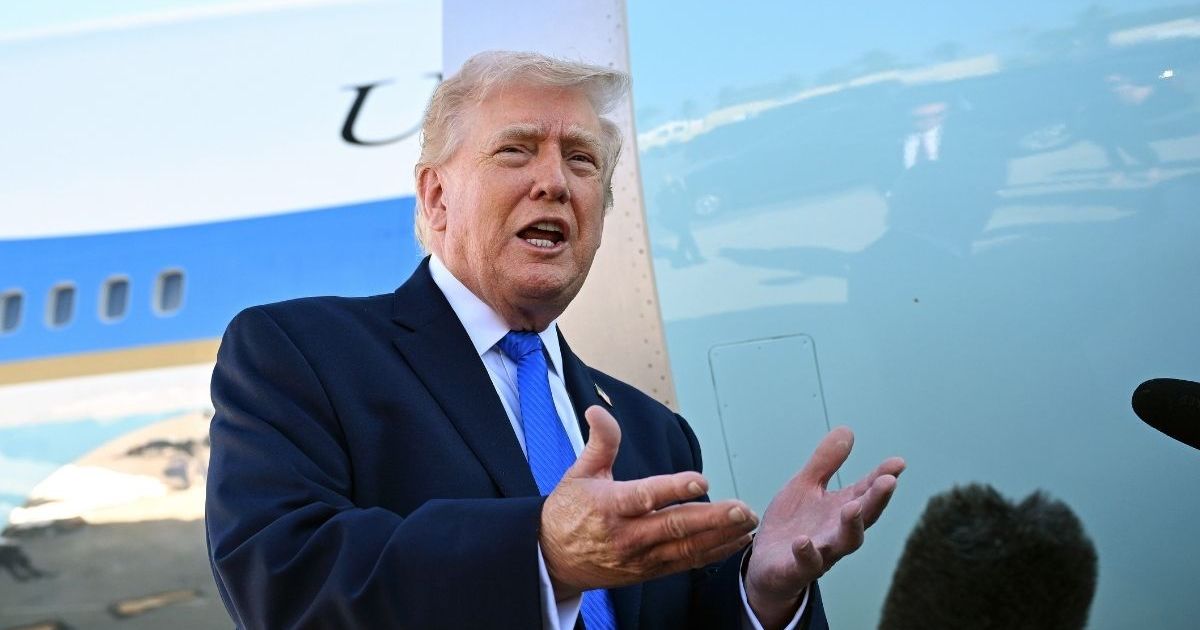
President Trump criticized two Supreme Court justices he nominated for joining a February decision that blocked his reciprocal tariffs program. In a lengthy Truth Social post late Sunday, Trump said the 6-3 ruling against the tariffs had cost the United States $159 billion that must now be paid back to trading partners and others he described as having ripped off the country for years.
Trump wrote that he loves Justice Neil Gorsuch, calling him a smart and good man, but added that Gorsuch voted against him and the country on tariffs in a devastating move. Trump suggested the justices could have added a single sentence to their opinion stating that any money paid by others to the United States does not have to be paid back.
The president said he is working hard to make America great again only to have people he appointed show so little respect. He contrasted Democratic justices, who he said always remain true to those who nominated them, with some Republican justices who he claimed go out of their way to oppose him to appear independent.
Trump added that he does not want loyalty but expects it for the country. Trump warned that a negative ruling on birthright citizenship, on top of the tariff decision, would not be economically sustainable. He predicted the court would soon rule against his executive order ending the principle of birthright citizenship, making the United States the only country that practices what he called an unsustainable, unsafe and incredibly costly disaster.
The justices have not indicated when they might issue that ruling in the case known as Trump v. Barbara. When the Supreme Court issued its tariff ruling on February 20, Trump called the majority opinion deeply disappointing and said he was ashamed of certain members of the court for lacking courage.
He described some conservative justices as fools and lapdogs for RINOs and radical left Democrats. Trump said Gorsuch and Barrett were an embarrassment to their families and to one another.
Callais. The 6-3 ruling, written by Justice Samuel Alito and joined by the court's other five conservative members including Gorsuch and Barrett, restricted the use of race in drawing certain districts under Section 2 of the Voting Rights Act. Tennessee enacted legislation that splits much of Memphis among three districts, diluting the votes of Black residents who make up a majority in the city and all but guaranteeing Republicans an additional House seat.
The move came barely a week after the Supreme Court ruling and overcame loud protests that included a confrontation between a Democratic lawmaker and state troopers. Louisiana Governor Jeff Landry invoked emergency powers to suspend a primary election already under way for U.S. House races, creating confusion among voters and election officials.
More than 42,000 ballots had already been cast when the suspension occurred. Landry postponed only the House primaries, leaving the competitive Senate primary schedule intact and prompting concerns about plummeting turnout. Alabama Republicans held votes during a tornado watch to set up new primary elections if courts allow redistricting.
The state remains under a federal court order not to redraw maps until after the 2030 Census but is seeking to have that injunction lifted. South Carolina legislators took initial steps toward redrawing the district held by Representative James Clyburn, though internal GOP concerns remain about possible risks in a Democratic-wave election.
Florida Republicans had already advanced a newly gerrymandered map that presumed the court would weaken the Voting Rights Act. Virginia's highest court struck down a Democratic-designed statewide referendum that could have given Democrats up to four additional House seats.
Collectively the moves could improve Republican chances of retaining their narrow House majority in this fall's midterm elections. Voting rights advocates described the speed of the GOP response as astonishing. They said the changes would lead to a steep decline in Black representation in Congress from the South.
Legal challenges to the new maps face a high bar under the standards set by the Callais decision.
“They destroyed the votes of one community for their own political partisan gain. They knew that they would take away the Black vote, and it’s just downright disgusting and egregious.”
“This feels like the echoes of the ‘southern strategy’ of the ’60s. This is diluting Black political power.”
Trump has publicly pressured red states to gerrymander as aggressively as possible, even if it means holding new primaries after some have already begun. He wrote on Truth Social that if states have to vote twice, so be it. Two days later, most candidates he backed in Indiana state Senate primaries defeated incumbent Republicans who had opposed a gerrymandering proposal.
Key Facts
Story Timeline
5 events- Feb 20, 2026
Supreme Court issues 6-3 ruling blocking Trump's reciprocal tariffs program.
2 sourcesThe Independent · Just the News - Last week
Supreme Court rules 6-3 in Louisiana v. Callais restricting race-based districting under Voting Rights Act.
3 sourcesThe Atlantic · The New York Times · Hot Air - This week
Tennessee enacts law splitting Memphis to eliminate majority-Black district.
2 sourcesThe Atlantic · The New York Times - This week
Louisiana Governor Landry suspends ongoing House primaries using emergency powers.
2 sourcesThe Atlantic - Sunday
Trump posts lengthy criticism of Gorsuch and Barrett on Truth Social over tariff ruling and upcoming birthright citizenship case.
2 sourcesThe Independent · Just the News
Potential Impact
- 01
Republican-led states are redrawing maps to reduce majority-minority districts in the South.
- 02
Legal challenges to new maps face higher burden under revised Voting Rights Act standards.
- 03
Voter confusion and lower turnout expected in affected Louisiana primaries.
- 04
Black representation in Congress from Southern states is likely to decline.
- 05
GOP chances of retaining narrow House majority in fall midterms have increased.
Transparency Panel
Related Stories
 France 24
Russian Drone Strikes Romanian Apartment Building, Injuring Two
A Russian drone crashed into a residential building in eastern Romania during an overnight attack on Ukraine. Two people were injured and Romania requested faster NATO anti-drone support.
 realitytea.com
Trump Says U.S. Will Lift Iran Naval Blockade After Nuclear and Hormuz Pledges
President Trump stated the U.S. will end its naval blockade of Iran once Tehran commits to forgoing nuclear weapons and opens the Strait of Hormuz to unrestricted shipping. The announcement came via Truth Social and a live statement.
 dnaindia.com
Lebanese President Urges Ceasefire in Call With U.S. Secretary of State
Lebanese President Joseph Aoun spoke with U.S. Secretary of State Marco Rubio about the need for a ceasefire with Israel. Israeli and Lebanese military delegations met at the Pentagon on the same day.