Substrate
finance

U.S. Enforces Blockade in Strait of Hormuz After Failed Iran Talks

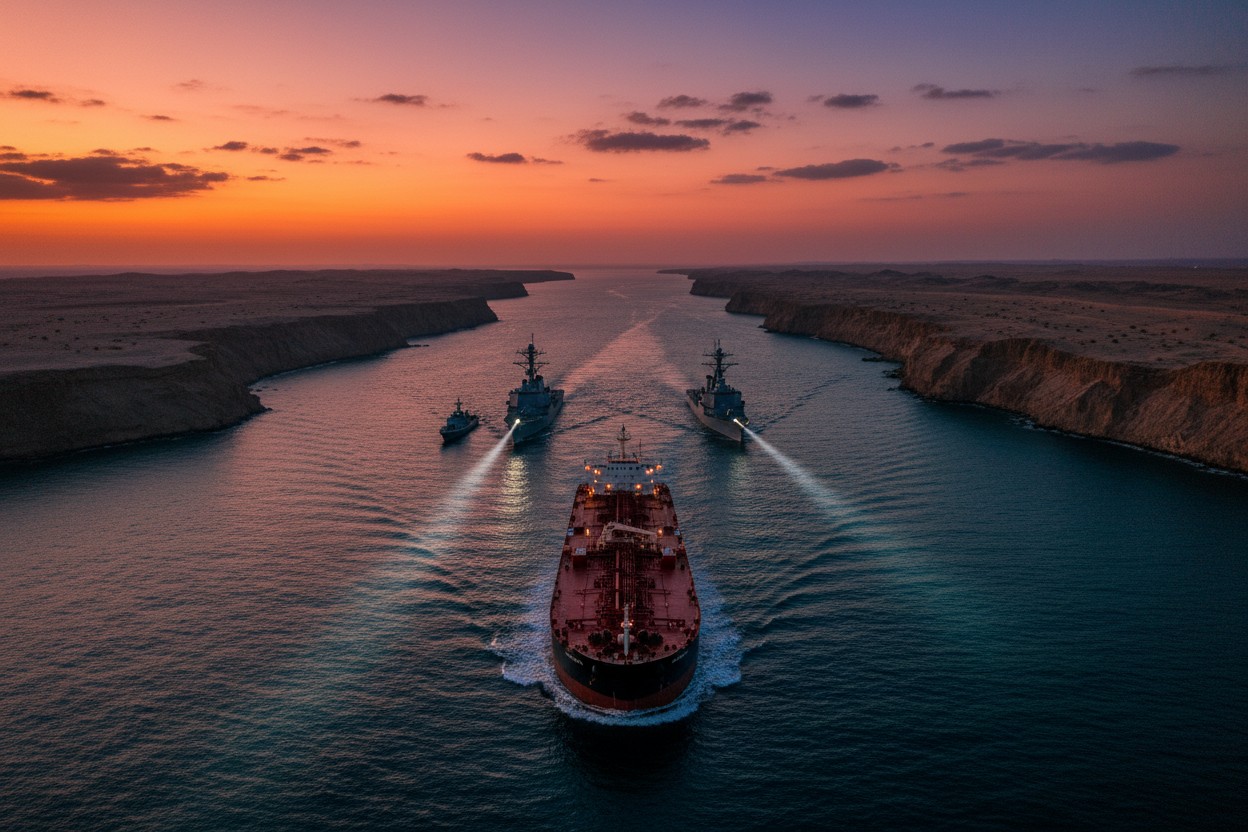
The U.S. has imposed a naval blockade on Iranian ports in the Strait of Hormuz following the failure of direct peace negotiations with Iran. Traffic through the strait remains limited, affecting global oil flows that typically account for 20% of the world's supply. Discussions for a second round of talks are underway, with potential resumption in Islamabad.

CNBC
BBC News
The Guardian
The New Yorker
Semafor
The Free Press
+1
9 sources·Apr 15, 12:58 AM(19 hrs ago)·3m read
U.S. Enforces Blockade in Strait of Hormuz After Failed Iran TalksThe New Yorker
Audio version
Tap play to generate a narrated version.

S. military has enforced a blockade on vessels entering or departing Iranian ports in the Strait of Hormuz since April 13, 2026. Central Command reported that during the first 24 hours, no ships passed the blockade, and six merchant vessels turned back to Iranian ports on the Gulf of Oman.

-Iran peace talks in Islamabad on April 12, 2026. The Strait of Hormuz, a key waterway off Iran's coast, normally handles 20% of global oil flows. S. and Israeli strikes. S. forces, including more than 10,000 sailors, Marines, and airmen, over a dozen warships, and dozens of aircraft, are enforcing the blockade.

Failed Negotiations and Blockade Announcement Direct talks between U.

S. and Iranian negotiators in Islamabad ended without agreement on April 12, 2026. Key issues included Iran's nuclear ambitions, with each side accusing the other of altering terms. S. delegation with special envoys Steve Witkoff and Jared Kushner, stated that further progress depends on Iran's response.

President Donald Trump announced the blockade on April 13, 2026, in response to the failed talks. He told reporters that the measure aims to prevent Iran from disrupting global trade. S. S. stance.

Potential Resumption of Talks A White House official stated on April 15, 2026, that a second round of U.

-Iran negotiations is under discussion, though no schedule has been set. Trump told the New York Post that talks could resume in Islamabad within the next two days. Pakistani and Iranian officials indicated to Reuters that in-person meetings might restart before the expiration of a two-week ceasefire agreed on April 7, 2026.

The ceasefire, proclaimed by Trump, was conditioned on the full reopening of the Strait of Hormuz. An official at the Iranian Embassy in Islamabad told Reuters that upcoming rounds could occur later this week or early next week, but details remain unconfirmed. CNN and NBC News reported similar possibilities for resumed negotiations.

The coming rounds of talks can come sometime later this week or earlier next week.

Regional and Economic Context Traffic through the Strait of Hormuz has been reduced to a trickle since Iran's initial restrictions.

S. blockade applies specifically to Iranian ports and coastal areas, including those on the Arabian Gulf and Gulf of Oman, while allowing passage for ships from other locations. This follows a period of heightened tensions amid the ongoing Iran war.

In related developments, Israel and Lebanon held their first direct diplomatic talks since 1993 on April 14, 2026, but achieved no major breakthrough in their conflict with Hezbollah. The two countries have lacked diplomatic relations since the 1980s, making the meeting notable. Hezbollah urged Lebanon to withdraw from the talks.


South Korean President Lee Jae Myung addressed the situation on April 14, 2026, noting ongoing disruptions in global energy and raw materials markets. He directed his government to develop alternative supply chains and strengthen emergency responses. High oil prices and supply-chain strains are expected to continue.

Ken Griffin, speaking at the Semafor World Economy Summit in Washington, DC, on April 15, 2026, warned that a prolonged closure of the strait for six to 12 months would lead to a global recession. The strait handles about 20% of global oil flows, according to the International Energy Agency. Energy markets have already shown volatility in response to the disruptions.

S. efforts to address Iran's actions in the region. Trump described the situation as Iran attempting to extort the world through control of the strait. Iranian officials have not commented further on the blockade's implementation.

Story Timeline

5 events
  1. April 15, 2026

    Second round of U.S.-Iran negotiations under discussion; Trump tells New York Post talks could happen in Islamabad over next two days.

    3 sourcesWhite House official · President Donald Trump · New York Post
  2. April 14, 2026

    Vice President JD Vance states next diplomatic move is Iran's to make.

    1 sourceVice President JD Vance
  3. April 12, 2026

    U.S. delegation led by Vice President JD Vance ends talks in Islamabad without deal.

    1 sourceunattributed
  4. April 7, 2026

    President Donald Trump proclaims two-week ceasefire subject to Strait of Hormuz reopening.

    1 sourcePresident Donald Trump
  5. Recent (unspecified)

    Tehran closes Strait of Hormuz in response to U.S.-Israeli strikes; Israel and Lebanon hold first direct talks since 1993.

    2 sourcesunattributed · unattributed

Potential Impact

  1. 01

    Advancement in Israel-Lebanon relations via first direct talks since 1993.

  2. 02

    Compliance with U.S. blockade by merchant vessels, as seen in first 24 hours.

  3. 03

    Disruption to global oil supply through Strait of Hormuz, which handles 20% of flows.

  4. 04

    Escalation of tensions due to U.S. blockade and Iranian closure of strait.

  5. 05

    Potential restart of U.S.-Iran talks in Pakistan, possibly before ceasefire expires.

Multi-source corroboration verifies facts, not framing. This panel scores the Substrate rewrite you just read (top score) and the raw source bundle it came from. A positive delta means the rewrite stripped framing from the sources; a negative or zero delta means our neutralizer let some through.

Sources vs rewrite
Sources
55/100
Rewrite
65/100
Delta
+10
Source framing: Sources frame US blockade as aggressive escalation amid failed talks, foregrounding Trump's actions and economic threats over negotiation progress.
Interventions:signal-correction retry
How else this could be read

The US blockade enforces a ceasefire condition by countering Iran's extortionate closure of the Strait, pressuring Tehran toward genuine nuclear concessions.

Signals detected
  • Lede misdirectionnotable
    Title and lede focus on 'U.S. Enforces Blockade' rather than Iran's initial restrictions or failed talks as core event.
    Foregrounds U.S. response over substantive conflict triggerThe headline leads with who shared, posted, or reacted to the event rather than the substantive event itself — burying the actual news behind the messenger.
  • Valence skewminor
    Trump 'announced' and 'proclaimed' ceasefire; Iran 'accusing' and attempting to 'extort' the world.
    Positive/neutral verbs for U.S. actions, negative for IranAdjectives and adverbs systematically slant toward one interpretation even though the underlying facts are neutral.
  • Loaded metaphorminor
    Iran attempting to 'extort the world through control of the strait'.
    Loaded term frames Iran as aggressor in shared source narrativeSources share the same narrative framing verbs (“sow doubt”, “spark backlash”) — a sign of a shared template, not independent reporting.
Source ideological mix
Left 7Center 0Right 1
All 8 classified sources lean the same direction (88% uniformity). Corroboration from same-lean outlets can amplify shared framing. (1 unclassified outlet excluded.)

Transparency Panel

Sources cross-referenced9 — 7/8 share a lean
Framing risk65/100 (moderate)
Confidence score83%
Synthesized bySubstrate AI (grok-4-fast-non-reasoning:fact-pipeline)
Word count583 words
PublishedApr 15, 2026, 12:58 AM
Bias signals removed3 across 3 outlets
Signal Breakdown
Loaded 3

Related Stories

Trump Announces Plans to Replace Fed Chair Powell and Review UK Trade DealGB News
finance1 hr ago

Trump Announces Plans to Replace Fed Chair Powell and Review UK Trade Deal

President Donald Trump threatened to fire Federal Reserve Chair Jerome H. Powell if he does not resign soon. Trump also warned of changes to the UK-US Economic Prosperity Deal due to Britain's stance on the Iran war. The Strait of Hormuz remains contested with a U.S. naval blocka…

Cnn
WA
CO
The New York Times
The Washington Post
+17
22 sources
Trump Says He Will Fire Fed Chair Powell If Term Extendedcnbc.com
finance5 hrs ago

Trump Says He Will Fire Fed Chair Powell If Term Extended

President Donald Trump said he would fire Federal Reserve Chair Jerome Powell if Powell does not leave the central bank after his successor is confirmed. Trump also stated that an investigation into the renovation of the Fed's headquarters must continue. Powell's term as chair ex…

cnbc.com
dailycaller.com
washingtontimes.com
UN
DI
5 sources
US Treasury Announces Continued Efforts Against Iran's Illicit Networks and Record Tax Refundsjpost.com
finance1 hr ago

US Treasury Announces Continued Efforts Against Iran's Illicit Networks and Record Tax Refunds

The US Treasury stated it will continue actions to dismantle Iran's illicit smuggling and terror proxy networks. Treasury officials also confirmed a record tax refund season this year, attributing it to tax cuts for working families. The announcements come amid mentions of high g…

FI
FI
MA
3 sources