U.S. and Germany Rift Clouds Plans for Long-Range Missile Deployment
The German defense ministry said there has been no definitive cancellation of a planned U.S. Army long-range fires battalion deployment to Germany, even as relations between Berlin and Washington remain strained. The United States announced it would withdraw 5,000 troops from Germany following disagreements over the Iran war and tariff issues.
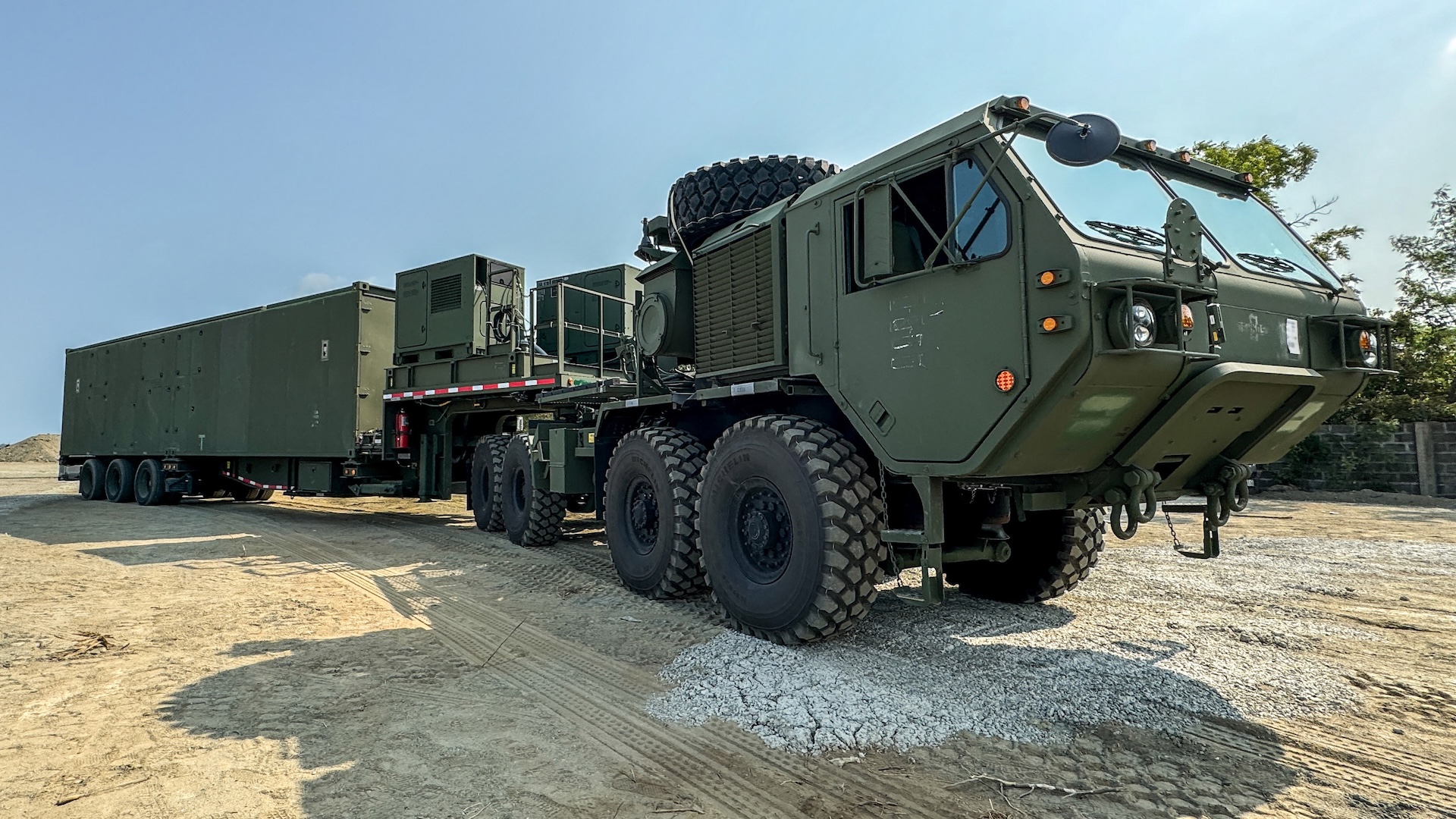 The War Zone
The German defense ministry said today there has been no definitive cancellation of U.S. plans to deploy a long-range fires battalion equipped with advanced conventionally armed missiles to German soil. A ministry spokesperson told Reuters the weapons were meant to be stationed there and may well still arrive.
At the same time, officials said European nations are preparing to procure their own systems should the American missiles not materialize. The uncertainty follows multiple weekend reports that the Pentagon had abandoned plans to send the 2nd Multi-Domain Task Force, known as 2MDTF, to Germany.
Those reports came amid a broader rift between the two countries. The United States announced it would reduce its military presence in Germany by 5,000 soldiers over the next six to 12 months, a figure that represents 14 percent of the 36,000 U.S. troops currently stationed there.
Pentagon spokesman Sean Parnell said the troop decision followed a thorough review of force posture in Europe and reflected theater requirements. The move responds to disagreements with Germany over the Iran war as well as ongoing tariff tensions. German leaders had criticized the U.S. handling of the conflict with Iran.
The 2MDTF was originally planned under the prior administration for episodic deployments beginning in 2026, followed by longer-term stationing. The unit would have brought SM-6 missiles, ground-launched Tomahawk cruise missiles, PrSM precision strike missiles and developmental hypersonic weapons including the Dark Eagle system.
These weapons offer ranges far exceeding the roughly 186 miles of the Army Tactical Missile System currently deployed in Europe. Ground-launched SM-6 can reach up to 290 miles in land-attack mode while Tomahawk holds targets at risk out to about 1,000 miles.
The PrSM has demonstrated strikes beyond 310 miles with goals to reach 620 miles in future versions. Dark Eagle, a hypersonic boost-glide vehicle, is designed for ranges of at least 1,725 miles. Together they would allow strikes on high-value targets deep inside defended territory.
A 2024 joint statement had described the deployment as demonstrating U.S. commitment to NATO and European integrated deterrence. The systems would have provided significantly longer range than existing land-based fires in Europe. Without them, NATO forces in Europe risk being outranged by Russian systems in the near term.
The treaty had banned ground-launched missiles with ranges between 310 and 3,420 miles. Russia has since tested and deployed systems that fill that gap, including the Oreshnik intermediate-range ballistic missile used against Ukraine in November 2024.
The Oreshnik, conventionally armed in its Ukraine strikes, could reach most Western European capitals if nuclear-tipped. Russia has also deployed Iskander missiles and Kinzhal-equipped aircraft closer to NATO borders and moved tactical nuclear delivery systems to Belarus.
These developments have prompted European NATO members to accelerate their own long-range strike programs. Republican leaders of congressional armed services committees expressed concern over both the troop withdrawal and the reported missile decision.
They warned the steps risked undermining deterrence. Plans for European weapons systems had previously been viewed as longer-term efforts, with the U.S. battalion intended to fill the interim role.
European nations are now moving to procure interim solutions including range-extension kits for existing cruise missiles such as Storm Shadow, Taurus and French MdCN systems. France announced it would restart production of its Naval Cruise Missile. Officials are also considering off-the-shelf options from South Korea, Turkey or Ukraine.
Longer-term projects include the European Long-Range Strike Approach involving six nations to develop a new missile with 621 to 1,243 miles of range for service in the 2030s. Germany and the United Kingdom have separately agreed to jointly develop a deep precision strike weapon exceeding 1,243 miles, though industrial details remain unresolved.
These efforts reflect growing recognition that long-range one-way attack drones alone will not suffice against the Russian threat. The current confusion leaves open the possibility that the 2MDTF could be reassigned elsewhere in Europe rather than canceled outright.
Whatever the final decision, the episode has underscored vulnerabilities in European deterrence and is likely to intensify allied efforts to reduce reliance on U.S. systems amid ongoing transatlantic tensions.
Key Facts
Story Timeline
5 events- Today — May 7, 2026
German defense ministry states no definitive U.S. cancellation of long-range missile deployment to Germany.
1 sourceThe War Zone - May 2026
Pentagon announces withdrawal of 5,000 U.S. troops from Germany over six to 12 months.
1 sourceThe War Zone - Weekend prior
Multiple outlets report Pentagon decision to abandon 2MDTF missile deployment to Germany.
1 sourceThe War Zone - November 2024
Russia employs Oreshnik intermediate-range ballistic missile in attack on Ukraine.
1 sourceThe War Zone - July 2024
U.S. and Germany announce plans for long-term stationing of advanced missiles beginning in 2026.
1 sourceThe War Zone
Potential Impact
- 01
European NATO nations will accelerate procurement of long-range strike weapons from multiple suppliers.
- 02
NATO European members face near-term vulnerability to Russian long-range conventional strikes.
- 03
France will restart production of its MdCN naval cruise missile.
- 04
Germany and UK will advance joint development of a weapon with over 1,243 miles range.
- 05
The 2MDTF may be reassigned to another European country instead of Germany.
Transparency Panel
Related Stories
 Substrate placeholder — needs review
Trump Administration Sends Tech, Energy, and Finance CEOs to China
The Trump administration is inviting chief executives from Nvidia, Apple, Exxon, Boeing, Qualcomm, Blackstone, Citigroup and Visa to accompany President Trump to China. The trip is scheduled for next week as of May 7, 2026. Officials emphasize building the relationship between Tr…
 Washington Examiner
Kash Patel Files $250 Million Defamation Lawsuit Against The Atlantic Over Alcoholism Claims
FBI Director Kash Patel filed a defamation lawsuit days after The Atlantic's April 17 report cited more than two dozen anonymous sources to claim he drank heavily in Washington and Las Vegas, causing rescheduled meetings and frequent unavailability. The Atlantic published a follo…
Substrate placeholder — needs reviewIranian Dissident Warns Against US-Iran Deal During Fragile Ceasefire After Joint Strikes
A 41-year-old Iranian dissident living in southern Iran sent a video diary to GB News while dodging internet blackouts and the regime’s secret police. He warned that the hardline Islamic regime, in power since the 1979 revolution, is using the uneasy ceasefire to hunt down and ki…