U.S. Imposes Naval Blockade on Iranian Ports as Ceasefire Holds After Failed Talks
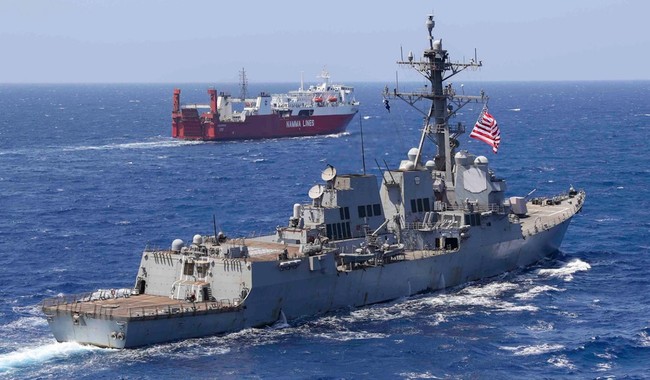
U.S. forces started a blockade of Iranian ports on Monday as a fragile ceasefire holds following failed peace talks over the weekend. The joint U.S.-Israeli operation against Iran began on February 28, with the first six days costing $11.3 billion according to the Pentagon. Professor Linda Bilmes of Harvard Kennedy School estimates the war could reach $1 trillion in total costs.
 redstate.com
S. S. forces started a blockade of Iranian ports on Monday. A fragile ceasefire is in place after peace talks over the weekend failed. -Israeli operation against the Islamic Republic began on February 28.
Roughly 55,000 troops were deployed in the region. Three F-15 fighter jets were shot down due to friendly fire from Kuwait. 3 billion, according to the Pentagon.
Ceasefire Follows 40 Days of Live Conflict Bilmes' research was published two days before the temporary ceasefire announcement on April 8.
Bilmes estimates short-term upfront costs at around $2 billion per day during the 40 days of live conflict. The Pentagon reports figures based on the historical value of inventory. " Large multi-year contracts with Lockheed Martin and Boeing are for interceptors and missiles.
S. is $4 million per interceptor. Drones fired from Iran can be produced for $30,000 each.
Expert Estimates Total War Costs at $1 Trillion Professor Linda Bilmes is a public policy expert at the Harvard Kennedy School.
" The Iraq war cost $2 trillion in total. Debt held by the public during the Iraq war period was under $4 trillion. S. public debt today is over $31 trillion. S. public debt stems from previous wars in Iraq and Afghanistan.
" Professor Linda Bilmes stated "The result is that the interest costs alone will add billions of dollars to the total cost of this war.
White House Seeks Defense Budget Increase The White House asked Congress to boost the U.S.
5 trillion. The Pentagon asked for $200 billion to be put aside for the war in Iran.
Stock Market Recoups Losses Since War Began The S&P 500 closed over +1% higher.
The S&P 500 posted its highest close since the Iran War began. The S&P 500 has added over +$5 trillion since the March 30th bottom. The S&P 500 is now higher than it was on February 27. S. and Israel started the war against Iran.
The S&P 500 has recouped all its losses since the Middle East war started on February 28.
Story Timeline
6 events- Monday, April 13, 2026
U.S. forces started a blockade of Iranian ports.
1 sourceunattributed - Weekend before April 14, 2026
Peace talks over the weekend failed.
1 sourceunattributed - April 8, 2026
Temporary ceasefire announcement.
1 sourceunattributed - April 6, 2026
Bilmes' research was published two days before the temporary ceasefire announcement.
1 sourceunattributed - February 28, 2026
Joint U.S.-Israeli operation against the Islamic Republic began.
1 sourceunattributed - February 27, 2026
Last trading day before the U.S. and Israel started the war against Iran.
1 source@JavierBlas
Potential Impact
- 01
Stock market recovery with S&P 500 surpassing pre-war levels.
- 02
Replenishment costs for U.S. interceptors at $4 million each strain military inventory.
- 03
Blockade of Iranian ports disrupts regional trade.
- 04
Increased U.S. defense spending likely to add at least $100 billion per year to base budget.
- 05
War costs estimated to reach $1 trillion, including interest on borrowed funds.
Transparency Panel
Related Stories
 cbsnews.com
United Airlines CEO Discusses Potential Merger with American Airlines in February White House Meeting
United Airlines CEO Scott Kirby proposed a merger with American Airlines during a February 25 White House meeting with Donald Trump focused on Dulles Airport's future. The pitch occurred amid discussions on airline competitiveness. Shares of both airlines rose in premarket tradin…
 cnbc.com
Major U.S. Banks Report Strong First-Quarter Profits Amid Trading Surge and Economic Risks
America's largest banks posted record first-quarter profits in 2026, fueled by elevated trading activity and investment banking fees. JPMorgan Chase led with revenue of $50.5 billion and earnings per share of $5.94, surpassing estimates. The bank's CEO highlighted a complex set o…
 GB News
Great Britain's Updated Demand Flexibility Scheme Launches This Week
The updated Demand Flexibility Scheme launches this week, approved by Ofgem last month and operated by the National Energy System Operator. The scheme aims to stabilise the electricity grid during summer by shifting customer demand. British Gas, Equiwatt, and Octopus Energy have…