U.S. Military Outlines Blockade Efforts Against Iranian-Linked Ships Amid Cease-Fire
U.S. military officials detailed ongoing naval blockade operations targeting Iranian-linked vessels globally, emphasizing warship capabilities and allied partnerships. Statements highlighted the degraded state of Iranian command and control, with warnings against cease-fire violations. The assessment included updates on Iranian leadership and regional dynamics involving the Houthis and China.
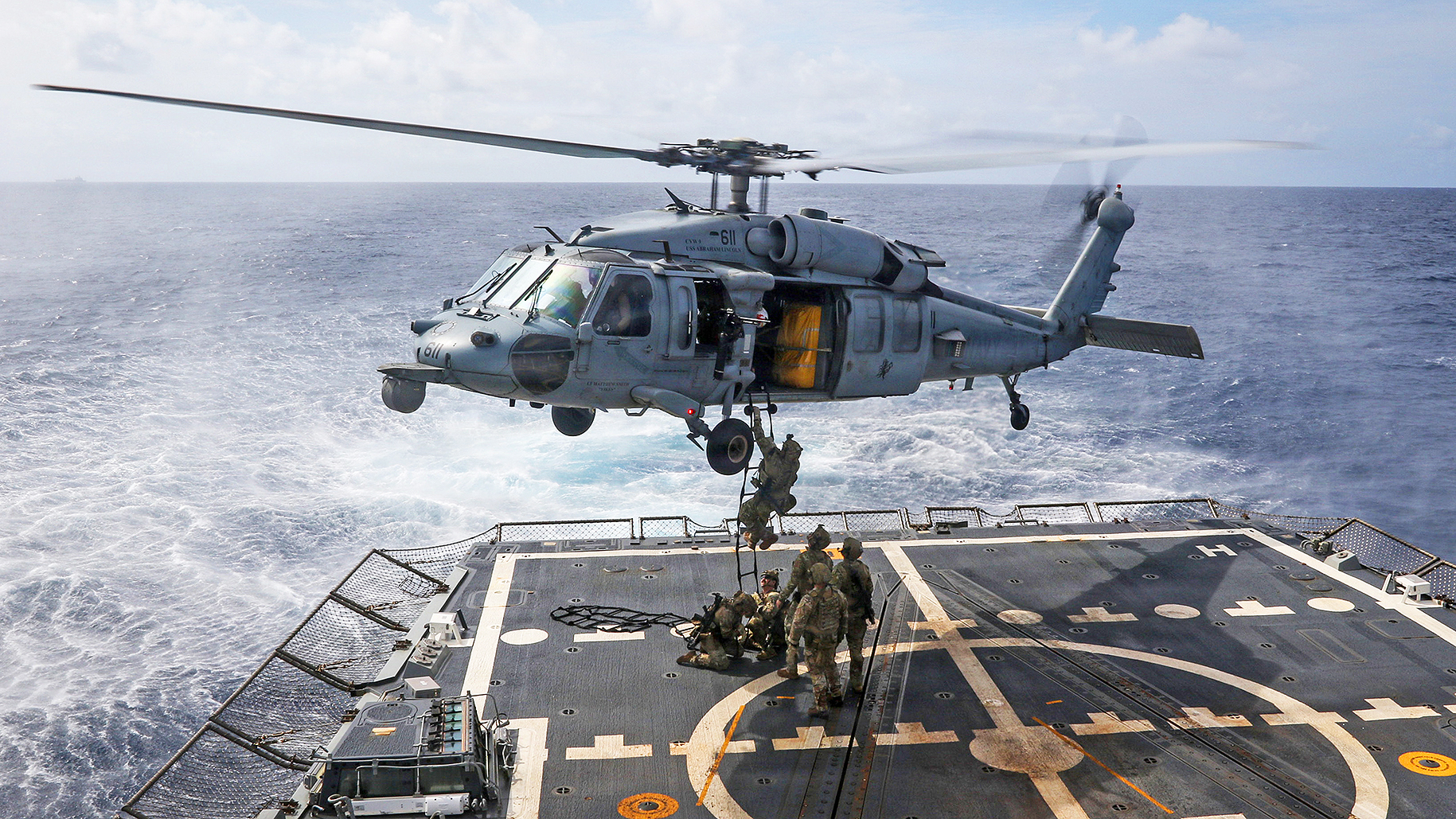
The War ZoneS. is pursuing Iranian-linked ships worldwide as part of an ongoing blockade, according to the Chairman of the Joint Chiefs of Staff Dan Caine. This global effort aims to restrict support to Iran during a current cease-fire in the Middle East.
Officials described the challenges of enforcing the blockade in congested waters. Dan Caine compared operating the blockade to driving a sports car through a crowded supermarket parking lot on a busy weekend. S.
warships, including surface-to-air missiles, land attack cruise missiles, anti-ship missiles, anti-submarine rockets, torpedoes, and five-inch naval guns. These ships also feature electronic warfare systems and embarked helicopters.
Allied Partnerships and Regional Posture CENTCOM
Commander Brad Cooper stated that military partnerships in the region are stronger than ever.
He noted a defensive posture stretching from northern Iraq to the northern Arabian Gulf, involving countries such as Bahrain, UAE, Saudi Arabia, Qatar, Kuwait, and Jordan. Cooper highlighted the creation of a large air defense umbrella across the Middle East. S.
soldiers by name, according to Cooper. He described these nations as exceptional teammates committed to mutual defense. The assessment came during discussions of operations like Epic Fury.

Story Timeline
6 events- Apr 16, 5:02 PM ET
1 new source added: @MarioNawfal
1 source@MarioNawfal - Today — Early Morning
IRGC conducted operations with approximately 30 explosions to restore access to underground missile sites.
1 sourceThe War Zone - Apr 16, 2026
U.S. officials including Dan Caine, Brad Cooper, and Pete Hegseth provided updates on blockade, alliances, and Iranian status.
3 sourcesThe War Zone · Fox News · Clash Report - Over a year ago
U.S. conducted Operation Rough Rider demonstrating capabilities against Houthis.
1 sourceThe War Zone - Feb 28, 2026
War began with initial targeting of Iranian underground missile sites.
1 sourceThe War Zone - 2024-2025
Houthis conducted drone and missile attacks on U.S. and commercial shipping in Red Sea and Bab el-Mandeb.
1 sourceThe War Zone
Potential Impact
- 01
U.S. forces will resume intensified operations if Iran violates the cease-fire.
- 02
IRGC restores access to missile sites, potentially escalating tensions.
- 03
Allied air defense umbrella expands across the Middle East with partner contributions.
- 04
Houthis maintain non-involvement, reducing risks in the Strait.
- 05
U.S. naval deployments avoid high-risk areas like the Red Sea.
- 06
China refrains from arming Iran following U.S. communications.
Transparency Panel
Related Stories
NASA Johnson Space Center / Wikimedia (Public domain)NASA's Artemis II Completes First Manned Moon Mission Since 1972, Sets Distance Record
NASA's Artemis II mission completed a flight around the moon and splashed down in the Pacific Ocean on Saturday. The mission marks the first manned moon mission since 1972 and set a record for the furthest humans have travelled into space at 252,756 miles (406,771km). Meanwhile,…
Study Shows Mechanical Compaction of Melamine Improves Carbon Nitride for Dye Photodegradation
Researchers have found that mechanically compacting melamine alters the structure of graphitic carbon nitride, enhancing its photocatalytic performance. The method improves degradation of Acid Orange 7 under visible light. The findings were published in Scientific Reports on Apri…
Monkeys Use Brain Implants to Control Avatars in Virtual Environments
Monkeys equipped with approximately 300 electrodes implanted in their brains successfully navigated avatars through various virtual settings. This development highlights progress in brain-computer interface technology. The findings were reported by @NewScientist.