Substrate
finance

U.S. Military Strikes Suspected Drug Boats; Criticism on Effectiveness, Legality

The Trump administration's Operation Southern Spear has involved strikes on 54 vessels in the Caribbean and Eastern Pacific since September, resulting in over 185 deaths. Officials claim the operations reduce drug flows and save lives, but experts and lawmakers dispute these assertions, citing increased cocaine seizures and legal concerns.

The Intercept
DE
UN
LI
KO
DI
+99
107 sources·May 4, 5:45 AM(1 day ago)·4m read
|
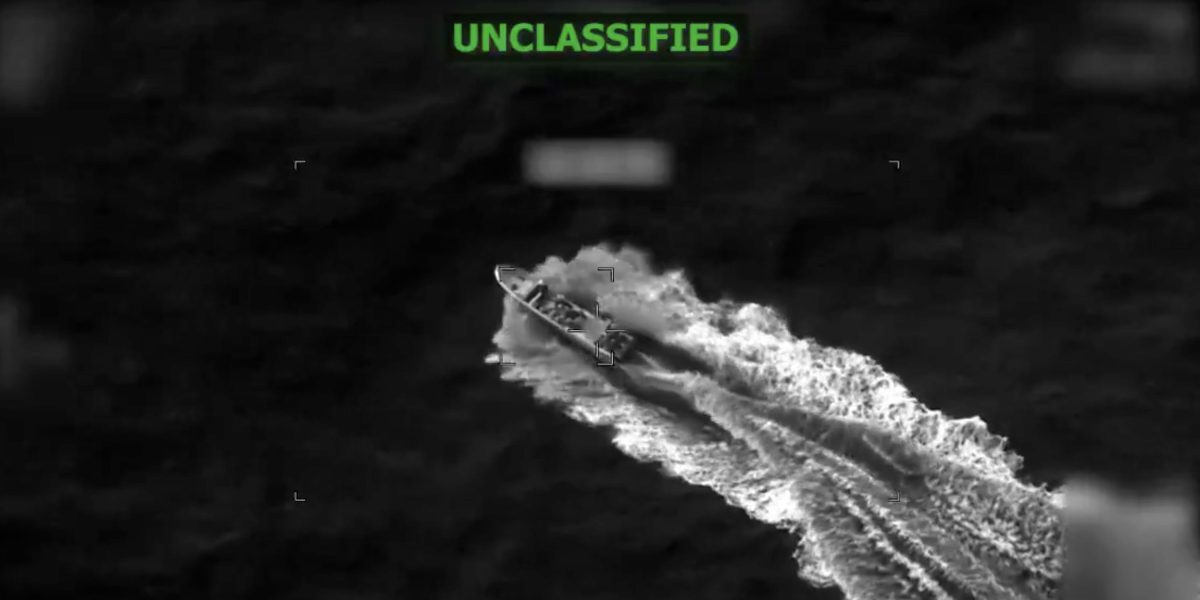
U.S. Military Strikes Suspected Drug Boats; Criticism on Effectiveness, LegalitySenior Airman Brett Clashman / Wikimedia (Public domain)
Audio version
Tap play to generate a narrated version.

The U.S. military has conducted strikes on 54 suspected drug-trafficking boats in the Caribbean and Eastern Pacific Ocean since September under Operation Southern Spear, resulting in more than 185 deaths. The latest strike occurred on April 26 in the Pacific, killing three people.

The administration states that these actions target members of at least 24 cartels and criminal gangs, though it has not named them. President Trump has stated that the strikes have reduced drugs entering the U.S. by sea by 97 percent and saved more than 1 million American lives.

He has described each boat as responsible for an average of 25,000 deaths. Acting Assistant Secretary of War for Homeland Defense and Americas Security Affairs Joseph Humire told Congress in March that the operations led to a 20 percent reduction in drug vessel movements in the Caribbean and a 25 percent reduction in the Eastern Pacific.

Customs and Border Protection data shows cocaine seizures at U.S. borders and coasts increased from 38,000 pounds in the seven months before the strikes to 44,000 pounds in the seven months after. The Coast Guard announced record-setting interdictions of over 215,000 pounds of cocaine in the Eastern Pacific since last August under Operation Pacific Viper.

Coast Guard spokesperson Brandon Hillard stated that narco-terrorists continue to traffic large quantities of illicit narcotics. Wholesale cocaine prices remain stable, with a recent seizure of 1.2 tons valued at $19.3 million, equating to about $16,500 per kilogram.

Retired Rear Adm. William Baumgartner said this pricing does not reflect a significant reduction in supply, as a 97 percent drop would cause prices to skyrocket. Millennium Health reported stimulant use, including cocaine, detected in urine samples at nearly twice the rate of fentanyl in 2025.

Adam Isacson, director for defense oversight at Washington Office on Latin America, said the strikes have had no impact on drug flows toward the U.S., noting the increased seizures suggest trafficking continues undeterred. Sanho Tree, director of the Drug Policy Project at the Institute for Policy Studies, described claims of major reductions as invented or based on disingenuous numbers.

Trump has stated that the targeted vessels traffic fentanyl, describing scenes of the drug floating in bags after strikes. However, Rep. , said officials admitted in closed-door briefings that the boats do not transport fentanyl, offering explanations she found unconvincing.

Baumgartner added that fentanyl is produced in the U.S. or Mexico and has not been smuggled from South America by boat.

I have not seen any evidence that fentanyl has ever been smuggled from South America to the United States," — Retired Rear Adm. William Baumgartner (The Intercept). Humire claimed the operations contributed to a nearly 20 percent drop in deadly drug overdoses as early as September 2025 compared to the previous year, and a 56 percent reduction in fentanyl flow. The Centers for Disease Control and Prevention reported over 70,000 drug overdose deaths for the 12-month period ending in November 2025. Experts, including Baumgartner, called linking the strikes to overdose reductions misleading, as the operations target cocaine, not fentanyl, which accounts for most overdoses. CBP fentanyl seizures at the U.S.-Mexico border have declined since 2023, with halfway through fiscal year 2026 showing about half the total for 2025. Jacobs noted that 99 percent of fentanyl enters through legal ports by U.S. citizens and legal permanent residents.

Lawmakers and experts have criticized the strikes as illegal extrajudicial killings, arguing the military cannot target civilians without an imminent threat. Sen. Jack Reed, D-R.I., the top Democrat on the Senate Armed Services Committee, questioned the long-term objectives and evidence of reduced drug flows.

Sen. , pressed Gen. Dan Caine, chair of the Joint Chiefs of Staff, on the legal justification for striking boats in international waters without evidence of narcotics.

What legal justification could there possibly be that would allow the U.S. military to strike boats in international waters and kill the occupants of those boats without a showing of evidence that there’s narcotics on those boats?" — Sen. Tim Kaine, D-Va. (The Intercept). Isacson described the actions as gross human rights violations, similar to extrajudicial executions. Military briefers have admitted they cannot meet evidentiary standards to prosecute survivors, leading to repatriation or abandonment. War Secretary Pete Hegseth stated on X in February that some top cartel traffickers ceased operations indefinitely due to the strikes, though the Pentagon has not named them.

Critics argue the administration misconstrues drug trafficking as a military issue rather than a business, with no command structure to surrender. Tree said even if some traffickers exit, replacements will emerge due to economic incentives. Jacobs emphasized there is no military solution to an economic problem.

The administration has granted clemency to around 100 people accused of drug-related crimes, including former Honduran President Juan Orlando Hernández, convicted of smuggling 400 tons of cocaine into the U.S. Republican Sen. Drug enforcement efforts have seen reductions, with DEA staff dropping by about 6 percent since 2024, over 5,000 FBI and DEA agents reassigned to immigration, and federal drug trafficking prosecutions at their lowest in over two decades.

The Justice Department scuttled its Organized Crime Drug Enforcement Task Forces last year. Following the U.S. invasion of Venezuela and kidnapping of Maduro, the puppet regime includes Interior Minister Diosdado Cabello, previously indicted in the U.S. for drug trafficking.

Key Facts

54 boats
struck by U.S. military since September
185+ deaths
from Operation Southern Spear strikes
44,000 pounds
cocaine seized post-strikes, up from 38,000
70,000 overdoses
reported by CDC ending November 2025
100 clemencies
granted for drug-related crimes

Story Timeline

5 events
  1. Apr 26, 2026

    U.S. military conducted latest strike on a suspected drug boat in the Pacific, killing three people.

    1 sourceThe Intercept
  2. Mar 2026

    Acting Assistant Secretary Joseph Humire testified to Congress on reductions in drug vessel movements.

    1 sourceThe Intercept
  3. Feb 2026

    War Secretary Pete Hegseth posted on X that some cartel traffickers ceased operations due to strikes.

    1 sourceThe Intercept
  4. Jan 29, 2026

    President Trump claimed at a White House briefing that drugs entering by sea are down 97 percent.

    1 sourceThe Intercept
  5. Sep 2025

    Operation Southern Spear began with the first U.S. military strikes on suspected drug boats.

    1 sourceThe Intercept

Potential Impact

  1. 01

    Human rights groups will file lawsuits challenging the legality of the strikes.

  2. 02

    Congress may increase oversight hearings on military operations in the drug war.

  3. 03

    Drug trafficking routes shift to avoid high-seas interdictions.

  4. 04

    DEA reassignments reduce domestic drug enforcement effectiveness.

Transparency Panel

Sources cross-referenced107
Framing risk55/100 (moderate)
Confidence score75%
Synthesized bySubstrate AI
Word count908 words
PublishedMay 4, 2026, 5:45 AM
Bias signals removed6 across 4 outlets
Signal Breakdown
Loaded 3Diminishing 1Framing 1Amplifying 1

Related Stories

Sen. Tim Scott Criticizes Fed Chair Powell's Plan to Stay After Term EndsThe United States Senate - Office of Senator Kelly Loeffler / Wikimedia (Public domain)
finance5 hrs agoFraming55Framing risk55/100Lede misdirection foregrounds Scott's criticism over Powell's substantive decision to stay on the Fed board amid investigations, burying the core event.Click to jump to full framing analysis

Sen. Tim Scott Criticizes Fed Chair Powell's Plan to Stay After Term Ends

Republican Sen. Tim Scott criticized Federal Reserve Chair Jerome Powell for planning to remain on the Fed's Board of Governors after his chair term ends on May 15, 2026. Scott said the move breaks 75 years of precedent and suggested it might be aimed at President Trump. Powell c…

cnbc.com
New York Post
RealClearPolitics
3 sources
finance1 hr ago

UAE Leaves OPEC After 60 Years of Membership, Reducing Group to 11 Producers

The United Arab Emirates departed the Organization of the Petroleum Exporting Countries on Tuesday, reducing the group's membership to 11 nations. OPEC members now account for about 33% of global crude oil output. The exit occurs amid high oil prices and the ongoing closure of th…

BBC News
The Guardian
OilPrice.com
3 sources
US, Japan, and South Korea Stock Indices Reach Record Highs Despite Iran War DisruptionsEuronews
finance3 hrs agoDeveloping

US, Japan, and South Korea Stock Indices Reach Record Highs Despite Iran War Disruptions

Major stock indices in the United States, Japan and South Korea reached new all-time highs this week, even as the war in Iran disrupts global energy markets and shipping routes. Oil prices stand at a four-year high, with 10-12 million barrels a day disrupted in the Strait of Horm…

Euronews
Semafor
2 sources