Unbiased AI-powered news
U.S. agencies monitored Iranian plots targeting the president for years, with warnings increasing after the start of the war. Israeli officials shared new intelligence shortly before the ceasefire ended this week.
Los Angeles TimesU.S. law enforcement and intelligence agencies tracked evidence for years of Iranian efforts to target President Trump, with signals only increasing since the start of the war. Shortly before President Trump ended a ceasefire with Iran this week, Israeli officials presented his team with intelligence indicating Tehran was hatching new plots to kill him.
It was not the first such warning. Their desire to target Trump and his top aides began six years ago, just outside Baghdad International Airport, when the president ordered a drone strike that killed Iran's most powerful general. The assassination brought the two countries to the brink of war.
Yet even as full-scale war was averted, top Iranian officials vowed revenge for the strike, authorizing attempts on the lives not just of the president, but of his secretary of state and national security adviser, among others, even after they had left office.
An Israeli operation killed Iran's supreme leader at the start of the war in February. His son, the new supreme leader, was absent from the commemorations, fearing assassination himself.
Threats and responses The prospect of foreign assassination plots targeting U.S. leaders puts the United States in dangerous new territory, where its embrace of political killings could ultimately place its own officials at unprecedented risk. Israeli news organizations have reported that Israel's prime minister cited Iranian attempts to kill Trump in recent years as part of his case to go to war in the first place.
A U.S. official told the Times that a range of serious threats exist against the president, including from Iran, but that Israel's intelligence pointed to a more specific plot. The official did not provide further details. Israeli officials did not respond to requests for comment.
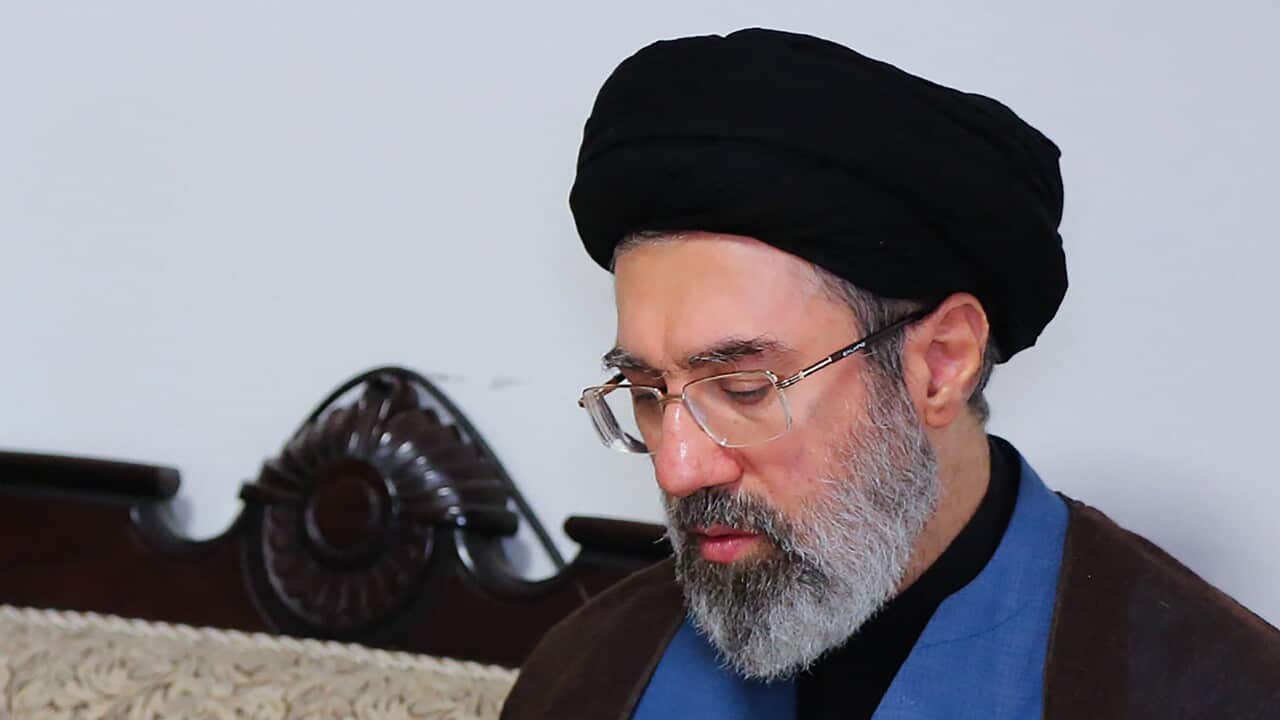
Iran's president has said in recent months that the government sees vengeance against U.S. officials as a priority.
Historical context The Soleimani killing accelerated a lifting of restraints on foreign assassinations, and the taboo on targeting and killing foreign leaders with U.S. military assets has been more or less lifted, said a political professor at George Washington University.
If the United States sets the example of how to conduct international relations, and it is using assassination of foreign leaders as a political weapon, it's only logical that other countries will be more inclined to also engage in assassinations, the professor added.
Returning from a NATO summit in Turkey on Wednesday, Trump was forced to switch back to an old model of Air Force One equipped with specialized defensive technologies from a new plane given as a gift by Qatar, after the Secret Service warned of potential threats to the aircraft from Iran.
They want to take out the U.S. leader, Trump told reporters aboard the plane. I'm on whatever list. I saw this morning I'm on every single one of their lists. The threat has remained on his mind in the days since. In a subsequent social media post Friday night, he warned of a catastrophic response he instructed the administration to pursue in the event Tehran succeeds.
The United States had a decades-old prohibition against assassinating foreign leaders before Trump's presidency, codified in an executive order signed by President Ford in 1976 over concerns of a CIA plot to kill Fidel Castro. The policy was only strengthened further by subsequent administrations, fearing a new international standard for targeted killings could result in catastrophic consequences in the halls of Washington.
Under the Obama administration, an international coalition targeting the Libyan regime of Muammar Gaddafi during the country's 2011 civil war struck his fleeing convoy, leading to his capture and killing by rebel fighters. But experts say Trump's explicit targeting of Soleimani and the supreme leader, and his public celebration of their deaths, marks a new paradigm.
These outlets didn't split into competing frames — coverage was uniform.
sbs.com.auAyatollah Mojtaba Khamenei issued his first public statement since his father's funeral, pledging to avenge the death of Ayatollah Ali Khamenei. President Trump responded with threats of massive U.S. retaliation if Iran targets him.
About 1,000 people gathered in Tel Aviv on July 11, 2026, as protests against Prime Minister Benjamin Netanyahu's government occurred nationwide. Demonstrators criticized the government's refusal to follow Supreme Court rulings and the war in Gaza. Speakers warned of democratic b…
freepressjournal.inNolan Xavier Wells was found dead on Horn Island on July 6 after traveling there on July 4 with three friends. His mother held a news conference in New York on July 10 seeking public help with the case.