business
USDA: Grocery Prices Up 24% Since 2020, With 3.1% Rise Forecast for 2026
Grocery prices in the United States have increased by about 24% since 2020, with a further rise of up to 3.1% projected for 2026, according to the U.S. Department of Agriculture. More than half of Americans report decreased affordability in everyday life, citing food costs as the primary factor. Consumers are adapting by reducing waste and switching to cheaper brands.
May 3, 5:00 AM·2m read1 source
 csmonitor.com
Audio version
Tap play to generate a narrated version.
Developing·Limited corroboration so far. This page will refresh as more sources emerge.
U.S. 1% in 2026 compared to 2025 bills. 4% average increase in the last year from a year earlier.
A CNBC-SurveyMonkey poll released in April found that more than half of Americans said everyday life had become less affordable over the past year. Of those, 76% pointed to rising grocery prices as a leading cause, followed by 71% citing gasoline and transportation, 37% healthcare, and 32% housing.
U.S. Grocery prices have risen by almost one-third since 2020, outpacing overall inflation. U.S. Department of Agriculture.
A strain of avian influenza devastated flocks of laying hens that year, while the Russia-Ukraine war kept Ukrainian grain as well as Russian energy and fertilizer off the market. Beef prices are currently rising as cattle herd counts have reached a 75-year low due to drought and higher operating costs.
Fresh tomato prices hit an eight-year high last month, driven by rising energy costs, tariffs on Mexican tomato imports, and weather problems in Florida.
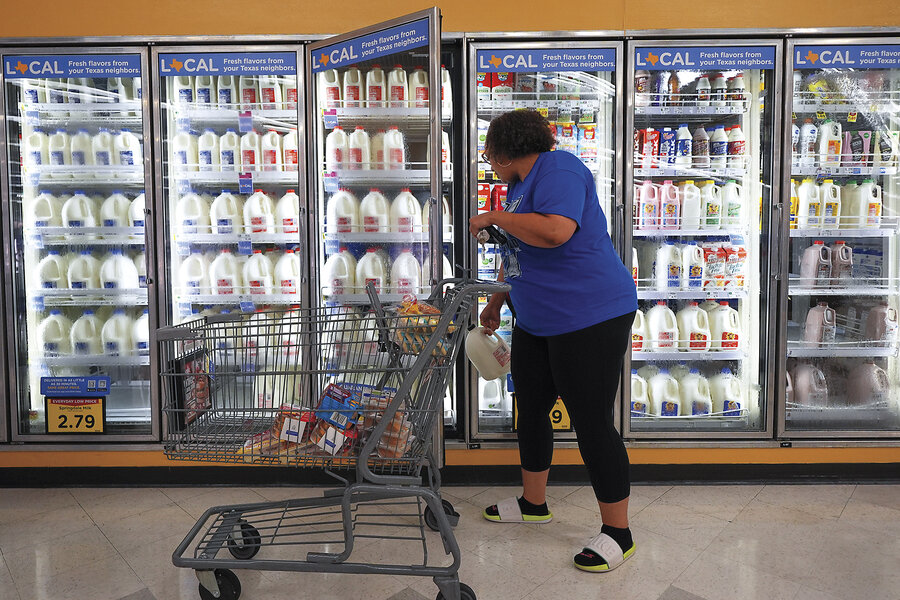
Egg prices, however, are getting cheaper as farmers rebuild flocks after the 2022 avian flu outbreak. U.S. 1% in 2026. In Dallas, a shopper pulled a gallon of milk for purchase at a grocery store on April 15, 2026.
She described food shopping as having become strategic amid the price increases. Vanessa Salmon, a resident of Benton Harbor, Michigan, who lives on a fixed income, noted that Fig Newtons cost 87 cents at Aldi in 2018 when she first moved to Michigan. 50 at Aldi.