Substrate
science

Proteins From 400,000-Year-Old Teeth in China Yield First Data on Homo Erectus

Researchers recovered substantial preserved proteins from six teeth assigned to Homo erectus at three Chinese sites, revealing two enamel protein variants shared by all specimens. One variant appears unique to East Asian H. erectus while the second is also found in Denisovans and some modern humans, suggesting interbreeding.
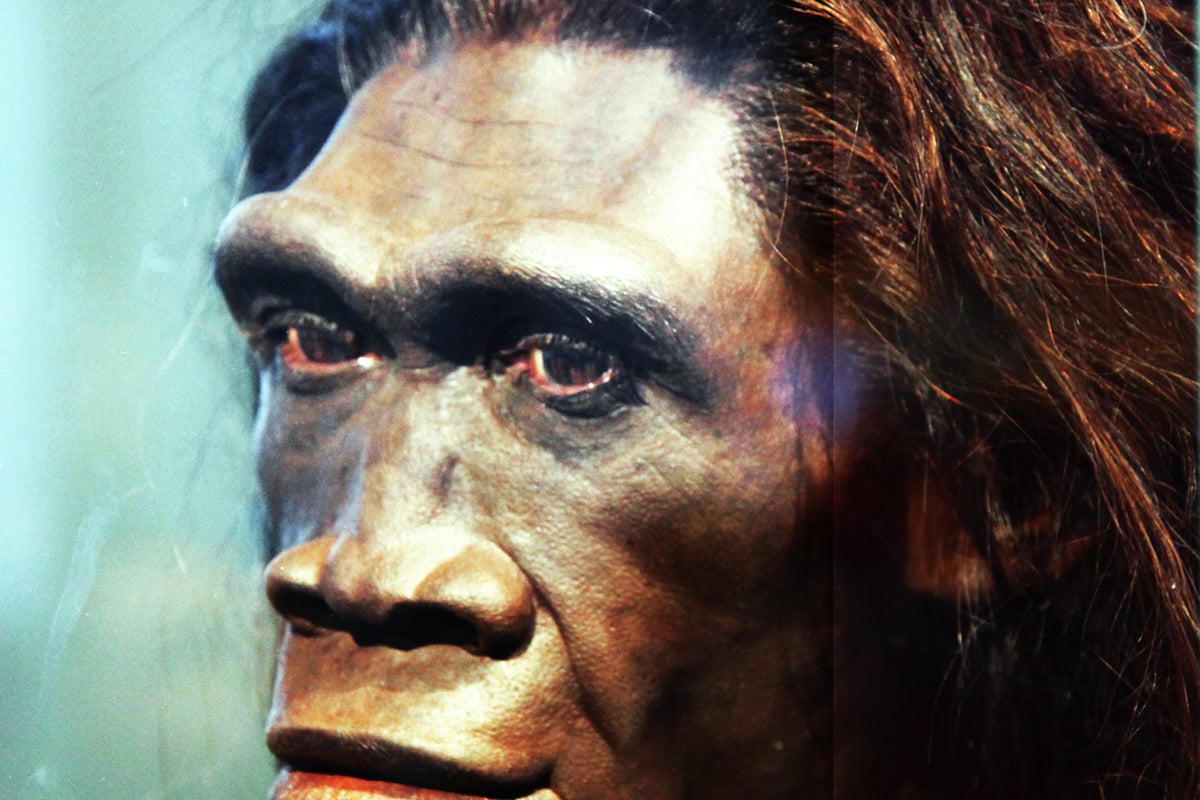
The Independent
New Scientist
2 sources·May 13, 4:00 PM(1 hr ago)·2m read
Proteins From 400,000-Year-Old Teeth in China Yield First Data on Homo ErectusThe Independent
Audio version
Tap play to generate a narrated version.
Developing·Limited corroboration so far. This page will refresh as more sources emerge.

Proteins recovered from six teeth approximately 400,000 years old have provided the first substantial molecular data on Homo erectus, revealing that the ancient species interbred with Denisovans. The teeth, analyzed by a team led by Qiaomei Fu at the Institute of Vertebrate Paleontology and Paleoanthropology in Beijing, came from three sites in China: one from Zhoukoudian, two from Hexian and three from Sunjiadong.

All six teeth shared two specific variants in their enamel proteins.

One protein variant has never been seen in any human group and may be unique to East Asian H. erectus. The second protein variant is also present in Denisovans and in a small fraction of modern humans.

The study suggests H. erectus interbred with Denisovans and passed on the protein variant. Based on the amelogenin Y protein, five of the six teeth belonged to males and one tooth from Sunjiadong belonged to a female.

The teeth were found isolated and their shapes are not especially H. erectus-like. Known H. erectus fossils found in China are all from periods often over a million years ago. Homo erectus arose in Africa approximately two million years ago.

8 million years ago, as shown by fossils from Dmanisi, Georgia. Homo erectus survived in Java, Indonesia, until as recently as 108,000 years ago. In 2020, Frido Welker at the University of Copenhagen obtained proteins from the dental enamel of one H.

Erectus tooth from Dmanisi, Georgia. The 2020 Dmanisi protein data gave no information about the fossil, according to John Hawks at the University of Wisconsin-Madison. This latest analysis is the first time ancient proteins from H. Erectus have revealed meaningful information about the species.


The Denisovan genome includes DNA from an unknown hominin group. A recent study examined Denisovan DNA in 30 modern human populations and found it originated from three distinct Denisovan populations.

John Hawks says there are three possible interpretations of the data that cannot be distinguished with current evidence. One interpretation is that the teeth belong to Denisovans rather than H. erectus.

Another interpretation is that the teeth represent a Denisovan population with genetic input from H. erectus. Ryan McRae, a paleoanthropologist with the Smithsonian National Museum of Natural History, said the work connects modern humans to deep ancestors.

Qiaomei Fu stated that more material is required to clarify relationships. “We really need to get more DNA and bits of H. 1038/s41586-026-10478-8.

Key Facts

Six teeth from Chinese sites yielded first informative ancie
All six teeth, approximately 400,000 years old and recovered from Zhoukoudian, Hexian and Sunjiadong, shared two enamel protein variants; five belonged to males
Protein variant links H. erectus to Denisovans and modern hu
One variant is unique to East Asian H. erectus while the second is shared with Denisovans and a small fraction of modern humans, indicating interbreeding accord
John Hawks outlines three possible interpretations of the pr
The teeth may belong to Denisovans, represent a Denisovan population with H. erectus genetic input, or indicate H. erectus interbreeding with Denisovans; curren
Earlier 2020 protein recovery from Dmanisi tooth provided no
Work led by Frido Welker at University of Copenhagen recovered proteins but yielded basically no information about the fossil, in contrast to the new Chinese sa

Story Timeline

6 events
  1. 2026-05-13

    Study published in Nature (DOI: 10.1038/s41586-026-10478-8) detailing protein analysis from six Chinese teeth

    3 sourcesNew Scientist · The Independent · Verified facts
  2. 2020

    Frido Welker obtains proteins from one H. erectus tooth from Dmanisi, Georgia, yielding essentially no phylogenetic information

    2 sourcesNew Scientist · Verified facts
  3. Approximately 400,000 years ago

    Six teeth deposited at Zhoukoudian, Hexian and Sunjiadong sites in China

    2 sourcesNew Scientist · Verified facts
  4. 108,000 years ago

    Last known survival of Homo erectus in Java, Indonesia

    1 sourceNew Scientist
  5. 1.8 million years ago

    Homo erectus reaches Eurasia, evidenced by Dmanisi fossils in Georgia

    2 sourcesNew Scientist · Verified facts
  6. Approximately 2 million years ago

    Homo erectus arises in Africa

    2 sourcesThe Independent · Verified facts

Potential Impact

  1. 01

    Highlights need for additional fossils and molecular data from East Asian H. erectus to resolve relationships with Denisovans and modern humans

  2. 02

    Strengthens evidence for multiple interbreeding events among archaic hominin groups in East Asia

Transparency Panel

Sources cross-referenced2
Framing risk55/100 (moderate)
Confidence score74%
Synthesized bySubstrate AI
Word count395 words
PublishedMay 13, 2026, 4:00 PM
Bias signals removed3 across 2 outlets
Signal Breakdown
sensational 2Speculative 1

Related Stories

Bill Cassidy Loses Republican Primary After Confirming RFK Jr. as Health Secretarykoreaherald.com
science1 hr agoFraming65Framing risk65/100Rewrite inherits consensus anti-Cassidy framing by centering his primary peril as punishment for confirming RFK Jr. and convicting Trump, while burying health data and his policy achievements.Click to jump to full framing analysis

Bill Cassidy Loses Republican Primary After Confirming RFK Jr. as Health Secretary

Louisiana Sen. Bill Cassidy, who voted to confirm Robert F. Kennedy Jr. as health secretary despite his own pro-vaccine record, is trailing in polls ahead of this weekend's Republican primary. Cassidy's vote, intended to build bridges with the Trump administration, has drawn atta…

Stat
The Atlantic
2 sources
Pentagon Releases Declassified Documents on UFO Sightings, Mostly Showing No Extraterrestrial EvidenceNew Scientist
science5 hrs ago

Pentagon Releases Declassified Documents on UFO Sightings, Mostly Showing No Extraterrestrial Evidence

The U.S. Department of Defense made public hundreds of pages of documents, photographs and correspondence on unidentified anomalous phenomena, some previously classified. The release includes imagery from NASA’s Gemini 7, Apollo 12 and Apollo 17 missions along with an infrared im…

The New York Times
New Scientist
Breaking Defense
3 sources
Lake Powell at 23% Capacity as Colorado River Runoff Projected at Record LowNewsweek
science5 hrs agoDeveloping

Lake Powell at 23% Capacity as Colorado River Runoff Projected at Record Low

A time-lapse using NOAA satellite imagery from 2012 to 2026 depicts more than a decade of declining water levels at Lake Powell. Federal forecasters project the reservoir will receive only 13 percent of typical April-to-July runoff this year, the lowest on record since its creati…

Newsweek
1 source