Commonwealth Short Story Prize Winners Face AI-Generated Writing Allegations
Three of five regional winners of the 2026 Commonwealth Short Story Prize have drawn accusations of using generative AI. The Commonwealth Foundation and Granta have issued statements addressing the claims.
 Wired
WiredThree regional winners of the 2026 Commonwealth Short Story Prize are under scrutiny after readers accused them of using generative AI to produce their entries. The Commonwealth Foundation, a nongovernmental organization based in London, awards the prize each year to one writer in each of five regions. Regional winners receive £2,500, and one overall winner will be announced next month.
Within days, readers flagged “The Serpent in the Grove” by Jamir Nazir of Trinidad and Tobago, the Caribbean regional winner, for stylistic patterns associated with AI text. Qureshi posted on X that the story contained repeated “Not X, not Y, but Z” constructions and other markers he described as typical of chatbot output.
An AI-detection tool called Pangram flagged the story as 100 percent AI-generated, a result that Wired independently confirmed.
Farook, director-general of the Commonwealth Foundation, stated that the organization takes the allegations seriously and described the judging process as robust. Farook noted that the foundation does not use AI-detection tools because submitting unpublished work to such tools would raise consent and ownership concerns.
Sigrid Rausing, publisher of Granta, said the magazine has no role in selecting the stories or the jury. Granta’s own review using Anthropic’s Claude agent was inconclusive, and the stories will remain on the site until the Commonwealth Foundation reaches a conclusion.
Two additional regional winners, John Edward DeMicoli of Malta and Sharon Aruparayil of India, have also faced similar accusations. Pangram flagged DeMicoli’s story as fully AI-generated and Aruparayil’s as partly AI-generated. The remaining two stories scanned as fully human-written.
A judge for the prize, Jamaican author Sharma Taylor, has been accused of using AI to write her descriptive blurb for Nazir’s story. Pangram evaluated that text as AI-assisted.
Transparency
Story details
Related Stories
ASML, Musk to Discuss AI, Terafab Project and Semiconductor Supply Bottlenecks
Musk will discuss AI, robotics, space, and the Terafab semiconductor project at ASML's internal technology conference next Thursday.
Frontier AI Labs Report Rapid Capability Gains and AI-Written Code; Anthropic Calls for Coordinated Slowdown
Anthropic called for a slowdown or pause among labs developing the most advanced AI systems. The request appeared in a Thursday blog post from its research institute.
 Ars Technica
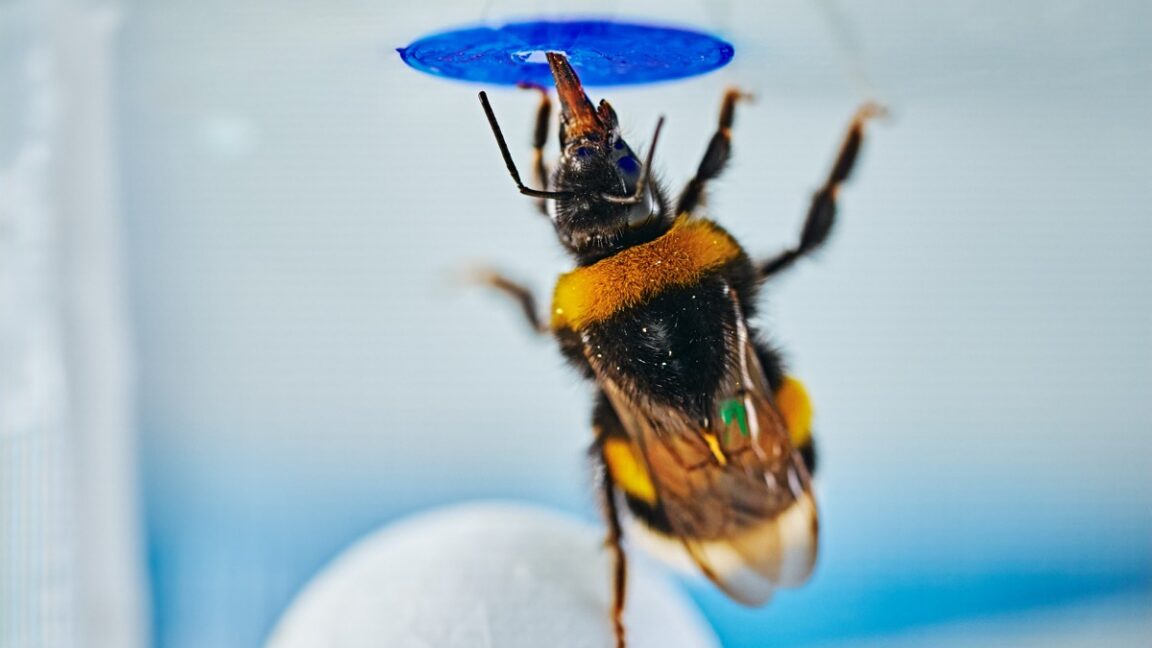
Bumblebees Demonstrate Spontaneous Object Manipulation in Controlled Experiments
A study published in Science shows bumblebees can spontaneously use a ball as a ladder to reach a flower, marking the first demonstration of this type of problem-solving in an insect.