Egyptian Desert Fossils Reveal Both Survivors and Missing Lineages Four Million Years After Dinosaur Extinction
Researchers recovered nearly 500 fish fossils from Qreiya 3 in Egypt’s eastern desert, dating to roughly four million years after the asteroid impact that ended the age of dinosaurs.
 The Independent
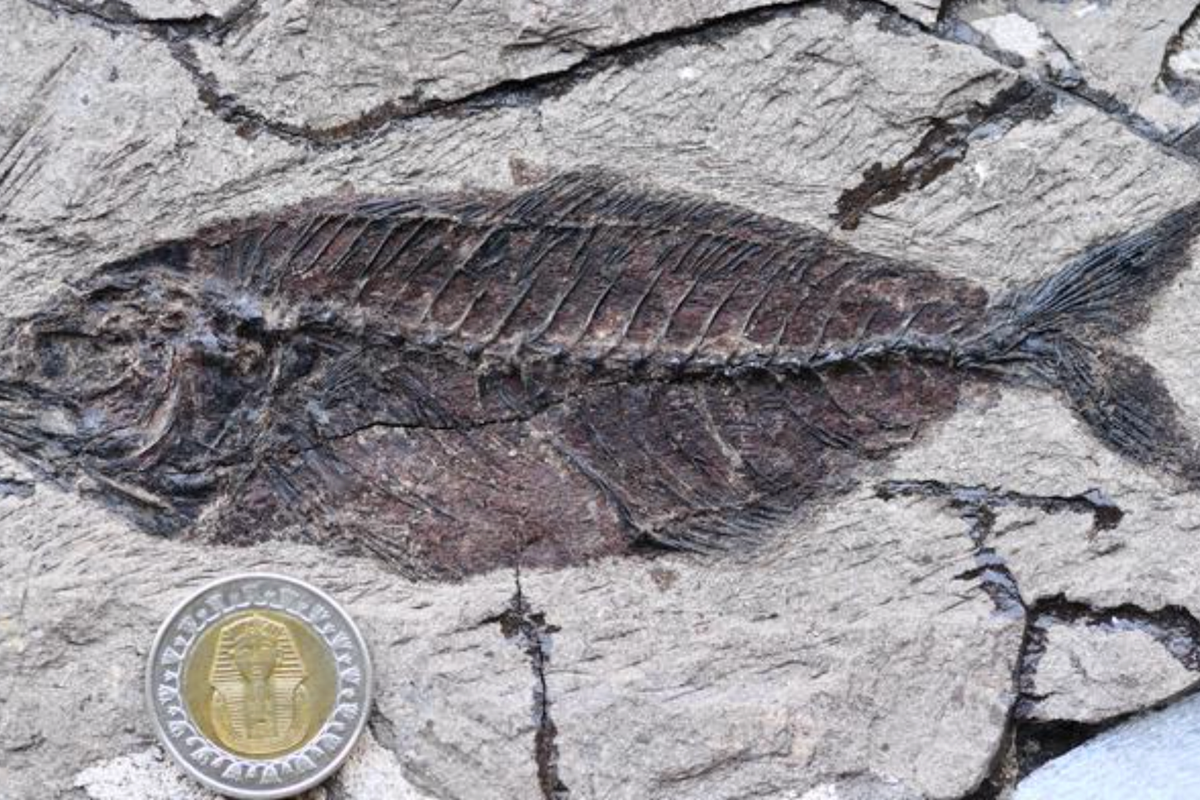
A team led by researchers from Mansoura University uncovered nearly 500 fish fossils at the Qreiya 3 site in Egypt’s eastern desert that date to approximately four million years after the asteroid impact 66 million years ago. The fossils include early relatives of tunas, jacks, moonfishes, and pipefishes, along with one specimen of an early relative of seahorses and pipefishes that still shows intact body armor.
Many characteristically Cretaceous-era marine fish lineages are absent from the assemblage.
D. student in the Department of Earth and Environmental Sciences and Museum of Paleontology at the University of Michigan, began the project while finishing a study on younger Egyptian fossil fishes in 2020. Hesham Sallam introduced her to earlier work by Robert Speijer and colleagues that identified rocks at Qreiya deposited only about four million years after the impact.
D. program. In July 2021, she joined a five-person team that traveled two days from Mansoura to Qreiya 3, then hiked over sharp rocks carrying equipment and supplies.
Belal Salem struck a rock with his hammer and immediately exposed a fossil moonfish. D. at Michigan in the fall of 2021.
The Sallam Lab returned to Qreiya 3 over multiple field seasons, curating specimens at the Mansoura University Vertebrate Paleontology Center. A 2023 expedition supported by a National Geographic grant awarded to Sallam lasted three weeks in temperatures that often approached 122 degrees Fahrenheit (50 degrees Celsius).
Back in the laboratory, preparation of the fossils required years of work, including CT scanning and comparison with modern specimens under the supervision of Matt Friedman.