EU Delays High-Risk AI Rules Until December 2027, Fast-Tracks Ban on Non-Consensual Deepfake Images
Negotiators reached a tentative deal on revisions to the AI Act after nine hours of talks in Brussels on May 7, 2026. The changes include pushing back implementation of rules for high-risk systems and excluding machinery from the legislation. The agreement must still win formal endorsement from EU governments and the European Parliament.
 Rappler
EU countries and European Parliament lawmakers agreed to a tentative agreement on watered-down AI rules on May 7, 2026 in Brussels, Belgium. The tentative agreement on changes to the AI Act came after nine hours of negotiations. The changes delay rules on high-risk AI systems such as those involving biometrics or related to critical infrastructure and law enforcement to December 2, 2027.
The previous deadline for rules on high-risk AI systems was August 2, 2026. EU governments and lawmakers also agreed to exclude machinery from the AI Act. They further agreed on a ban on AI practices which create unauthorised sexually explicit images.
The ban on AI practices which create unauthorised sexually explicit images will apply from December 2, 2026. Mandatory watermarking of AI generated output will apply from December 2, 2026. The AI Act entered into force in August 2024.
The changes to the AI Act are part of the European Commission’s push to simplify a slew of new digital rules. Marilena Raouna, Cyprus’s deputy minister for European affairs, said the agreement delivers concrete relief for businesses. “Today’s agreement on the AI Act supports our companies by reducing recurring administrative costs,” she stated.
Cyprus currently holds the rotating EU Council presidency. The tentative agreement needs to be formally endorsed by EU governments and the European Parliament in the coming months.
U.S. And Asian rivals. Dutch lawmaker Kim van Sparrentak welcomed the prohibition on unauthorised intimate imagery. “By the end of this year everyone, but especially women and girls will be safe from horrific nudifier apps being widely available on the EU market.
Today we put a clear end to this kind of violence against people and children,” she said. The AI rules, triggered by concerns about the impact of the technology on children, workers, companies and cybersecurity, remain the strictest in the world even after the revisions.
Transparency
Reported by a single outlet. This score reflects source tier and factual specificity — corroboration is limited with one source.
Story details
Related Stories
 fortune.com
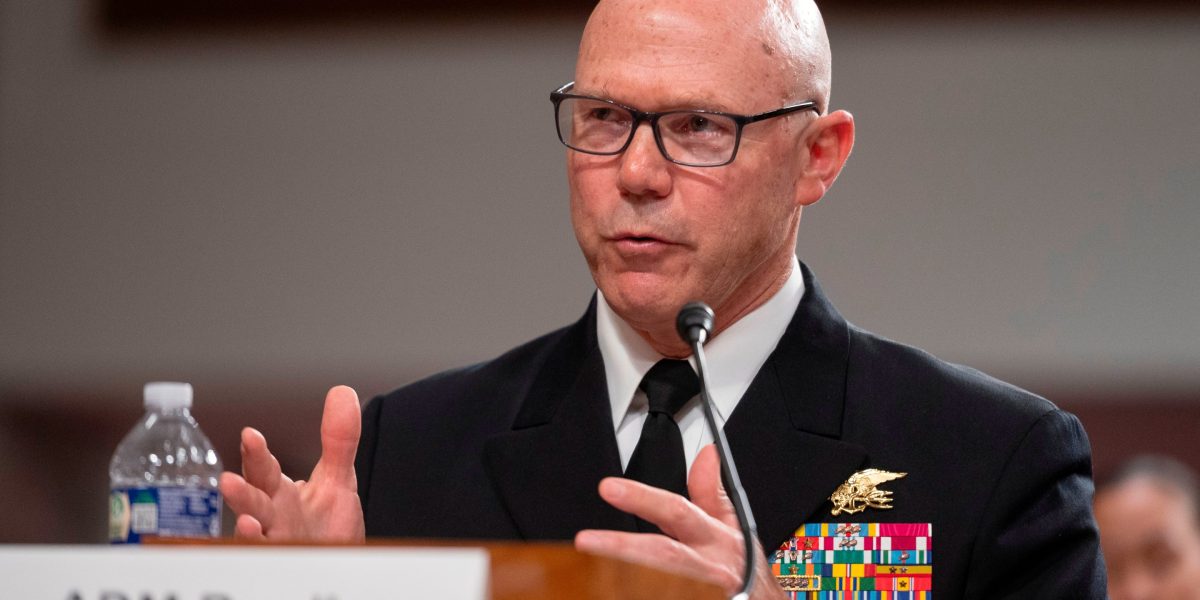
U.S. Special Operations Command Reports Increasing Use of AI to Enhance Targeting and Decision Speed
Admiral Frank Bradley said humans must retain confidence that AI will deliver violence only where intended. Defense Secretary Pete Hegseth continues to push rapid AI adoption across the military.
 Semafor
Anthropic Raises $65 Billion at $965 Billion Valuation
Anthropic completed a $65 billion funding round at a $965 billion valuation. The round follows earlier growth that exceeded internal forecasts and a separate agreement to lease computing capacity.
 citizen.co.za
South African Researchers Develop Quantum and AI Tools for Cybersecurity
Scientists and startup companies in South Africa are applying quantum communication and AI-powered tools to address rising global cyber threats. The work focuses on strengthening data protection methods.