Hancock County Felon Sentenced to Prison for Stockpiling Homemade Explosives and 30 Firearms
A Hancock County man received a prison term after federal prosecutors proved he possessed more than 30 firearms as a convicted felon and manufactured multiple homemade explosives. The case triggers mandatory federal sentencing enhancements that bar such defendants from supervised release until they complete their full prison terms.
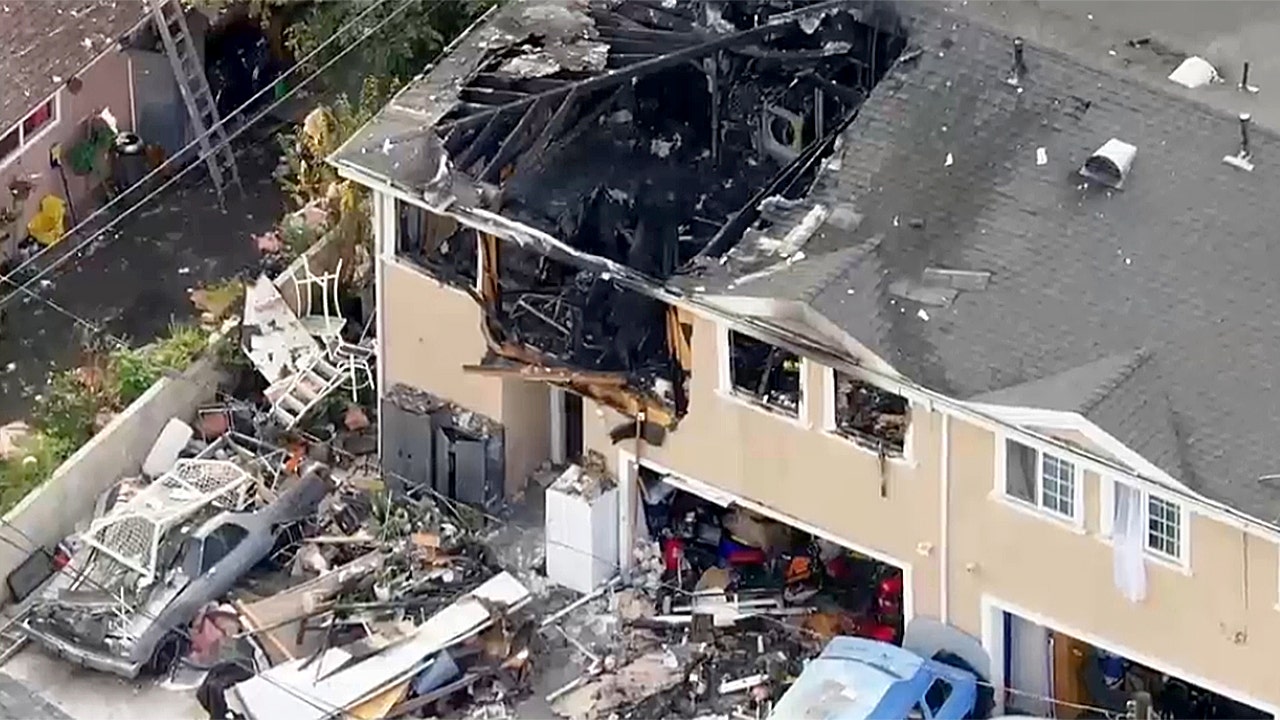 foxnews.com
A Hancock County, Ohio, man was sentenced in U.S. District Court for the Northern District of Ohio on May 7, 2026, after a jury convicted him of being a felon in possession of more than 30 firearms and of manufacturing and storing homemade explosives.
The defendant, previously convicted of a felony that prohibited him from owning firearms, accumulated 30 guns along with components and finished devices capable of producing explosive effects. Federal agents recovered the cache during a search of his property.
The exact prison term imposed was not detailed in the Department of Justice release, but the charges carry statutory maximums of 10 years for each count of felon-in-possession and additional consecutive time for the explosives violations.
The scope of the violation centers on one individual whose stockpiling directly violated 18 U.S.C. § 922(g)(1), the federal statute that bars anyone convicted of a crime punishable by more than one year in prison from shipping, transporting, possessing or receiving any firearm or ammunition.
The homemade-explosives count rests on 18 U.S.C. § 842 and § 844, which criminalize unlicensed manufacture and storage of destructive devices.
The sentence changes the defendant's status from pretrial release or detention to immediate incarceration in a Bureau of Prisons facility. Upon completion of the term, he will face a period of supervised release that federal guidelines treat as non-negotiable for explosives and repeat firearms offenses. The ruling also requires forfeiture of all seized weapons and explosive materials.
Downstream, the conviction obliges the Bureau of Alcohol, Tobacco, Firearms and Explosives to update its national tracing database with the serial numbers of the 30 recovered firearms, which can reveal trafficking patterns. It also requires the U.S. Attorney’s Office for the Northern District of Ohio to report the explosives-related sentence to the Department of Justice’s National Explosives Task Force, feeding data used to track domestic manufacture of improvised devices.
Courts in the Sixth Circuit now have another data point when applying sentencing enhancements under the Armed Career Criminal Act or explosives guidelines in future cases.
This marks the latest federal prosecution in Ohio under post-2022 enforcement priorities that emphasize removal of large arsenals from prohibited persons. The Department of Justice has pursued similar combined firearms-and-explosives cases in the Northern District in each of the past three years, each time citing the risk that such stockpiles pose when held by individuals already barred from legal possession.
Coverage spread
Substrate’s article above is written from the primary record. Below: how mainstream outlets reported the same event.
No mainstream coverage of this story has surfaced yet.
Transparency Panel
Related Stories
 BBC News
Trump Meets Advisers to Decide on Iran Ceasefire Extension
President Trump said he is holding a Situation Room meeting to make a final decision on a possible deal with Iran. The proposed agreement would extend the ceasefire by 60 days and reopen the Strait of Hormuz.
 middleeasteye.net
Trump to Decide on Iran Deal in Situation Room Meeting
President Trump said Friday he is heading into the Situation Room to make a final determination on a potential agreement with Iran. The proposed deal would reopen the Strait of Hormuz without tolls and require destruction of Iran's highly-enriched uranium.
 benzinga.com
Vietnam Clears Graves for Trump Organization Project in Hung Yen Province
Farmers in Hung Yen province are exhuming family graves to make way for a $1.5 billion Trump Organization development that includes hotels, villas and a golf course. The project, approved last year, has drawn local resistance over compensation levels and relocation of remains.