technology
NASA to Launch Robotic Spacecraft June 30 to Raise Swift Observatory’s Orbit
Usa Today reported that NASA will launch a commercial robotic spacecraft on June 30 to raise the Swift Observatory's orbit. The mission aims to prevent an uncontrolled reentry and extend the telescope's operations for several years.
 app.buzzsumo.com
Audio version
Tap play to generate a narrated version.
Developing·Limited corroboration so far. This page will refresh as more sources emerge.
NASA plans to launch a robotic spacecraft on June 30 to raise the orbit of its Swift Observatory, which has been descending faster than anticipated. Usa Today reported that the Swift Observatory, launched in 2004, observes gamma-ray bursts from low-Earth orbit using three multiwavelength telescopes. Increased solar storms since fall 2024 have accelerated its orbital decay.
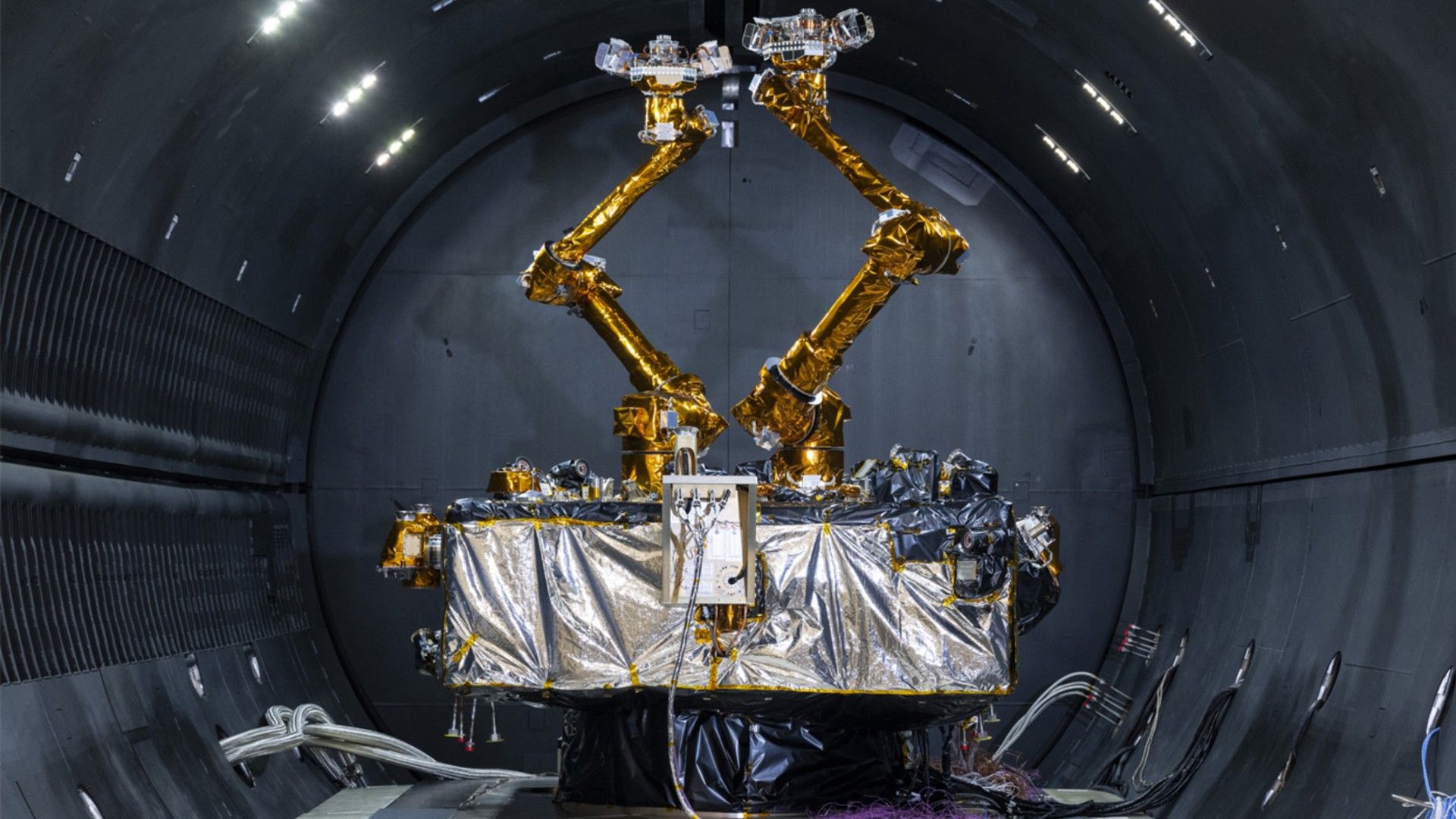
Katalyst Space received a $30 million contract in September 2025 to build the 880-pound LINK spacecraft. The vehicle features a custom robotic capture mechanism to attach to the observatory's main structure. The Pegasus XL rocket, manufactured by Northrop Grumman, will carry LINK.
The 55-foot rocket has completed 45 missions since 1990. In mid-June the spacecraft was encapsulated at NASA's Wallops Flight Facility, and the rocket was mounted on the Stargazer aircraft. The Stargazer took off June 18 from Wallops for the Marshall Islands.
The air-launched Pegasus XL is targeted for liftoff at 6:23 a.m. ET on June 30 from Kwajalein Atoll. After release at 40,000 feet, the rocket will reach orbit in about 10 minutes. Katalyst will spend several weeks checking LINK systems before the spacecraft approaches Swift, captures it, and raises its altitude to nearly 370 miles over several months.
Without intervention, the observatory faces a 50 percent chance of uncontrolled reentry by mid-2026 and 90 percent by year-end. Mission teams are maintaining Swift above 185 miles. U.S. " The effort would be the first attempt at commercial robotic capture of a government satellite not built for in-space servicing.