Unbiased AI-powered news
Poland, Germany and the Czech Republic recorded sharp drops in reported methane emissions from lignite mines last year. Experts attribute the figures to new site-specific measurement methods that lack published guidelines.
The Japan TimesPoland’s Belchatow and Turow lignite mines reported methane emissions in 2024 at levels roughly one-thousandth of those shown by most independent tests over the prior two decades. Emissions from open-pit mines in the Czech Republic fell 91 percent between 2022 and 2024, while nine of ten German lignite mines recorded a 64 percent decline in 2024 from the previous year.
The reported reductions could not be explained by production cuts alone.
Physicist Jaroslaw Necki, an associate professor at Krakow’s Mining and Metallurgical Academy, said he does not believe the numbers. “Wrong techniques are being intentionally applied to benefit coal mines — not the environment,” he said. Necki compared measuring emissions from ground-level coal samples to shaking and opening a soda bottle then measuring remaining carbon dioxide.
Prior to 2025, most open-pit operators used national emissions factors. Starting last year, operators may establish their own site-specific factors based on tests conducted without published guidelines. Poland’s PGE introduced new factors at Belchatow and Turow that produced results more than 99 percent lower than earlier measurements.
Germany adopted an industry-provided “average implicit emission factor” 60 percent lower than the previous value for its April UN climate report. Poland’s Central Mining Institute published a study last year recommending samples from fresh boreholes at least 10 meters deep, which found methane content up to 60 percent higher than samples from excavated pits.
In Germany, operators collected soil from freshly exposed coal embankments, crushed the material and quantified emitted methane.

A 2022 Czech study concluded that coal loses 75 percent of its methane before extraction. A preliminary UN-funded study published in March found operator-reported surface coal mine emissions lower than external expert estimates and described site-specific testing as unsuitable for accurate estimation.
Between 2016 and 2023, three Australian mines reported 8.5 million tons less emissions using site-specific methods than they would have under state-based factors.
The EU Methane Regulation, scheduled for implementation in 2027, allows fines of up to 20 percent of annual turnover for failing to report emissions. The European Commission is preparing a request to draft standards for estimation of emission factors for surface coal mines, expected to be presented next week.
The European Committee for Standardization is not currently working on guidelines for methane emissions from coal mining.
Brian Ricketts, secretary-general of Euracoal, said the three countries have developed similar methodologies with a view to a future standard and that each method is robust. PGE stated its samples were collected from test boreholes across its mined deposit. A Czech Environmental Ministry spokesperson said the 75 percent emissions occurred in the past without human influence.
At RWE’s April annual general meeting, 99 percent of voting shareholders sided with the board after activist investors proposed a vote of no confidence over methane measurement methods. Michael Müller, RWE’s chief financial officer, said the company’s measurements are based on established procedures confirmed by external expert reports.
Jutta Paulus, a member of the European Parliament, said the methane regulation was mainly intended for oil, gas and hard coal and that a better methodology is needed for lignite.
These outlets didn't split into competing frames — coverage was uniform.
cnet.comThe government website named for President Trump offers discounts on fewer than 12 percent of the more than 800 brand-name drugs marketed by participating firms. Some major revenue-generating medicines remain unavailable while generics frequently cost less elsewhere.
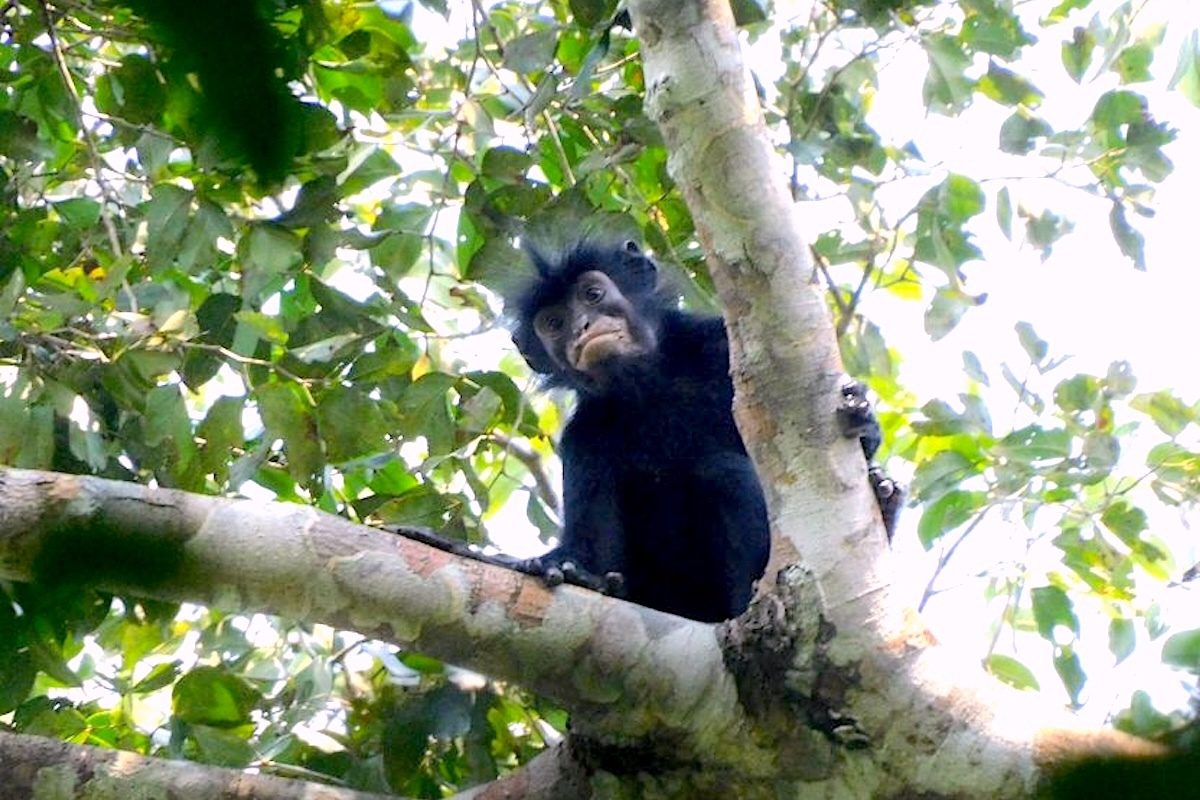
e360.yale.eduResearchers have identified Colobus congoensis, known locally as likweli, through morphological and genetic analysis of specimens from the Democratic Republic of the Congo. The primate is the fifth new African monkey species documented in 75 years and occupies a limited range in…
theconservativetreehouse.comNpr reported that federal policy changes disrupted cancer disparities research. The cancellations affected 93 percent of surveyed researchers and led to staff reductions at major registries.